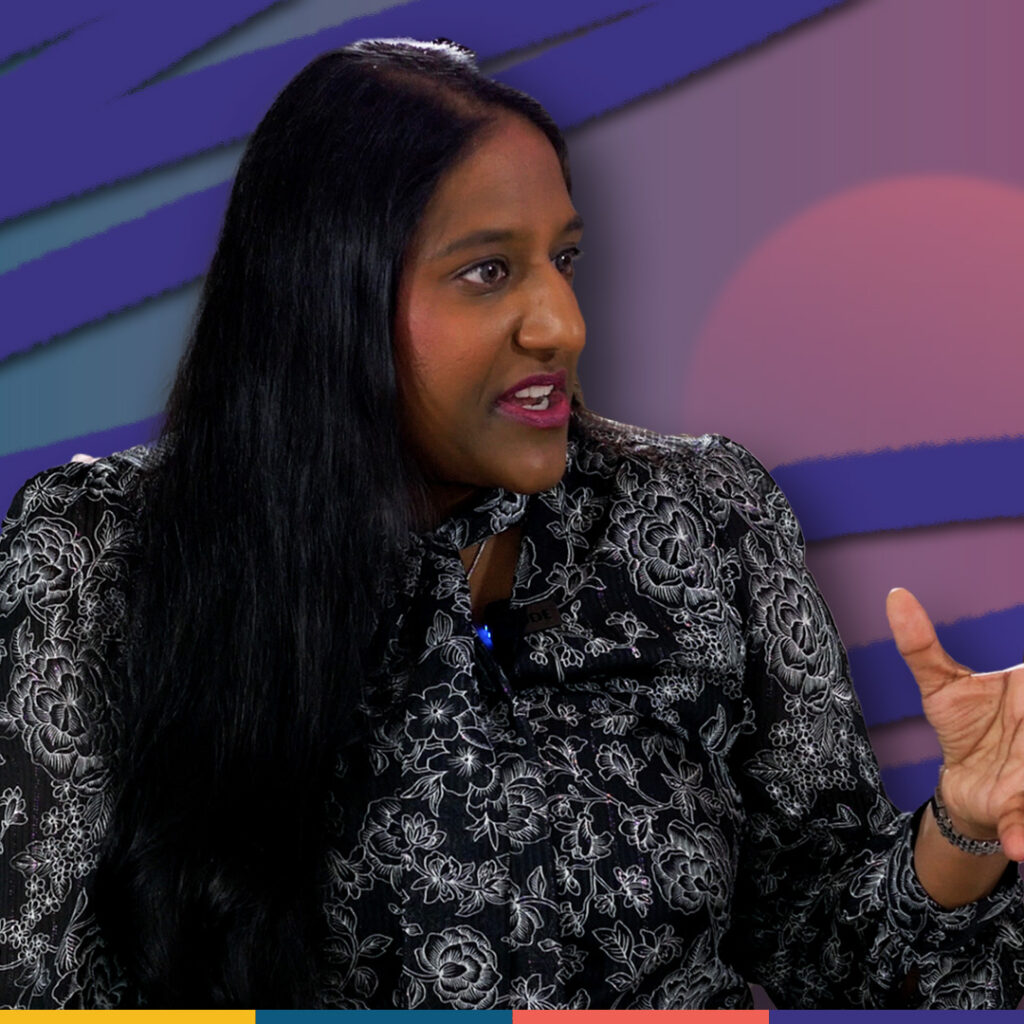
In a special Meeting of the Minds episode recorded at the MedHealth Innovation Summit in Detroit, Senior Director of Commercial Intelligence Chris Hemphill sat down with Robert Matheny, Clinical Manager, Neurodiagnostics, at Henry Ford Health to discuss workforce wellness, organizational trauma, and trauma-informed leadership.

Sign up to learn about future episodes of Meeting of the Minds
Key Points
–Organizational trauma comes from a variety of sources, such as an acute event, like a pandemic, long periods of chronic stress, or a failure in leadership.
–It manifests as breakdowns in trust and productivity, increased errors in quality and safety, silos, and turnover.
–Trauma-informed leadership seeks to eliminate workplace polices, procedures, and structures that are causing employee burnout and illness and replace them with more supportive systems.
Watch the Full Episode
Watch a Highlight
Sign up to learn about future episodes of Meeting of the Minds
Read the Transcript
Chris Hemphill: Again, again more exciting conversations to be had at The MedHealth Summit up here in Detroit. This time. we’re talking with Henry Ford Health Systems Robert Matheny, who is the clinic manager of neurophysiology for Henry Ford Health System. I had the pleasure of seeing his presentation on addressing provider mental health issues and workforce issues. And we know that that is a major topic that a lot of Institutions, that we’re all focusing on right now, how do we care for mental health, how do we care for our providers in a way that results in care for the patients that we serve as well. And it was really powerful. I can’t give any spoilers or anything like that, you have to hear from Robert himself, but there are some really interesting and powerful perspectives that Robert brings to the table. Robert care to share any words with the audience or say hello?
Robert Matheny: Thanks for having me. I’m excited to have this conversation. Issues about workforce wellness and trauma and trauma-informed leadership have been really important, I think, for me over the last few years and I think are increasingly important for us to be having very serious conversations about as we look to the future.
C.H.: And that’s a major topic that we’re going to dig deeper into. Robert just dropped the term trauma-informed leadership. That’s something that’s a perspective that we want to dig deeper into because it’s becoming much more and more important as we realize and acknowledge the trauma that people have gone through at an individual level and how that impacts cultures more broadly. Now one thing that really stood out when I was looking up Robert and learning more about him, is that his he coined this term…Did you come with the term pracademic?
R.H.: No actually I didn’t. I took it from one of my professors in my PhD program, Dr. Danielle Padgett. I heard her use it. I don’t know if she coined it or not or if she took it from somewhere else, but she talked about being a pracademic as somebody who as an academic, as a researcher, is focusing their research on things that can be directly applied, translational research. There’s so much research that we do in the academic field that’s just academics talking to academics, and it has such practical implications, especially in my field of interpersonal communication, which is related to psychology. There’s so much good work out there that doesn’t actually get into the hands of the public because it’s just published
in academic journals, which are fascinating but terrible reads. Nobody really wants to read that and so being a pracademic means how do I get my research or the research of others out into consumable ways for folks? So it’s making a difference in the everyday life.
C.H.: That’s fascinating. We hear about academic papers, and we don’t want them just to sit there and collect dust. If there are interesting discoveries, if there are interesting things that can be carried over into practice then that’s what we want to happen with our science is to start resulting in things that impact people. Could you talk about your personal mission when it comes to bringing this practical but academically informed path? Just a little bit of background. Robert has been directly delivering therapy, has done research and organizational consulting looking at these things on a more broad level. I’m just curious about your personal mission. What’s driving you down this path?
R.H.: So by training clinical training. I was a behavioral health therapist. I had a practice in Arizona for a few years, and I left direct-care delivery, in particular, because I was priced out of being in it. I was a masters-level therapist with a significant amount of student loans, and I was in an environment, in a structure, in a field that does not make a lot of money. I was never gonna, never, ever gonna pay off my student loans if I stayed where I was and doing what I was doing, so I went on to a Ph.D. And they say when if you’re going to do a Ph.D., research what you know, and so since my background is in psychology, and I was really, really curious about human interaction and why we behave the way that we do, in particular around conflict.
And so I started researching conflict, in particular intractable conflict, identity-based conflict. So when we have a relationship that we either want to, ought to, or have to maintain, but there’s this conflict between us, maybe it’s because I hold an identity that you don’t validate, or there are societal issues. How do we maintain that relationship or what do we do with that relationship? And that really drove me to think about the ways in which we engage with people at work because you spend more time with people at work than you do oftentimes with your family. The workplace really is a microcosm of societal trends, larger intractable conflicts play out at the water cooler all the time. They play out in the ways that people get promoted. Who gets promoted and who doesn’t? Who gets paid certain compensation and who doesn’t? Who holds power? Who holds a seat at the table? All of that is based on our interaction, and so a big piece of my personal mission and research has been how we have those conversations in healthier ways. How do we take and bring things that are hard to really persuade people towards a better future? And so, even in my current role, I started out at Henry Ford as an organizational effectiveness consultant, doing executive coaching and those kinds of things, and then I went into direct operations management, in particular, because I wanted to see for myself–this is the pracademic piece of it, right? I wanted to see if could take the things that I had been talking about and coaching others to do and researching and put them into practice in my own life as a leader and see a real meaningful difference there. Could I get that credibility because not only had I talked about it or researched it or taught it, but I had done it and made it happen? And so I’m in my own space now trying to affect that, my own microcosm while I also still continue to think about these broader issues.
C.H.: So that’s really interesting that we’re seeing a transition, and I spoke with several people earlier today who are doing similar transitions from clinician into organizational leader or business leader. I’m curious, especially because your background is in therapy, do you feel that this has been a way to scale some of these things that you’re doing on a one-on-one level and
R.M.: It’s been a way to scale is one way to say about it. But I think it’s also a way to think about maybe how do I move, how do we move some of our interventions upstream? So rather than waiting for someone to experience trauma or to experience chronic stress. How do we that we’re not traumatizing individuals in the way that we work or what they’re getting exposed to? How do we move that intervention upstream? So we’re addressing things like structural racism or a workforce culture that causes burnout. If we can move those interventions upstream and mitigate the thing that causes that, we’re really shifting then, away from from sick care to true health care. Let’s look at the structural issues that we have. So it’s somewhat scaling, but it’s more, I think, shifting where is the focus of intervention.
C.H.: Interesting. When we think about what defines that role today with Henry Ford, how do you define what is your focus as clinical manager of neurophysiology?
R.M.: So every job description has bullet points–these are the things that you are directly responsible for and then there is the bullet point at the end that is always “and other duties as assigned.” Most of us who are curious, who are motivated, who are constantly thinking how do I grow or what’s my next step. We probably spend 80 percent of our time in that “other duties as assigned” bullet point. So my day job, I run a neurophysiology clinic. We actually have eight different clinics, eight different locations, two inpatient units. I have a team of about 50 folks that I manage. I’m responsible for growing those programs, for making sure that we’re ensuring quality and safety. That’s my day job. Those are the things that I have to make sure I get all of that done. Then the rest that I do, I actually spend a lot of time with our health system on our Diversity, Equity inclusion and Justice strategies.
I’ve developed several trainings and talks in partnership with colleagues where we’ve specifically taken on the stand of wanting to be an anti-racist organization. Well, if we’re really going to do that, we have to level set. What do we even mean by that, and so educating our workforce on what does structural racism mean? What does bias mean? What does anti-racism mean? And then the other big piece has been trauma-informed leadership, and I really see them as intersecting.
If we’re thinking about the impact that the pandemic has had on health care, but even before the pandemic, we’ve had an issue in healthcare, in terms of a burnout culture, in terms of coming shortages of nurses and physicians, and in other providers. We’ve known there’s been a problem and the pandemic really highlighted that. So what can we do as leaders to get ahead of that, to address our structures, and make sure that we are creating the best, most healthy environment for folks to work in so that they can provide the best of themselves to our patients?
C.H.: I’d like to dig in a little bit deeper on that, too. Actually. There’s a whole lot that we could discuss with you, a whole lot of good stuff. But when we think about this trauma-informed leadership perspective, knowing you’re managing a large team and others here. It’s a new concept and a new term to me, at least. Could you dig in a little bit deeper on what trauma-informed leadership means, and really in terms of, like, the entrenched ideas that leaders have today. What are some of the gaps that could have that could be addressed by trauma-informed leadership?
R.M.: Early on in the pandemic, during the first wave of COVID that we experienced here in Detroit, a big piece of my role was to spend time with our folks who were at bedside care delivery, helping them to recognize the symptoms of chronic or traumatic stress in themselves and each other, make sure that they knew what resources we had for them to help them deal with those things. And then also to keep a line of communication between those folks and our executives making sure that we are identifying trends, and what people really need. And I worked with an interdisciplinary group of folks from across our organization to bring as many resources to bear to support those folks as possible, and at some point in time, as I was going from team to team to team saying, you know, here are the symptoms of traumatic stress and how you can recognize them in yourselves. I started realizing that everybody’s traumatized, and so if you have a critical mass now of folks in an organization who are all dealing with burnout, chronic stress, traumatic stress, at what point in time is it important to step back and look at the organizational level and say has the organization itself. become traumatized?
What does organizational trauma look like? Organizational trauma can come from an acute event, like a catastrophe. It can come from just long chronic stress. It can come from a failure in leadership. There’s a variety of sources organizational trauma can come from, but it looks like, in the workforce, breakdowns in trust in productivity, increased error in quality and safety, breakdowns in communication, increased silos, increased turnovers in teams. So one example is that across healthcare, in general right now, the amount of 12-hour shifts that are covered by brand new straight-out-of-college nurses, is up by 55 percent. That means, we have a significant number of folks who are not tenured in their position. They’re still new. They’re still learning. That has an impact on the quality and the safety of the care that we’re able to deliver at the bedside. Increased turnover. Staffing shortages, I mean, a variety of things. So trauma-informed leadership, then steps back…Oftentimes when we’re thinking about things like chronic stress, burnout. We, as an organization, will take individualized approaches to that. So we’ll say, how do we make sure that we have a good EAP program to offer folks counseling, how do we make sure that we’re teaching mindfulness or we’re getting them plugged into other kinds of wellness programs that help them manage their stress? Trauma-informed leadership steps back and says: Yes, we’ve got to do that, but that is insufficient, if we stop there. We also need to step back and say what are the systems, the policies, the processes, the procedures, the structures that we’ve built that are causing traumatic stress, chronic stress, and burnout? And what is our responsibility as an organization to change the way that we are structured so that we aren’t creating that acute or or chronic stress on folks, so that we aren’t causing them to be in this place. We’re shifting it upstream, and saying before we worry about how to help you deal with the trauma and the stress. How do we help you not experience that in the same way, so that we’re not burning you out so that you can bring your best self to work and to your patients.
When we’re thinking about things like chronic stress, burnout, we, as an organization, will take individualized approaches to that. Trauma-informed leadership steps back and says: what are the systems, the policies, the processes, the procedures, the structures we’ve built that are causing traumatic stress, chronic stress, and burnout?
Robert Matheny
C.H.: That’s a really powerful statement. I can actually think of many people that I’d want you to talk to like Janae Sharp who takes this perspective of, rather than putting the burden on the employee as a problem they have to fix, what can we fix as an organization to relieve these traumatic pressures, not only from our policies but from other things that maybe just maybe impacting them.
R.H.: There’s a there’s a great book by Dr. Bruce Perry, put it out in a partnership with Oprah Winfrey, and it’s called What Happened to You? And his premise is we often see symptoms showing up in people, and we say, what’s wrong with you,? Why are you experiencing anxiety, depression, substance abuse? What’s wrong with you? And he says a lot of those symptoms are coming from traumatized experiences that they had. So instead of saying, what’s wrong with you, a better question is what happened to you? How do we externalize the problem and help you understand what you went through and the impact it’s had on you so that we can begin to make a difference? As a leader, or even as a coach, I used to work with teams, and you’d see these teams be really dysfunctional, high conflict, lots of turnover, lots of absenteeism. You would be tempted to say what’s wrong with this team? When in reality, if you step back and said, what’s happened here that’s caused this, that’s created these dynamics, because if I don’t change the structure, then it doesn’t matter, I could pull out each person and I could replace them all, but the dysfunctional team culture will remain, even if I turn over all the people. And so when I step back and say, what has happened to this team, what’s happened to this organization, what’s going on with the structures? Now, I can begin to solve some of those problems and really address the root cause of some of those cultural challenges.
C.H.: Can you give me an example of a team that you would work with or a time that you had seen something, just curious about what you enacted to understand the problem, and then help the team overcome that problem?
R.M.: I think you in my own life, as a leader that, this is a granular example, but I know that this is a common story across healthcare right now as I talk to my colleagues and other organizations. They’re going through similar things. When I took over my team as I said, I have a team of about 50 people, run eight different clinics, two of them inpatient units, one of my key programs that I run is our epilepsy monitoring unit (EMU). If you’re a patient who needs a refined diagnosis, or we need to adjust your treatment plan for monitoring epilepsy or perhaps we need to evaluate you to have brain surgery. You’ve got to come to stay in the EMU. And you know, you have to do that before you can have potentially a life-altering surgery or try out a new treatment. Because of staffing challenges, because we had a significant amount of turnover due to stress and a variety of other things, I had to close my unit, and it had been closed for several months. So now we’ve got this whole population of folks who need vital life-giving services that can’t access them because there’s a team that has been struggling for a while.
So we had to step back and say, okay, we need to look at our compensation structure. We need to look at the workload. We need to look at the structure of the leadership team here and create some stability for these folks, create some psychological safety, create some predictability for them, and just stabilize the team. Then we need to do some investing in just spend time with them, relating to them. So I spend a lot of time rounding and just developing meaningful connections with my team so that they feel a connection to me, they feel a connection to our leadership upward, and they feel a connection with each other, fostering positive relationships. And taking a strengths-based approach to who they are and investing in them, and then, only then could we then say all right, what’s the analysis? What’s the growth for the future? And how do we get there? What’s the strategy? Because now they’re able to think. Now that they’ve got some stability and they’ve got some connection, they’re then able to dream for tomorrow.
So we’ve been slowly implementing some of those steps and trying just to take some of the key strategies from a trauma-informed leadership approach and put them into real-life day-to-day operations. And as we’ve done that we’ve been able to stabilize the team. My epilepsy monitoring unit just reopened last week and we’re able to get access for those patients who’ve been waiting so patiently for so long to be able to be seen.
But it really happens at that level. I’m not measuring progress in these big massive, you know, revenue outcomes or big massive patient numbers. I’m measuring progress in has my turnover reduced? What’s the tenure of my team, and am I able to attract more highly skilled workers, are people happy here? Some of those day-to-day things. And as we do that over time, it makes a big difference.
C.H.: So that introduces some really big thinking, too, because it’s hard to just listen to this and not think about, if I see a little number adjustment on a spreadsheet, turnover is a little bit higher, that little tick higher could represent all kinds of trauma, all kinds of really deep personal issues that are going unaddressed that they just couldn’t find help within the organization for.
R.H.: Look at national survey data that has been happening since the pandemic. One in three healthcare workers is reporting clinically significant levels of anxiety and clinically significant levels of depression. One in five are reporting symptoms of insomnia. I forget the exact statistic, but a significant number of people are reporting increased substance use and abuse issues. Sixty percent of healthcare workers say their job is bad for their mental well-being, and one-third of all healthcare workers today are actively thinking about or planning on leaving the industry altogether. So these little things: how are folks feeling at work? What is the impact their work is having on them? Having massive outsized national trends. We already knew there was going to be a nursing shortage and a physician shortage in about 10 years. This chronic stress and dramatic stress sped that up to where, now we are seeing nursing shortages everywhere. That we’re closing beds in hospitals all across the country because we can’t staff them, which is causing backups to patient care. Patients can’t access the care that they need because we can’t staff the clinics and the hospitals that they need to come to. It becomes a huge issue when you take these little things, but then you scale them up to hundreds of thousands of healthcare workers across the country experiencing them.
C.H.: So if we back into it, then we see these numbers adjust, and we might see a downturn in a survey, wellness surveys, and things like that, and the response has commonly been EAP programs or yoga benefits or things like that. What does it take to work alongside leaders who might not understand trauma-informed leadership and to guide them down the path of getting deeper into these issues? Ultimately, we’re talking about a national problem here. What does it take to get leaders to start thinking about these things, rather than blaming the employee, like, understanding the structure that might be causing these issues.
R.M.: I think the first thing is just to help them make the connection between what they’re seeing in terms of their organizational outcomes and pressures and the chronic and traumatic stress that people have experienced. So I had a conversation with some executive leaders about a year ago where I created a timeline of the pandemic on the wall. The timeline started from January of 2020 and went all the way through up to that current moment, and I’d populated the timeline with some big, key moments–first surges, when did the vaccine first become available? And then I said, all right. I’m gonna have you guys populate some of your personal experiences on this timeline. I gave them Post-it notes, and I started asking questions like when was the moment you first knew that COVID was gonna have a big impact on your life as a leader? When was the moment that you’re most proud of? When was the moment you were the most scared or felt imposter syndrome? When is a moment you zigged when you should have zagged? I asked all these questions, and they could have populated their answers anywhere in that two-and-a-half-year span of time, but no matter what questions I asked them, their answers always fell somewhere between March of 2020 and June of 2020, which was the time in which we are experiencing the first major surge. Our hospitals were overwhelmed, aand there were just so many horrific scenes happening.
And so after about 45 minutes of this conversation, I pointed out to them, I said, you guys, I’ve intentionally tried to provoke answers from you that are not in this time frame, but no matter what I ask you, you’re living in these few months, and that is because that’s what trauma does. It freezes us in a moment in time. We stop, and we say, you know, I was under this crazy experience and the things that I did at that time made sense to respond to that crazy, right? But now that I’m out of that moment, some of those things that were functional then are now the new problem. So if I am a leader making decisions as if I’m living in that moment, even though I’m not, I might be making decisions or putting policies or putting strategies into place that are going to be the new problem for my organization.
So when we stepped back, and we had that insight moment, it was like a massive light bulb went off in the room, and we started to see what are the connections between the decisions that they were making as leaders, and the chronic stress, the traumatic stress that they had been through? And then we were able to extrapolate, now think about that multiplied across the entire workforce, making those decisions. And then look at your turnover. Look at your quality and safety scores. Look at your patient satisfaction scores through that lens. What impact you have and when we when we brought it there, the light bulb went off, and it changed the conversation about what do we need to do in terms of an organizational strategy moving forward?
C.H.: That’s a powerful example, and it shows a scenario where there is an audience that you’re working with, and you’re able to ask these pointed questions and direct them in the right way. I’m wondering, too, because this is stealing from your presentation that you gave a little bit earlier, but I think that there are a lot of people, even in even in leadership positions, even in very executive positions, who might see something going wrong, but still not speak up about it. I’m just wondering about your thoughts on what it takes to find these audiences, and drive that influence, no matter where you are within an organization.
R.M.: I think the power of relationships is so key. I didn’t start out by talking to executives. I started by talking to my colleagues and my leaders, and we kept bubbling it up and kept bubbling it up. In any organization, there is the organization that is on paper, who reports to whom, and all of that, and then there’s the shadow organization. I don’t mean anything nefarious by the word shadow organization, but it’s just that it’s the organizational structures that you can’t see because they’re not written down. It’s the relational networks that are typically how things really get done. You know, there’s, I could follow the structure, or I could call my buddy who works in that department, and we can have a conversation, we can make a connection. So working through those relational networks and influencing just your space becomes really key there.
I think the other thing that’s really important for a leader to do, any individual, is to clarify what’s really important to you. If you’re gonna be intentional about influencing something, you’ve got to know why you’re doing it. You’ve got to know why it matters to you. So clarifying your own values, what’s important to you? What are your non-negotiables in your relationship to your work? What are non-negotiables in terms of the way that you want to show up in the world and the impact that you want to have and the way that you want to relate to your organization. Getting really really clear about that helps you see when is it worth speaking up versus when is it worth just flowing. I think a lot of times we don’t speak up because we don’t realize how much a situation is violating our values. We put up with things that we wouldn’t if we really were clear about that with ourselves.
And I think the last thing I would say is, I’m a big anti-shame person. I challenge a lot of leaders to address their relationship to shame. Shame is this emotion that we experience when we say there’s something that’s true of me and were it to become public knowledge, I would no longer be considered worthy of inclusion. I would no longer be given a seat at the table. And so what we do then is we want to hide. We want to protect ourselves when we feel shame. We want to deflect, we want to be defensive. When we get clear about our values, what’s really important to us, and we deal with our shame, we recognize, you know what, there’s enough value in you. and who you are that you get to be wrong sometimes? Or you get to have a flaw because there’s enough value in what you bring to the table that you can continue to go forward even if I speak up and I take a risk, and I’m wrong, I’m wrong. Okay, somebody will point that out, and we’ll move forward, and we’ll learn together, but it frees you up to take those risks, to be vulnerable as a leader and say, hey, you know, might we want to rethink some of these structures? I feel like there’s a structural problem here.
So if you want to really influence folks you’ve got to do those three things. You got to know why it matters. What your non-negotiables are? And be able to get rid of your own defensiveness by dealing with and addressing your relationship to shame.
C.H.: Powerful example. I think it’s going to take a big rewiring of our relationship with shame to address a lot of social ills and a lot of stigmatization that people have whether it be mental health issues, racial issues, sexual issues, gender orientation issues, etc. There’s a whole lot of rewiring with that relationship to shame that needs to happen.
R.M.: Absolutely. one of the conversations that I’m really involved within my organization is our Diversity, Equity, Inclusion, and Justice programming. I think I mentioned I do a lot of education around bias, race, racism, and anti-racism. And the sense, as a cis-gendered white man, walking around talking in our organization about structural racism and anti-racism, there’s a whole lot about that situation that would cause me to say, this is uncomfortable. You know, shame would probably keep me from leaning into that space, but the fact is by leaning into that space and being willing to have uncomfortable conversations and being willing for people to point out when I’m wrong and have individuals of color say, hey, white guy, you’re getting it wrong here and not get defensive, but say thank you for sharing that and being able to grow. Then you multiply that. Multiple people having those kinds of conversations. That’s where it makes it different, and the role of shame in silencing us in those spaces or causing us to be defensive and not leverage those learning moments and not grow and make it better. Shame shuts all of that down. It makes it harder to do and is the enemy of progress in a lot of those things that are uncomfortable.
C.H.: It does make it more convenient to avoid facing an issue, avoid solving the problem, and just be silent on it altogether. SoI have a question. When we’re thinking about trauma-informed leadership and organizational change you have spoken about turnover metrics, quality scores, and things like that. We had a little conversation a little bit earlier about measurement-based care. How we measure outcomes and relationships from a therapeutic perspective. I’m wondering that the types of things that you monitor from this organizational perspective that you’re looking at, are there metrics or measurements that you focus on there to gauge overall health, organizational health?
R.M.: I think there’s a variety of things that you could do, and we do some of them, and I think there’s other ones that maybe we could consider adopting, but when you think about what are the symptoms of organizational trauma? When you see traumatized organizations, you do see increased turnover. So that’s an easy metric, you see increases in conflict and workplace violence. Those things are easy to track and measure. You see increases in error rates. So your quality and safety metrics can be an indication. If we are medicating the symptoms of organizational trauma, in theory, that should have a lift to some of those outcomes. You will see a difference in your revenue because you have decreased error rates, you have increased satisfaction, and you’re getting a greater capture on your reimbursements from CMS.
I think you’re looking at these broad structural kinds of metrics that help you understand what is the climate of my organization. Is it getting better? Because if we have a traumatized organization all of those things are going to suffer. You can measure even some things around lines of communication. So if I make an organizational announcement, what is the saturation of that messaging all the way to the front lines? So if I’m walking around as a leader, and I’m rounding on folks, and I’m saying hey, did you hear about this initiative or did you hear about that decision or that policy? If my lines of communication are working well, they should know about it, right? But if we have increased silos or there’s just too much noise out there. They’re going to say I have no idea what you’re talking about. So when we do rounds, we have several things that we check on with folks, and we record that, and we can measure that, so there’s a variety of things that you can do. I think for an organization, it really depends on which are the key areas that are the most important indicators of the health of your organization. I’d pick three to five max that you’re really going to focus on and say, if we’re really making progress from a trauma-informed leadership perspective, then we should see a lift in these spaces. Pick one that’s focused on people. Pick one that’s focused on performance, and pick, you know, a freebie, whether it’s your revenue or whatever. But something that’s an indicator of your health as an organization.
C.H.: Excellent points and one thing that I’ve been asking everyone and we might have a deeper conversation on this, but given all the things that we’ve discussed, I’m just wondering if there’s one thing that you could hone in on, one thing that you could focus on to change how we deliver organizational health, what would that be?
R.M.: Hands down, it would be the financial structures around healthcare. The financial chassis of the industry on the whole, how we get paid for what we do, and how we measure productivity. So for many of our healthcare providers, the way that we measure their productivity is through work RVUs. So we have a how many patients did you see? How many RVUs did you generate? And so we have a volume-based model for how we measure productivity, and we’re constantly talking about transitioning to value-based care. But it’s difficult to transition to value-based care where we’re looking at what are the outcomes we’re able to achieve and getting paid for creating better outcomes if the way that we’re incentivizing or we’re valuing or workers is based on a volume-based approach, you just can’t, ask a provider to spend more time with patients. Have better clinical conversations. Have increased points of connection with your patients, but also create more RVUs. Because the RVU metric causes us then to want to work faster, right, to see more patients. So if I’ve got to get to the next patient, I’m incentivized to move this conversation as quickly as I possibly can, which can have it deleterious impact on the quality of our conversation, the quality of the interaction and the connection, and the trust that I’m able to develop. They’re just diametrically opposed to each other.
Also controversial statement, but if we believe that healthcare is a right, then we have a moral imperative to have a conversation about whether or not it makes sense to have insurance companies, payer systems in the hands of privatized organizations whose goal is to provide a profit to their shareholders. If you’re an insurance company, the way that you provide a profit is you take in as many premiums as you can and pay out as little as you can. That is not a goal that has the patient in mind. Because we are denying services oftentimes or a fight we’re changing rules to make sure that we are performing as best as we can from a payer system financially. That means sometimes we’re maybe saying no to meaningful care that patients really need to get because we are managing the bottom line of our payer organization.
We have a moral imperative to ask if healthcare is a human right, is that a structure that upholds that right or impedes it? So the whole financial chassis the entire industry, really? If that could change anything and that’s a tall order, but if I had a magic wand that could change something, that’s what I would change.
C.H.: Fantastic. It is a tall order, but when we boil everything back down to just nakedly exposing the incentive. Even though there could be all kinds of intentions. There could be all kinds of players within an organization who still focus on doing the right thing, but still, the incentive still drives it in a certain direction that doesn’t reflect best for patients.
R.M.: It’s important to say that intention and impact are different things. We, as human beings, often are guilty of what they call the fundamental attribution error. We judge others by their actions and we judge ourselves by our intent. So if I say something to you that has a negative impact on you and you say hey, that’s hurtful. I’ll say well, that’s not what I meant. I didn’t intend to hurt you. It doesn’t matter what my intent was. What matters to you is the fact that it had a negative impact on you. And so I need to own the impact that I had.
The road to hell is paved with good intentions, right? It’s so in the healthcare industry. We have the intention of providing patient-centered quality care. That is our intention. That’s everyone, I truly believe, for the most part, the folks in healthcare are folks of goodwill who really want that to happen, including our payer systems. But the impact on public health is not the impact that is aligned with our intention, and it doesn’t matter if we keep saying well, I want to do better. I didn’t mean to create a health inequity in this community. I didn’t mean to. But you did. Yeah, you did and so it’s time, rather than judging ourselves and patting ourselves on the back because we’re people of goodwill who have good intentions. We need to step back and say what is the outcome that we’re creating. We have a moral imperative to address our outcome, regardless of our intention.
C.H.: So intent versus impact would be a great secondary conversation to have if we cross paths again, that would be a really fantastic conversation to have. But for folks that want to get in touch with you regarding this conversation, what is the best way that people can reach out to you?
I don’t Tweet a lot, but I am on Twitter. @RGMATHEN, is my Twitter handle. You know, folks can email me directly or look me up in my own organization Henry Ford.
As much as I am out having these kinds of conversations, I have been focused on having the conversations and have neglected developing my own social online presence.
C.H.: So all good, all gravy. I a conversation like this. We got it got really real, and I hope that people watching come away with a focus on, you had an earlier point, on know why you’re doing what you’re doing. Know why you’re waking up in the morning. Know what your values are and understand when those those are in conflict and how that impacts you, but also think about the types of things that you’re doing, what you’re putting out in this world. What’s the impact that it’s having? Does the impact that you have also not align with some of the values that you have. So I think that is a major major point to think about, and again, I appreciate you coming in and just having such a honest conversation with this.
R.M.: Yeah, no thank you for the opportunity just to amplify the conversation. My goal really is just to get a national conversation to happen around this so that we can, if we can talk about it, we can plan for tomorrow to do better.
C.H.: Well, let’s keep the conversation going because the only way that we’re going to or will ever be able to get to that scale is just to have the conversation, it’s gonna feel repetitive, but we’re just gonna need to keep going and keep fighting that fight.So again, I appreciate you bringing that energy to the table. Thank you. Thank you and for the folks watching or listening appreciate you hanging out with us for Meeting of the Minds, and we’ll see you next time
Sign up to learn about future episodes of Meeting of the Minds