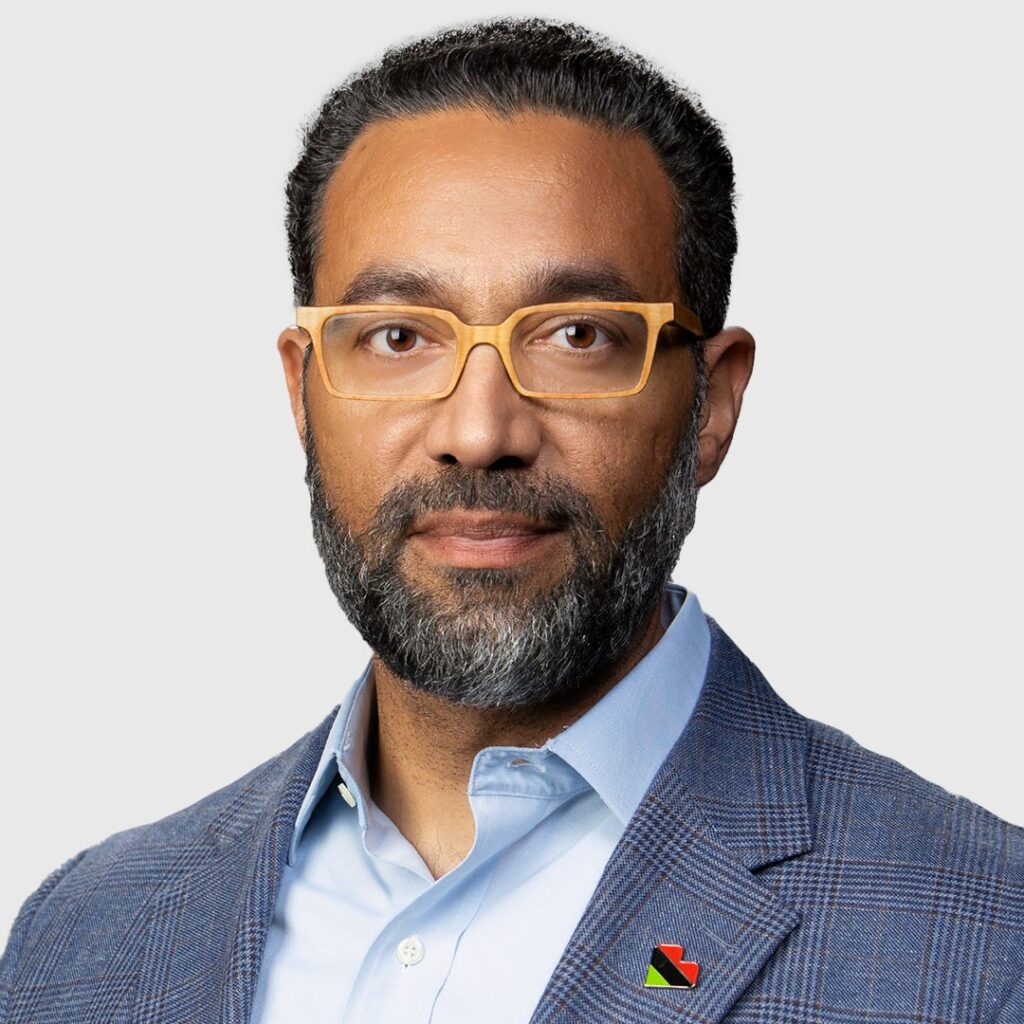
In a special Meeting of the Minds episode recorded at the MedHealth Innovation Summit in Detroit, Senior Director of Commercial Intelligence Chris Hemphill sat down with Dr. Aaron Friedkin, Chief Business Officer of Homeward Health, to discuss Homeward’s mission and value-based care model.

Sign up to learn about future episodes of Meeting of the Minds
Key Points
–Homeward Health is a technology-enabled healthcare provider delivering care to rural America. It enters a market as an in-network provider for any Medicare and Medicare Advantage plan patients in the community
–It uses a value-based care model that seeks to align incentives between the people paying for care, the patients receiving the care, and themselves as the providers of care
–Homeward is supporting improved population health by delivering an end-to-end care experience, which includes behavioral health
Watch the Full Episode
Watch a Highlight
Sign up to learn about future episodes of Meeting of the Minds
Read the Transcript
Chris Hemphill: Hello and welcome. I am Chris Hemphill with Woebot Health Meeting of the Minds, and I’m joined by Dr. Aaron Friedkin of Homeward Health. We’re excited to bring a conversation to you straight from Detroit MedHealth Summit.
The MedHealth Summit is an annual event that brings together technologists and other folks in the Detroit area, especially in the healthcare technology realm, to connect, network, and grow their businesses, grow their understanding, and grow their mission.
I’m extremely excited to talk to Dr. Friedkin today who comes from Homeward Health. When we think about these concepts around disruptors and healthcare, this one goes even deeper than that because the common framing of the disruptor has been a completely for-profit motivation. Our common framing of these healthcare disruptors are tech companies, coming typically out of Silicon Valley and operating typically on short horizons. We had a really fascinating conversation earlier about the concept of a Public Benefit Corporation and how they stay mission focused on healthcare equity and driving healthcare outcomes in rural health areas. So really want to dig deep on that focus on their strategies, their focus on innovation, and just get deeper into Dr. Aaron’s background on how he came from a pediatric radiology perspective to now working on the business side. I’m gonna put you on the spot so much because we’ve got so much to talk about. Any words for the audience before we get in?
Dr. Aaron Friedkin: So first of all just appreciate the opportunity to speak here at the MedHealth Summit and then with you, Chris, as well. We’re really excited about the work that we’re doing at Homeward. I love to come back to our mission which is to re-architect the delivery of health and care in partnership with communities everywhere. There are a couple words that are part of our mission that are really deliberate, and you hit on part of this. The first is the idea of re-architecting. We didn’t come out and say that we’re going to reinvent or reimagine. There are a lot of parts and pieces that exist in the system today. How can we put them together in a way that actually supports underserved populations? And then the second word that’s really critical in our mission is the idea of partnership. A lot of disruptors in the healthcare industry came in and said, we’re smarter than everybody else. You know, we’re gonna figure this out. I don’t care that you’ve been doing this for 50, 60, 70 years. We know better. That’s not the way that we’re gonna solve the challenges that exist in delivering care to rural America. We know that we have to do it in partnership with the communities that we serve, with trusted entities that exist in the system today, as well as just other members of the healthcare ecosystem. So thrilled to talk about all of that and anything else that you want to touch on.
C.H.: All right, fantastic, and I hope that the audience hearing that is getting excited because you’re gonna hear a lot of stuff to write down especially when it comes to that looking at the disruptor not as a disruptor but as a potential partner. I know that our audience has a lot of people in the traditional care space, but I see even innovation on the traditional side and questions around “how can we partner with newer players in the types of innovations that they’re creating?” So we’re gonna get deep into that, but it’s always most important to remember that behind every innovation, behind everything that you see, behind every change that you make, behind every strategy you make, it’s about what people are doing. How people with backgrounds have led them there. Aaron, you bring just such a rich background with pediatric radiology training at Harvard, time at McKinsey, Blue Cross Blue Shield Minnesota, and now all the way to the new entrance space. So could you just talk about your personal mission and journey and how that’s led you here?
A.F.: Yeah. So thanks for asking. You know, I wouldn’t go so far as to say I’ve had an interesting background, but I think I’ve had a unique background, and as you mentioned, I’m a physician by training, so I’m thrilled to be here in Detroit. You know, I’m a loyal Wolverine, did my undergraduate training at the University of Michigan to my residency there, and practiced as a pediatric radiologist in the Twin Cities in Minneapolis-Saint Paul, and for me, what I learned, and I tell people this all the time, is that I liked the path to become a physician a lot.
But then when I was out in practice and kind of just doing the same thing over and over again every day, for me, there wasn’t this next thing to be working towards, and I became really intrigued by how can we make our practice more efficient? How can we grow our practice? How can we do new innovative things?
I realized pretty early on after I was in practice that I wanted to be more on the business aspect of the healthcare delivery space to really think about solving some of the big problems that I saw. So as you mentioned, that ultimately led me to an opportunity to work for McKinsey and Company, which is a large management consulting company, had the chance to work on really big ambiguous problems for payers for providers, and that’s really what motivates me. I like tackling things where there’s not a clear answer, but you got to think about how you move the problem forward.
After a few years of McKinsey, ultimately led me to work for the health plan space, so started at Blue Cross Blue Shield of Minnesota where I basically was the medical director that was working with all of the large employer groups that they have there. So as you think about many of the disruptors that we see in the healthcare space, they’re oftentimes working with large self-funded employers who foot the full bill for the services, for the healthcare services they have to cover for their employees. So I really got deep in understanding what are the pain points that those companies have, what are the opportunities that we actually have to support their populations and through that work…
It’s funny. I was talking about this with someone the other day. This was going back to 2016-2017. There were two things that I was talking with employers about at the time that they should be focusing on. I remember I was in charge of working with the teams that did all of our customer reporting analytics to look at that the employer’s problems, and I would tell the employers, I don’t care what your data says, whether you’re spending too much or too little on behavioral health, that’s where you should be focusing your energy. Not that people weren’t talking about it then, but I think we were a bit ahead of the curve back across Blue Shield of Minnesota.
And the other thing, I actually wrote a whole blog article about this. I told employers if there’s one thing that you could actually tactically do, it’s educating their employees on washing their hands. So, think about this in 2017, three years before the global pandemic, people at the time looked at me like I was crazy, but there were really good studies that showed if employers educated their employees on proper hand hygiene, it prevented transmissible diseases, and absenteeism.
So anyhow got really invested in understanding what self-funded employers are doing. And then that ultimately led me to Blue Cross Blue Shield of Michigan. I had a chance to move back to Michigan and got to lead commercial strategy and clinical strategy for those types of employers, really focusing on what are the opportunities to support their employees in different ways. I had the chance to deploy a number of new digital health solutions. So I kind of built the strategy for digital health at Blue Cross Blue Shield of Michigan, and that’s where I got exposed to a company called Livongo Health.
So you may be familiar with Livongo. Livongo, chronic condition management company, was purchased by TeleDoc a few years ago for an astronomical amount of money, $18 billion. That’s where I started to see the value that bringing new types of solutions to support populations and thinking differently could really deliver value. And then in my last role, when I was at Blue Cross Blue Shield of Michigan, I had the opportunity to really think through new ways of paying for care. So how do we bring this concept of value-based care, where you’re paying for outcomes and quality and managing down the total cost of care in a way that makes sense for patients? And that’s where I got the bug. This idea of really thinking about aligning incentives between the people that are paying for care, the people that are receiving the care, and the people who are delivering the care. That’s ultimately what led me to Homeward. Homeward was founded…our CEO and president both came from Livongo. So that’s how I got to know them. I was a customer. I think they might say I was a bit of a pain-in-the-butt customer, as I was pretty demanding, but…
C.H.: The best kind of customer.
A.F.: Exactly, but when I saw what the company was trying to do, it was a really unique opportunity for me to bring the learnings and value, all things that I’ve learned about through my experience, and align towards a mission that I’m also very passionate about, which I’m happy to talk about what we’re doing at Homeward.
C.H.: So great. Just a couple of comments. You said not interesting, but then you just blew us away with that. So I’m just gonna throw that out there. And yeah, there are so many interesting conversations to be had when we think about a digital health strategy and the many, many, many different vendors and different players out there. Questions people might have overall would be “how do you manage the connection between 20-something different vendors?” and “how do you hold them accountable like you’re doing with Livongo?” Unfortunately, that will have to be the subject of another talk.
We can get a little bit deeper into Homeward Health. There’s just so much that I’m excited to unveil in this based on the background that you just shared. But let’s narrow in a little bit on Homeward Health because we’re talking about the mission. We’re talking about the focus. My next couple of questions are what is Homeward Health? What do you focus on, and then how does this role of Chief Business Officer apply to that?
A.F.: The way to think about Homeward is we are a new, you know the buzzword, technology-enabled value-based care provider that was really designed from the ground up to think about how do you overcome the challenges of delivering care to the rural population. So when you look at the United States, about 20 percent, 60 million people, of the United States population actually live in geographies that are considered rural. And unfortunately, when you look at the statistics for the rural population, the health outcomes are horrible. So about 40 percent higher preventable admission rates for people that live in rural areas. Twenty-three percent higher mortality rates. So just based on where you live, 23 percent higher likelihood of dying. That’s unacceptable to us.
So we said there’s a really big problem to go out and solve. How can we think about doing this in a way that we think is going actually to solve the problem and be a sustainable business? So what the team from Livango really understood is that there’s a way to leverage technology to scale the way that you can deliver care to populations. And when you look at the rural population, it’s not the prime, it’s not the only driver, but one of the major drivers for some of those outcomes that we talked about is a lack of access to care. So we just know, if you live in a rural area, you have about half as many providers on a per capita basis. You live about two and a half times as far from a hospital than if you live in a more urban area. So the solution isn’t to build more hospitals and try to get providers to move to rural areas. That’s not the way you’re going to solve this access issue. So the idea from the start was how can you think of creative ways to scale the way that you can expand that access? So knowing that we’d have to do something different to solve there, it became really clear, and this is where my background…What do I do as Chief Business Officer, a lot of times, it’s starting with how is this going to get paid for. And what was very obvious to us from the start is that we couldn’t be constrained by the traditional fee-for-service way that care is paid for. If we just said the only way this business is going to work is by making sure that we get paid for every service that we deliver–that volume over value space–that’s not gonna work. So we said, imagine a situation where we were given a certain amount of money to manage the population, deploy new and unique tools and capabilities and service models, whether that’s virtual visits, whether that’s going into the home. And not trying to solve for is each one of those individual services going to be reimbursed on their own, but thinking about how does that constellation of services actually support the needs of the population? We said if we have a way to do that, that unlocks tremendous potential for us to do something different.
So, fortunately, those ideas of what we call capitated payments, where providers just get a block of money, and you have to manage within that dollar amount. Those models actually are becoming more and more prevalent in the Medicare space. So we said all right, if we’re gonna solve this population, if we’re gonna prove out this model, we need to start in the Medicare space because it’s most aligned with this opportunity to take on capitated payments to serve a population.
So the other thing that we realized was to do this, we couldn’t just be a vendor. We couldn’t just say we’re gonna pick and choose different health plans and we’re only going to serve a certain person in the population. We knew that we want to make sure that any patient, any Medicare patient, that’s in these rural geographies we serve can access Homeward’s model. So we were very intentional. When we enter a market, we enter as an actual in-network provider with the Medicare plans that are there. So that’s both traditional Medicare and the Medicare Advantage plans. So that’s just a very different approach than many other organizations have taken because again, we don’t want to turn patients away if they actually need care.
So that talks a bit about the business model. What do we actually do? So when we enter a market we have immediately expanded access. We are a new primary care practice that exists in the market. We don’t build brick-and-mortar facilities because we knew, we joke internally, no matter where we would have put one, we would have invariably picked the wrong location. So we said, how do we take away the constraint of having brick and mortar? Well, why don’t we meet people where they are? Let’s go into people’s homes, if that’s an opportunity, if that’s where they want to receive care, to eliminate some of the barriers that they have. And then let’s actually open mobile clinics. So we operate big RV-based mobile clinics that we can rotate throughout the communities that we serve to provide more of an office feel but not be constrained by any specific locations so that we can actually learn where people go and meet them where they’re going. And then through that, as we engage with the population that we serve, we introduced them to virtual care. Not everybody actually has experienced it. Everybody says, well, they don’t have broadband necessarily in these rural communities. They may not have cellular devices. But you know what a lot of people have? They’ve got a phone. A lot of people think that virtual has to be this video visit that so many of us have gotten used to over the past three years through all the Zoom meetings that we’ve done. The telephone works really well. The problem with the telephone historically was that providers didn’t get paid to consult with people over the phone. But because we take on total capitation for the population, we want patients to call us whenever they need something. That’s a good use of not just our time. That’s helping to make sure that care is being delivered to the population. So again, we’ve built this model where we try to solve all the big fundamental issues, you know, expand access, do it in a way that meets the population where they exist today, and do it in a way where the payment model fundamentally aligns incentives between the people that are paying for care, the patients that are receiving the care, and us, who’s delivering the care.
We’ve built this model where we try to solve all the big fundamental issues–expand access, do it in a way that meets the population where they exist today, and do it in a way where the payment model fundamentally aligns incentives between the people that are paying for care, the patients that are receiving the care, and us, who’s delivering the care.
Dr. Aaron Friedkin
C.H.: Well, that’s really fascinating to hear about, and I want to get deeper into the Chief Business Officer role, but I still have a question. You’re just bringing up really interesting points about effectively delivering under a value-based care scenario. Because there have been offers and openings for value-based care for many many years and of course, we have a recent iteration with accountable-care organizations, and while traditional players have been very slow to catch on, and we don’t see as high a percentage of value-based care contracts as we could have, what are the gaps that traditional players have tended to miss that allow y’all to operate effectively under this value-based care scenario?
A.F.: It’s a great question. And I think that the inclination is to ask what are people not doing right in the current model. And I actually don’t think that’s the way to think about it. The challenge if you’re a traditional provider, you’re serving multiple different patients across multiple lines of business. When I say lines of business, you may be seeing Medicare patients and Medicare Advantage patients and commercial patients, Medicaid patients, and you’re doing it across multiple different payers So the challenge that you have is, we talk about value-based care as if it’s like one general thing. No, in the commercial space every different payer may have a different type of program that they’re actually solving for. It’ll look different potentially in the commercial space and the Medicare space. So that challenge, to me, that’s one of the biggest fundamental challenges that many people have. I don’t think anybody argues with the idea that value-based care is the way that care should be delivered. There are just a lot of just structural constraints to make it happen.
So we knew that and, look, there’s a lot of things when you’re coming in as a new entrant that are challenging. But the one thing that we do have is we’re only focused on Medicare, so that eliminated a lot of those other variables that we actually had because we said the Medicare space will actually allow us to do this.
So you’re starting to see more and more organizations and, I would say Michigan as a state is a leader in this space, the payers in the state have actually been really collaborative with the providers that exist here, but it is tough whenever you have providers that are kind of split across all these different ways of care getting paid for across multiple different players.
Now the other challenge that you have when it comes to value-based care is, you have to go all in. People talk about this idea of having a foot in two canoes. So, it’s really hard to say, well part of my business runs by making sure that I have a lot of visits, but I also get some incentive payment for doing certain things right. So figuring out how you balance that and having a path to move towards something that’s sustainable is just tough.
So we don’t view these other entrants, anybody that’s in the value-based care space as competitors. The more people that are doing this and trying to change the way that care is being paid for, we think is a positive for everybody. It helps us. It gets the payers more comfortable with paying for care in a different way. It gets patients to understand the value of being in these types of models. It allows even big health systems to start to think about what’s their roles. They think about value-based care. So it’s probably more than you want to hear, but hopefully, that gives you some sense of how we think about it.
C.H.: I just think it’s kind of funny that we use this foot and two canoes analogy knowing realistically that nobody in their right mind would ever put their foot into two canoes. Thank you for really describing the role, and it’s really exciting thinking about these new journeys and modalities, like mobile clinics and things like that. Just wondering how the role of Chief Business Officer wraps into that.
A.F.: When I chose to join Homeward, there were a number of things that were exciting for me about the opportunity. First of all, I love our leadership team. As I said, I was a kind of a pain-in-the-butt customer, but really respect a very smart, innovative team of people that are super passionate about what they’re doing and the mission of our organization. So our CEO, she grew up in rural Minnesota. My wife is actually from rural Minnesota, the other side of the state, from where our CEO is from. I’ve seen the challenges that her family, her parents, in particular, faced receiving care. So for me coming to an organization that was very much aligned with the mission was really important.
But in the role that I play with the organization, I’m basically the one that goes out and talks with health plans about how can we partner. How can we think about ways to solve this problem together in a way that–understanding the constraints and the challenges and the problems the health plans are trying to solve, understanding what we collectively want to achieve to support this population–really building out strategies where we can collaborate with folks to do that. So that’s what I get to do. And then it’s not just with the payers. It’s who are the other stakeholders in the ecosystem that we can partner with to help deliver against this really challenging problem.
So one of the very first partnerships that we announces before we announced a payer partnership was with RiteAid. So RiteAid, is a pharmacy. Rite Aid happens to have, across the country, 700 of their locations that are in rural areas. So there’s, actually been, depending on the study that you look at, some studies actually show that pharmacists are more trusted than even providers than physicians themselves. So we think about stakeholders in the healthcare ecosystem.
So think about us. We’re a new entrant coming into a community, people don’t know us. Being able to work with an organization that has a trusted relationship with the population. You know, people view RiteAid as a trusted partner for their health. They also have destinations where people go in those communities. So as we look at locations for us to have our mobile clinics on a regular basis, again, it’s eliminating a lot of those barriers that people have. How do we meet people where they’re already going? If they’re already going to RiteAid for something else, great, let’s have our mobile clinic there so that they know that they can access care while they’re there.
So that was really critical, structuring partnerships like that. And as we’re in active discussions with a lot of different stakeholders besides just payers and providers in the ecosystem to think about how we can support the unique needs of the patients that we serve. So that’s what I get to do. Hopefully, you can see I’m really excited about it.
C.H: I can tell. So we have this innovative model that’s all in on value-based care and then can offer opportunities and relationships and connections that they’re mutually beneficial between y’all and traditional players, so I think that’s a really interesting approach to it. One thing that we had spoken about earlier. Actually, I didn’t know this about your background, and I was really interested when I heard you talk about it, but you mentioned where mental health fits into that journey. One concept that we’re really focused on at Woebot is behavioral health integration and whole health. I’m just curious about your perspectives on it. I’ve just seen a lot of investment or a lot of attempts at this behavioral health integration concept, just curious about how mental health plays a role in how y’all focus.
A.F.: I would say just, broadly speaking, the events of the past couple of years, between the pandemic as well as things that we’ve seen as it relates to challenges the population has faced, whether that’s equity issues whether it’s just stressors the people have faced, it’s been extremely unfortunate, but the one thing that has come out of it that’s positive is there’s been a general, I think, destigmatization of mental health and behavioral health. Going back five, ten years ago, getting people to even talk about mental health and behavioral health was something that we just didn’t see, you know, there was just a reluctance. It was considered a weakness as opposed to really addressing the idea that no, this is just health. This is not a fault that anybody has. This is health, this is part of health. So as you think about that it’s been very positive to see across the industry in general and just recognizing the number of organizations that are focusing on this. That is a positive I think across the board.
Now going back to this idea of value-based care and thinking about it, anybody that’s focusing on service, serving a population or individual, you can’t just think about the sick care that’s being delivered for their physical health. You have to think about how the stuff comes together because we know that for individuals that have chronic conditions if they have a co-morbid behavioral health condition or mental health condition, the likelihood that their outcomes are going to be worse and that their spend is going to be higher is just much greater. So you have to think about this from a clinical outcome standpoint and from a business standpoint. If you’re not thinking about these things together, you’re not going to be able to achieve the outcomes that you want.
What we’ve seen within our model and as we’ve continued to support the population, what we’re excited to see other people do collaborative care model, which is basically, does behavioral health get embedded into primary care practices? That’s really critical and doesn’t necessarily need to be that every primary care practice has to hire a psychologist or psychiatrist in their practice, but ensuring that you have the ability to coordinate with those resources as needed is really critical. So for us, one of the things that we’re trying to solve for as we
go forward is, again, we’re not expecting a bunch of providers to move to rural communities. So how can we partner with entities that are in the ecosystem today to ensure that, one, we’re identifying opportunities to deliver behavioral health care to the patients that we serve and how do we make that super easy and convenient to get the care to the population?
I have the opportunity to speak with a number of folks throughout the healthcare ecosystem and I think what everybody realizes, even though there’s a ton of attention on the space, There are not enough providers, there are not enough people that are doing it. So that’s something we just as a system have to think about, and I certainly don’t have a solution for that. But it is a real challenge that we as a country are going to be facing. So how do you think about new ways to scaling care? How can people with different levels of licensure deliver components of the care that are needed? To the extent digital tools can augment some of the things that are taking place, that’s really important. And then how do you train your primary care providers to potentially deliver components of care that maybe they would have previously referred out? So again big challenge, but I would say anybody that is serious about population health or value-based care has this top of mind for them.
C.H.: Have you seen cost curves…
A.F.: I think that we know that there are opportunities there. I don’t know. I personally can’t point to specific studies that show if you do X, Y and Z, it actually lowers outcomes, but I think anybody that’s looked at the data says it sure seems like there should be. So we definitely, definitively know that there are worse outcomes and higher spend for populations that have comorbid behavioral health conditions compared to those who don’t. And we know that if you have multiple chronic conditions the likelihood that you have a comorbid behavioral health condition increases so that you can’t treat them in isolation.
C.H.: I did a webinar last year related to Walmart Health and their entry into Georgia and a lot of people that were attending were really curious–this was back in 2021, and there’s a lot of fear around disruptors. But I feel like you have the opportunity, having been in the traditional space, clinical space, and now the new entrance space, I’m just curious for the folks that are watching and just trying to understand if they’re in that traditional background, what are the things that they should be thinking about related to this relationship with disrupters and these new entrants coming to the market.
A.F.: People in the healthcare space, especially people who have been there for a while, anytime something new comes forward, people get worried. What does this mean for them? Rightfully so. We saw the challenges that providers faced over the past several years when volumes drop when patients aren’t coming in. You know many providers struggled with how to stay afloat. Hospital systems have had significant challenges in the space. So everybody’s worried about what happens if I lose even more of my patient base and if I lose even more of my revenue.
There are a couple of ways to think about it. One, everybody would love to think that they can do everything. Maybe, maybe not, you know, so how do you think about the specific roles that your organization fills, and then knowing where the industry is trying to go with this idea of meeting people where they are, really being much more patient-focused, consumer-focused, understand the expectations of the population, not being constrained by having people show up in the office and wait an hour, and think about how do we align with the way that care should be paid for?
I think there’s an opportunity for everybody to really think about how to partner with other organizations and not view disruptors as a disruptor to your business model, but view them as someone who’s thinking differently about the way that we solve this healthcare problem, which is a really big problem. So you know, as an example. We knew that rural healthcare providers are already challenged and rural hospitals, a significant number closed over the past five, 10 years. It would be a really bad idea for us to try to solve the rural healthcare problem by leading to a bunch of rural hospitals going out of business. That would be really bad, bad business and a bad, bad idea for how we’re gonna support the population, bad for the overall healthcare ecosystem.
We also knew that the last thing that we want to do is take dollars out of any provider’s pocket in the communities that we serve. There are physicians that are delivering care there, I don’t want to steal business from them. I don’t want to take any value-based reimbursement that they’re getting today. So as we’ve gone and talked with our health plan partners, we said, you know what, based off of the data that we’ve seen, there’s just a lot of people that aren’t getting any care today. How do we focus on that part of the population today instead of competing for the people that are already accessing the system? So it’s, going after a population that isn’t even accessing the system today, or when they do access the system, they’re accessing it inappropriate way. They’re just showing up at the emergency department. So we’ve been really intentional about that, and that’s the way where we can not all just coexist, but think about this, if we’re not serving this population that wasn’t receiving care that was probably necessary that they should be getting, we can now coordinate with those hospitals that exist in the communities to make sure the patients get the services that that hospital actually delivers. So we just have the ability to actually do that because, again, the way that we get paid, the way that we can focus on coming at this through a different angle. So I don’t think that’s fully the way to think about it, but hopefully… that’s how we’re thinking about it and how I would encourage others to think about it.
C.H.: You’re out here sowing seeds. You’re throwing ideas. Different people have different areas of expertise, and different organizations have different expertise. And I think that what this lays the groundwork for is let’s examine that, let’s take inventory of that, and what we’re missing in our inventory, that’s where we can look into this range of people, range of organizations that are doing, that are able to augment where we might not be as strong.
A.F.: That’s the way I think about it. And again, it comes back to this idea of partnership. I find it hard to believe that anybody who’s in the healthcare space…there has to be a reason why people ended up there. Hopefully, it’s for this idea of being able to do good, support a population, and address the challenges that people face. So if anybody that’s out there that’s in the space, if that’s where you are ultimately coming at this from, think about, for you to advance that, there are other people that you can work with to fall back on that piece. And I get it, everybody’s always concerned about how I keep–the whole, no margin no mission. You got to have a sustainable business, but a sustainable business doesn’t necessarily mean that you have to do everything.
C.H.: You bring up the word mission, it just makes me think about the different roles that a Public Benefit Corporation can focus on. We say no margin no mission, but let’s focus on that mission, as well. But, it leads me to my final question, which we ask everyone, is if there’s one thing that you could change about the delivery of healthcare, mental health, etc. If there’s one thing you could change about health care delivery, what would that be?
A.F.: Now I’m super biased, and this is having spent five plus years on the health plan side, but if we could have designed from day one the way that care is paid for to not be a fee-for-service model, and really from the ground up, say this is the way the care should be paid for. And the system had been built in a way to allow it to do that so that everybody’s incentives are aligned. That’s why I’m so excited to see that’s where the industry’s moving. Everybody says it’s not moving fast enough and big enough, but if we were living in a world where incentives are fully aligned across folks, it would…so many of the conversations that we have about what’s broken in the healthcare system just wouldn’t exist.
C.H.: That’s a really big topic–what’s the underlying incentive, and if we have these incentives that look like they hint at bad outcomes and they’re gonna go in that direction.
A.F.: I mean the system will only operate in a way that it’s, however you design it, that’s outcomes you’re gonna get. Yeah. So if you’re paying on a fee-for-service basis, people are gonna figure out, how do I make the most of that model. If you’re not actually holding people accountable for the outcomes–and outcomes can be everything from clinical outcomes to experiential outcomes, you know, making patients wait for appointments, not really meeting them where they are, inconveniencing their lives. If that’s the way the system is designed, that’s the outcomes that you’re gonna get. So if we could really rethink the way that, that aspect of it. There’s been a lot of press recently about Medicare Advantage, and some concerns that people are gaming the system or, you know, payers have been under the spotlight in terms of some of the things that have taken place, but if you look at the way that Medicare Advantage was designed, it actually is a fairly elegant model with this idea that the government’s going to pay for people based on how sick they are and what it actually costs to deliver care.
Health plans are actually incented, not just to manage the cost of care, but the whole star rating aspect, to ensure the patients have great quality and ensure they get great outcomes. If you do those things you get rewarded to reinvest in the actual product itself. So it is this really elegant model. If only we could bring that to the rest of the healthcare system.
C.H.: I really appreciate that, and honestly, this has been a really energizing conversation. I don’t think that anybody watching would be able to tell that this was at 9:00 in the morning.
A.F.: Thank you for that. I really appreciate the opportunity. The teams that I’ve had the privilege of working with over the past number of years always tease me because of the energy that I usually have at 7:00 am when we start our morning. So appreciate the opportunity. Hopefully, it
comes across that this is something I’m really passionate about and how good the organization is.
C.H.: I bet there’s going to be people watching that want to reach out. What’s the best way to get in touch?
A.F.: So anybody can reach out to me. My email is AFriedkin@homewardhealth.com. Feel free to reach out to me on LinkedIn as well. So, happy to connect, talk more about what we’re
doing. And again, we’re really, really big on partnership. So great.
C.H.: Well, it’s been a real blast talking to you and the folks watching Meeting of the Minds, we really appreciate you sticking with us in this interview, and we also appreciate the MedTech Health Summit for putting this all together. MedTech Crossroads for setting up the awesome audio-visual setup, this fancy lighting and screens, and everything like that. So appreciate it, and hope everybody has a great day. Thank you.
Sign up to learn about future episodes of Meeting of the Minds