AI in Mental Health Workflows: Virtua Physician’s Perspectives
Dr. Angela Skrynzski, Virtua Health’s lead physician for tele-health, changes the conversation to, “What support can we offer in a…
Summary:
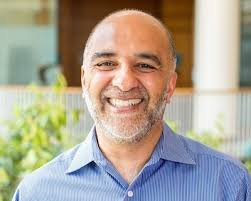
Dr. Taft Parsons III, Chief Psychiatric Officer at CVS Health, discusses his journey into behavioral health leadership and how it’s shaped his thoughts on healthcare’s impact.
Key Takeaways:
Chris Hemphill, Interviewer (AI Strategy & Data Science, Woebot Health):
Welcome to another Meeting of the Minds podcast. This is part of the series that we’re doing at Behavioral Health Tech 2024. We’re extremely thankful to have been out there podcasting, but there was somebody that we couldn’t quite catch out there on the floor. It was a whole lot going on and because we couldn’t do it in Phoenix, we are here at Tech Town Detroit on Wayne State University talking with Dr. Taft Parsons III, who is the chief psychiatric officer for CVS. So we’re really, first of all, proud to be filming this in Detroit, in an innovation center within Detroit. There’s a lot of personal meaning as you see all these. This is an innovation space where you’re going to see people in the background that are innovating and leading. But we want to zoom in with you, Dr. Parsons III, on a conversation that connects leadership and innovation to a personal background and personal story that drives the fuel behind it. Before we get into it, anything that you’d like the audience to come away from this conversation with?
Dr. Taft Parson III:
All right, well now since you did mention Detroit, I will have to say what up though to all my Detroiters that might tune in and listen to this podcast. So I think as I think about and thought about what we’d be talking about, I wanted to make sure that people who are listening to this podcast get a sense of where me, working for a payer and where payers sit in that healthcare space. I think when you’re there working with folks, what you do find is a lot of people, and in particular a lot of clinicians that are very passionate about the work that they do and from the place where they sit within healthcare are really trying to get the folks that are members of those health plans the best health outcomes possible. And so it’s a very different perspective that I think sometimes folks don’t really understand So hopefully folks tuning in will get a sense of what is it that health plans actually do as it relates to the health of populations and individuals that are members.
Chris Hemphill:
if we’re looking at from 90,000 feet, we can look at tech and things, we can look at various industries and say things, but it’s all about zooming in and understanding who is powering the right type of work and hopefully, Taft, a big reason I wanted to have you here is that concept of leading by example,. So that leads me to a starting question is can you talk about, you outlined a journey from just I’m a human being then into medical school, going into psychiatry and then moving into step-by-step into the role that you have today. Can you paint a picture for us and connect that personal story to why you’re making an impact today?
Dr. Taft Parson III:
Yeah, and I will say, you have some people that I went to med school with people, like “I wanted to be a doctor since I was five years old,” and I was not that guy. I knew that I enjoyed science and math, I had passion for it in high school. When I got to college, I said, I’m going to do something in science. So at that point, I did not like biology, so I said, “Let me get that out of the way first.” And I had a fantastic professor, Dr. Clark for G-Bio, and he just ignited a passion in me for the life sciences. And so I decided to be a bio major at that point and then still hadn’t decided to go to med school, got to my physiology class with Dr. Cook, who I will say probably had the biggest influence over my career path in life. He taught us how those organ systems work together, and I thought that was the coolest thing ever. And I said, “Where can I get more of that?” And it was going into medicine. So as a kid originally from Milwaukee, I was lucky. I got into the magnet school track, the gifted and talented track, which was a lottery system at that point. So I’m a hundred percent sure that there were a lot of other kids who were just as intelligent as me, who by the way of their name didn’t get drawn out of that metaphorical hat, never got the same shot that I got and ended up in less well-funded schools that didn’t provide the same set of resources and opportunities that I got. I’m glad that I got it and took advantage of it. Went to what they call Golda Meir and Morris Middle School and then Rufus King High School, which is an international baccalaureate high school. And that entire time from third grade through graduating high school, it’s geared towards talking about what are you going to do as an adult? How are you going to go to college? How are you going to be successful? Providing those really passionate teachers that influence your life in ways that you don’t understand until you become a middle-aged person and look back at it. I still remember Mr. Mitchell, my fourth grade teacher who graded me really hard. I was getting B’s and C’s in his class and at parent teacher conferences he said, “Look, I’m not giving you A’s not because you’re not good and you don’t know the material, but because you’re not working up to your potential.” He was the first African-American teacher that I had and he held me to a higher standard than other folks were holding me. And that helped. That was the kick in the butt that I needed to really take school more seriously.
Chris Hemphill: I know we have a whole story to tell, but can we zoom in on this and talk about how that made you feel in the moment of being held to that higher standard?
Dr. Taft Parson III:
Oh, I think as a fourth grader, I felt like it was unfair. I was like, “Why is he making it harder for me than for my other classmates?” But I think him already being in that position as, I don’t know if he was middle-aged at that point, as a middle-aged Black man looking at this kid that has potential and talent and saying, “What does this child need to really give him the push to live up to his potential?” I think that now I really appreciate that. At the time I was like, “I should be getting A’s ’cause I know this and I did well on the test,” but the manner in which somebody who can read what a child needs and provide that for them in a structure that is maybe not easy, but supportive and loving is a different type of experience than I think a lot of kids get. And so I was somebody who benefited from that by divine intervention or by chance. Either one, I think that it gave me the opportunity to kind of build on that over and over again to the place where I am today.
Chris Hemphill:
Yeah, there’s a lot to be thankful for in that and knowing that he knew something different about the world than you did. And I mean, I’m implying though that the difference is because of our skin color, because of various elements of the background, we ultimately do end up having to work harder.
Dr. Taft Parson III:
Yeah. I think it was made famous by Olivia Pope in that show… Shoot, what’s the name? What’s the of that show? I forgot. I’ll remember it in a minute.
Chris Hemphill:
We’ll flash it on the screen.
Dr. Taft Parson III:
But her dad said he did the whole kind of, you got to work twice as hard to get half as far. And I think that that was the first time that a lot of folks outside of the African-American community had heard something like that. But this is an accepted notion and a standard within our community that we are not going to get the same benefit of the doubt that a lot of other folks get. And so we have to demonstrate excellence to a level that other folks don’t have to demonstrate it. And I think Mr. Mitchell, being in that position, he didn’t necessarily say it at that time, but that’s what he was doing. He was saying, “Look, you may be performing as well as these other folks, but I’m going to grade you harder ’cause you need to step it up to the next level in order to be as successful as they are all going to be in life.” And so he was the first African-American teacher that I had and one of a very low number of male African-American teachers that I had. And I think probably the next time that I had multiple Black male teachers was in undergrad at Morehouse, which I think was another opportunity that came to me, someone unintentionally. I was a good student, I was an honor student. I had not at that point plan to go to an HBCU. And so now I have to give credit to John Singleton as a director. I thought to myself, I was like, “Well, I should probably apply to one HBCU while I’m applying to colleges.” Why did I pick Morehouse instead of Howard, instead of Tuskegee or any other HBCU? Well, it was because Boys in the Hood had come out and at the end of Boys in the Hood, Trey went to Morehouse. And I remember that. And that was the only reason that I picked Morehouse as the HBCU that I applied to as opposed to any of the other ones. And I will say that Morehouse changed my perspective on life. It changed the direction of my life. It has had everything to do with everything that I’ve become after that.
Chris Hemphill:
That leads me to a specific question then. How did Morehouse inspire you down this direction of psychiatry as opposed to all the other specialties that you could have focused on? All this building into a point, why the focus on the mind?
Dr. Taft Parson III:
So I’ll say Morehouse got me to medicine. It didn’t get me to psychiatry and Dr. Cook that I’ve mentioned, he was the one that kind of put together how these things that before I had been looking at under maybe a microscope like cell biology. I mean it’s cool to look at cells under a microscope. Dr. JK Haynes would probably rail against me for not saying that that was the coolest thing, but it was interesting, it was engaging, but more on kind of an intellectual esoteric level. When Dr. Cook would then talk about how do all these things operate together in organ systems, it became very tangible and real to me and it turned it into something that I became passionate about as opposed to intellectually interested in.
Chris Hemphill:
So I love the beginning of the answer when I asked about psychiatry, which was looking at the cells and systems and how they work together and everything like that because you keep, I guess, the smallest level of abstraction is physics when you’re looking at all the way down to the atomic level that these things could coalesce, themselves coalesce and then all of a sudden you get us and then it’s a question about how we relate to each other and work with each other and think, and I’m just curious about what the connection is the moment that you decided that you wanted to go into psychiatry as a field.
Dr. Taft Parson III:
So I became a psychiatrist on the day that I was told that I was not an emergency room physician. So I was going through med school at the time when the show ER was out. So tons of people wanted to be an ER doc. And so I thought I was either going to be an emergency room physician and I had done research in an anesthesiology lab at the medical school, so I thought I might go into anesthesiology, had my whole fourth year schedule set up to do that. And I started my fourth year with two ER rotations. My mentor called me into his office. He was the chair of the department and from his office door you could see the emergency room. And so he points out and he goes, “You see that guy over there?” There’s some resident, he’s running back and forth from trauma to trauma. He’s like sweating bullets. He’s all over the place. He said, “That guy, that guy’s an emergency doc.” He said, “Now you see this guy over here.” He pointed out this other ER resident who was calmly walking with a clipboard from patient to patient, taking his time. And he said, “You’re not that guy, you’re that guy.” And he said, “That guy is going to finish his ER residency and he’s going to go and work in a suburban urgent care center and he’s going to regret that he did emergency medicine.” He said, “You’re that guy. You’re good, but you don’t have the passion for it. You need to figure out something else that you’re more passionate about.” And so at that point, I had to reflect on other rotations that I had done and I had done my psychiatry rotations in a locked unit, county facility in Milwaukee. And there was six weeks of the most severely mentally ill folks you could imagine, people that had chronic psychosis, people that were on forensic confinements. And every day I was enthusiastic about the stuff that I had seen that day. And so I changed course and made the decision to go into psychiatry at that point. My interviews for psychiatric programs were interesting because people would look at my transcripts and they’d be like, “Well, it looks like you’re set up to go into ER or something else. Why are you going into psychiatry?” And so I had to tell that story over and over again and coming into, I matched at Henry Ford here in Detroit, which is literally a couple of blocks away from this building. And on starting residency, I really grew to learn that I made the right choice, particularly when I did my inpatient rotations. This is where you’re taking care of the people who are in the biggest crises of their lives. They have the most severe illnesses. And I would go every day and think to myself, these are my people. And not so much that intellectually I really enjoy these complex patients. I thought to myself, these are my people because I grew up around people that had illnesses like this. They reminded me of family members that I have. They reminded me of people that were in the neighborhood that I interacted with on a regular basis. And so to bring that mindset that these people remind me of people that I really care about, I think affects the way that I can interact with them in hopefully a very empathic manner, professional manner, and treat them with the dignity that people, despite their illness, that they deserve.
Chris Hemphill:
So when I think about that relationship and especially the way you painted the picture of him pointing to the man with the clipboard walking around, it-
Dr. Taft Parson III:
That was a little bit of a narcissistic injury. It hurt my feelings to have somebody tell me that I shouldn’t be doing the thing that I think I want to do. But sometimes you have to get that feedback and that criticism and you have to take it and you have to accept that that’s somebody who knows what they’re talking about and determine whether or not you’re going to follow that advice. So I had to do a little soul-searching after that.
Chris Hemphill:
Well, I apologize for prying into it.
Dr. Taft Parson III:
It’s all right.
Chris Hemphill:
something in that picture paints that story for me on the move from psychiatry and into these various leadership roles and various positions and what I think about someone who is walking and calmly taking in all this information, that so that they can generate that greatest impact more for a large number of people. So I know it was painful, but there’s something to respect in that, and I’m curious about that migration from psychiatry and into leadership and the motivations behind that.
Dr. Taft Parson III:
Yeah, I think when I started my psychiatry residency, you couldn’t possibly have convinced me that at some point I would want to be an administrator. Like many other med students, residents, like you think to yourself, that’s not what doctors do. Doctors take care of patients. I didn’t want to be within residency programs either in the last year or as an additional year, they have what’s called a chief resident. Chief resident does a lot of administrative tasks. They learn how to do administrative medicine. I had no interest in doing that when I was a resident at Henry Ford. So as I finished residency and went into practice for the same department, I stayed with Henry Ford and did mostly inpatient work ’cause those were the patients that I most enjoyed taking care of, the opportunity came up where the medical director for the facility left, and it was still fairly early in my career and I did not think initially that I should apply for the position, but a couple of people who were already in some leadership roles, they were like, “Taft, you should apply for this.” And I thought about it and I said, “Well, how many times am I going to get an opportunity like this? Let me just throw my head in the ring. Let me apply for it and we’ll see what happens.” Well, I did well in the interviews and probably a little bit too… It was a little early in my career, so they gave me a chance that I think they didn’t have to give me. And so I came into first medical leadership at this facility. So I was the medical director for Kingswood Hospital, part of Henry Ford Health System, and it was a place where I did a lot of my residency rotations. And so the staff working there, I think that they had a vested interest in making sure that I was also successful. So I wasn’t like an outsider coming in. It’s a place where I think I had a lot of folks who I’ll describe as they would be my aunties and uncles while they saw me as the kid who’s the doctor. And so they really wanted me to do well in this position. I think that that helped me to learn how to get people to a consensus of what needs to happen. It helped me to learn to collaborate across different teams. So if you’re a medical leader in a hospital, you got to work with nurses, you got to work with business people who have no medical training, and you got to get everybody moving in the same direction, especially on things that are clinically important to do the right way. And because these folks wanted to see me be successful, I think it was maybe a little bit easier for me to get folks to say like, “Look, Dr. Parsons says this is a thing that we need to do, so let’s figure out how we’re going to do it.” Very good experience. I went from taking care of one patient at a time to being responsible for how the facility runs for 80 to 100 patients at a time, which it’s a different perspective to say, “Okay, this program that we’re designing in boring meetings, we’re going to roll out and it’s going to affect 80 to 100 people who are there for five to seven days.” And so you rotate that 80 to 100 people every week or so through an entire year. That’s how many people this program really affects. And if you create good high quality programs, that’s how many people’s lives you improve by giving them good evidence-based effective care while they’re there in your facility. And so it’s a different perspective than taking care of one person at a time, but I think that, an appreciation for how you could affect a lot of people through those boring meetings, that gave me an appreciation for what administrative medicine could be. And that set me on this path to say, “Yes, I can be a pencil pushing administrator for the rest of my life because look at the wide-ranging impact that these policies and these programs have on a lot of people’s lives.”
Chris Hemphill:
Impact is such a strong word with me, especially when I think a lot of the fear that comes from moving from a clinician into administration is you don’t get the visibility of that impact immediately. So it makes me curious in leadership positions and things like that, what would be the accomplishment that when you think about the impact that you had, what’s the accomplishment that you’re most proud of as a healthcare leader?
Dr. Taft Parson III:
I think on some level, there’s nothing like the reinforcement that you get from an individual patient that you treat, although I don’t think that that’s the biggest thing that I’ve done. So let me give a small example. So I was at a holiday party at the Detroit Golf Club one day, and one of my friends who was there, he said, “Hey, I got to introduce you to this other guy.” And so he introduces me to this gentleman and the guy goes, “You’re Parsons. You’re Dr. Parsons.” And he says, “You saved my daughter’s life.” And so then he starts to tell me the whole story about how his daughter a couple of years earlier had been admitted to Kingswood Hospital. And the conversation that I had with him and his spouse at the time about what it means to have a young adult child having their first break of a major mental illness and what needs to happen and what they need to do. And this isn’t something that, up until that moment, I had thought of as anything other than me just doing the day’s work. But to have somebody come back and talk about how big of a difference that made in their life, it really hits home. So there’s that individual thing, and I mean, there’s nothing more reinforcing than that. And so I think that that is why a lot of people who go into healthcare, they like that individual one-on-one, I’m taking care of a patient sort of interaction. I think it helps clinicians, doctors, nurses, tolerate a lot of a bad work environment because you do get that reinforcement from the people who really benefit and appreciate the care that they get. That said, I have come to these insurance companies and created programs that affect millions of members. And so we come up with initiatives like we’ve had a suicide prevention and reduction initiative at CVS going for the last few years, actually started before I came. And so we’ve been tracking these multiple things that we do for the membership who have had either a suicide attempt or found to be at high risk for suicide in these reach outs that we do, screenings that we do, and we’re having good results with showing that we’re reducing across millions of people the incidence of suicide and suicide attempts. Now you have to be able to appreciate in a more abstract sense how that’s benefiting people because there’s not that individual one-to-one connection that you’ll make with somebody saying, “You Dr. Parsons saved my life or saved my child’s life.” And so it’s a different way to appreciate the work that you do. And I think not everybody gets that, but I do. And so I do get fulfillment from these larger programs, but I understand and I see with examples like that small one, there’s nothing like getting that reinforcement of some real big difference that you made in one or two people’s lives.
Chris Hemphill:
That leads me to a question that I got. I stalked you a little bit before this meeting. I was out there at the Behavioral Health Tech. They had a pickleball game set up, and I was out there doing interviews and I ran into Dr. Ayo Gathing, she’s a regional vice president and chief medical officer at Humana, and she mentioned that we had some overlap. And I said, “Hey, so Ayo, if you’re watching this, you’ve got to come on the podcast next.” So that’s an obligation now, but one question that she had and is really tightly tied with what you were talking about as far as the personal motivation and what you get back from hearing from individual patients. So behind these programs that impact millions of people, she asked me to ask you, what’s the why behind your leadership and innovation?
Dr. Taft Parson III:
All right, and first, and we talked about it before we started recording, so I’m going to just cheerlead for Dr Gathing for a minute because I always, one of my favorite people that I’ve worked with, I Ayo is one of my favorite people and I will say that everybody that I introduce her to, they love her and they see that passion and that fire in her that I also see.
Chris Hemphill:
The things that you just said about her, they resonate. It was amazing the amount of energy that she had. She was just like… Ayo, if you like what you heard and you want to jump on with us, we’re looking forward to it.
Dr. Taft Parson III:
All right. Well, we joke that she likes to follow me around. So she will be on the podcast and make that pledge. So now she’s obligated.
Chris Hemphill:
Awesome, awesome.
Dr. Taft Parson III:
So what’s the why for what I do? And I think it goes along with being able to appreciate that more abstract improvement that you can bring to healthcare. Within the behavioral health space there’s a very traditional sense that every treatment, every case is very individualistic. And when I started in residency, there was a movement to bring psychiatry back to the rest of medicine. And so the challenge is that while things like cardiology and nephrology had years and years of experience developing these pretty sophisticated outcome measures of what does good look like in these other specialties, that didn’t really exist in psychiatry because everything had been this very special relationship confidential. You have the therapist or psychiatrist and the patient, and what goes on between those two is very difficult to measure. And so we didn’t and don’t have a lot of fantastic measures of what does good quality behavioral health practice look like? What does good quality treatment look like we have this responsibility, this broad responsibility to take care of a population of people. And so in order to do that from a behavioral health perspective, we have to know first off, what does good look like? And second off, how do we know that people are getting that good treatment? And so as I’ve moved into this health plan, population health from a behavioral health perspective roles that I’ve had over the last several years, really trying to figure out how do we ensure that the members of our health plans are getting good evidence-based and effective care, and how can we demonstrate that and how can we demonstrate improved health outcomes? That’s what drives me in these sorts of roles because there’s much work to be done, but it’s good work, it’s good worthwhile work. So people propose these very simplistic solutions to how do you get good out of healthcare and health plans and healthcare in the US is this system that has developed over many decades And so the task is how do we make it better? How do I do better this year than we did last year? How did we do better last year than we did the year before? And there’s a ton of work to be done there, and I get satisfaction from making it better this year and next year compared to last year and the year before.
Chris Hemphill:
So you pose a very difficult question, which is in this mental health space and in a space where we’re looking at populations, I’m going to ask you, what does good look like? And maybe you can think about how other people can ask themselves the same questions.
Dr. Taft Parson III:
Okay. And I will say, if you think about crawl, walk, run as this progression of getting better at something, behavioral health, when we look at how do we judge good is probably still in the crawl phase. So we’ve gotten to the point I think as an industry within healthcare to where people say, “Hey, you got to measure what you’re doing in order to be able to show that good things are happening.” So we have patient-reported outcome measures like PHQ-9, [inaudible ] seven, there’s a bunch of them, and go into specialty conditions. And so the responses by a person on those scales are somewhat subjective, but you amass enough of them over time, over a huge population, they become objective. So for one person, how they’re doing that day on a PHQ-9, it’s their subjective report of how they feel, but you take 30 million of those and it becomes very repeatable, it becomes statistically valid. And so it becomes a very objective measure of either improving or worsening of depression symptoms. Measuring things is necessary in good evidence-based care, but it is not the same as good evidence-based care. So we have standards that are put out by our respective professional organizations of what should happen in depression treatment. Part of it is measuring how people are doing periodically over time, but that’s not the only thing. If you’re a psychiatrist, there’s recommendations about medications. If you’re a therapist, there’s recommendations about therapeutic techniques. And what we don’t have is a good way to demonstrate that those things are happening behind that closed office door or virtual office door. So there are limitations to the large data set that we get. More recently because of electronic medical records and some of the capabilities that they’ve developed to send data back and forth, some companies are giving us information like, “Hey, for your members, this is how much better the PHQ-9s get once people get in treatment.” So that is a measure of improvement. Once somebody’s in treatment still doesn’t necessarily mean that they got evidence-based techniques, it means that they got better. So you say, “Well, they probably got better because they got evidence-based treatment, but it’s not definite.” And so you can see that we’re getting better at getting closer to being able to tell are the clinicians actually doing those things that we know are effective treatments, but we’re not quite there yet in the same way that they are in some other specialties. We know when people actually get better, they have improved health outcomes, not just on the behavioral health side of things, but also on the physical health side of things. So diabetics that have depression, when that depression gets treated well, their diabetes gets managed better, their diabetes outcomes are better. And so that’s where we’re really trying to get to at a large scale. And like I said, if it was easy, we would already be doing it. There are different challenges when you talk about a big company like the group of folks that are what we call aggregators. They aggregate a lot of providers underneath a corporate umbrella and do some of the office functions for them. What they can do is very different than a therapist or a psychiatrist that is a sole practitioner, just seeing a caseload of patients who may not even at this point have an electronic medical record. So the capabilities are going to be very different when you’re talking about these big companies versus what still makes up a large part of our network of providers is people that are in very small offices with not a lot of sophisticated EMR capability.
Chris Hemphill:
Well, I got to say, whenever I was fiddling with the cameras a little bit earlier, you said, “Don’t let perfects be the enemy of done.” And that honestly, it resonates because if you look at my LinkedIn, I am critical of a PHQ-9 of various measures because of the simplicity. But look like with those being the best data available in a lot of scenarios, that’s just what we have to work with.
Dr. Taft Parson III:
So there’s kind of saying, “Well, that may not be the perfect thing for this person’s type of depression, but because it’s almost ubiquitous and everybody uses it, we have a lot of information to judge it against.” And so therefore it might not be perfect, but it’s good enough for us to really get much better information if that’s what we use.
Chris Hemphill:
Another thing I wanted to get into was we’re talking about the way people use these measurements or the way people perceive the differences between and lying between physical and mental health. And I got another question ahead of this interview about what are the sacred cows in the industry that you see as probably at risk for changing over the next three, four or five years?
Dr. Taft Parson III:
I think in behavioral health, one of the things that is, I’ll say a cultural thing within behavioral health is the privacy between that clinician and the patient. And it has traditionally been treated like something that’s more private than what would occur between like a primary care physician and the patient. And there are situations in which either by regulation or by professional practice, some things are still treated as “more private” than a usual healthcare discussion. I think that there are situations in which that actually is detrimental to healthcare. So a lot of times the example that I’ll give is, and I’ll give two, one is if you have a psychiatrist treating somebody for let’s say bipolar disorder, common medication to prescribe would be a mood stabilizer like lithium. Lithium can have effects on the kidney and thyroid. Now if that patient says to their psychiatrist, “I don’t want you to tell my primary care provider about this, that PCP may not know that the high blood pressure medication that they’re prescribing that works through the kidneys may interact with the lithium and actually cause kidney damage and change the levels of the lithium that the person is on. And so this is an example of something where, yes, the behavioral health care is with the behavioral health specialist, the PCP is managing physical health conditions, but it’s the same body. That patient, that individual is the same person who’s taking in both medications. And so it is very important for the PCP to know about that treatment. The other situation is one where there is currently regulation that prevents some discussions and that’s around substance use disorders. There’s a federal rule that does say they are more private than the usual HIPAA protected conversations that all healthcare providers and their patients have. And so if you think about a substance use disorder, and we will take alcohol use disorder, it has multiple, multiple effects on many organ systems within the body. It increases the risk of multiple types of cancer, has effects on the liver. And so it is part and parcel to that PCP’s understanding of how to manage their patient to know that that patient has an alcohol use disorder. But there are limitations to the alcohol use disorder treatment team, the people treating that condition, communicating back with the PCP, particularly if that patient does not want that communication to happen and it’s detrimental to the overall health outcome. So I think that there are these privacy issues that have existed for a long time in behavioral health that are detrimental actually to the overall health outcomes and it’s becoming a bit less of a sacred cow. People are starting to realize that yes, that same individual with a mental health condition and a physical health condition, those clinicians need to be able to talk to each other.
Chris Hemphill:
So a lot of the conversation happened around interoperability is around breaking down silos technologically established, but this one sounds like it’s a cultural element.
Dr. Taft Parson III:
But it does expand into the technological side because you have a lot of firewalls that are created to protect those limitations. And so this is something that I’ve had to deal with at Henry Ford, at Molina, at Humana, and now at CVS Aetna is figuring out where do you have a firewall that by regulation still really needs to exist and where do you have firewalls that exist because of historical practices? It can be a limitation to the way that information flows back and forth even within a common electronic medical record.
Chris Hemphill:
I love having conversations, honestly. I hope that the guests and fans I get that is love talking about the barriers that need to come down and ideas that need to change. . But you’ve been bringing up some excellent points about the need to focus on quality as part of that value equation. And it just makes me wonder what would you say is missing, what nuance it might be missing from the overall conversations happening about value-based care?
Dr. Taft Parson III:
I think that there… Well first off, yes, it’s been a recent soapbox of mine because for whatever reason, value-based care has become like the IT thing in behavioral health. The question is what do you mean by value-based care? What folks mean on the primary care side can be very different than what folks mean on the behavioral health side. The capabilities and what goes into a value-based care contract on the physical health side is going to be very different than what can possibly even go into it on a behavioral health side. There are multiple different levels and types of value-based care. So at its most basic, we have things that we could, there’s several terms for it, but pay for click or did you do a thing? So we as the insurance plan may say, “Well, we value screening for depression in all of our memberships. So if you screen for depression and tell us that you do it in your claim, we’ll pay you a little bit extra money.” That may be that’s a, did you do a thing sort of value-based care? The next level is we have these standard sets of measures like HEDIS measures, Star measures for Medicare, and if you do well on these quality measures, we will pay you an extra amount of money. So pay for quality bonus, taking then upside risk. So if you manage your population of patients that have our health plans and you take care of them at a cost that’s less than what we would otherwise pay compared to the rest of our network and hit some of these quality measures, we’ll share that savings. So it’s taking upside risk. , I think that what value-based care looks like in the behavioral health space is more on that either pay for a did you do a thing that we value as a company or pay for quality scores? I think those are things where the size of a behavioral health company is appropriate to do that, taking that shared savings and that upside and down, so full capitation, I don’t think that I’ve seen behavioral health companies that are large enough to do that. And it becomes a problem of how do you attribute the savings to the behavioral health intervention. So oftentimes that member will have a value-based contract with the PCP practice that they’re in. And so the PCP practice is going to want to make sure that they get all the credit that they deserve. And if you take that earlier example of somebody that’s got depression and diabetes and the diabetes gets managed better, how much credit do you give the behavioral health team, which is a difficult thing to do because there’s not a universal consensus on how big of an influence behavioral health management has on the outcomes with physical health conditions.
Chris Hemphill:
in our conversation, we started from your personal journey and we started from the time before you were in healthcare and healthcare administration and with the kinds of changes that you see and the difference that you’re making at that executive level, it always makes me reflect back, even in my role in data science, my mom asked me what am I learning about the stuff that we’re analyzing at Wobot? And there actually has been some benefit back to her and back to my family just by working in data science in this field. It just makes me wonder, your message for people outside of healthcare that are trying to navigate this complex system, what’s your message for how people can overcome a lot of the barriers and difficulties that they’re going to face in their healthcare journeys?
Dr. Taft Parson III:
Well, I think it’s… All right, there’s not a simple answer to that. I think if you’re talking about somebody who is simply functioning as a patient getting healthcare, you need to be connected to a primary care provider and a primary care team. They are the quarterbacks, they’re the ones who are there to help navigate some of the complexity within the healthcare system. And if you’re not engaging with a primary care provider, you will be at a detriment when you actually need healthcare for a specific condition or in an emergency. So just as a general patient, if you don’t have a primary care provider, you need to get one. Those are the people that are the quarterbacks of healthcare. They are the ones that help their teams, their staff help navigate some of these challenges, things like insurance approvals, things like how do you schedule multiple tests on a given day? Do you need to see a specialist or is this something that the PCP can handle? So those things, they are there in part to make sure that the healthcare that you get is as efficient as it can be and to help you navigate that.
Chris Hemphill:
Well, this forces our next question because like we’re talking about agreement and all these workarounds, everything like that, but we’re going to give you a special power that will let you do anything that you want now. You could change any one thing about healthcare. So yeah, you only get one thing, but what would that one thing that you would change be?
Dr. Taft Parson III:
The one thing that I would change is, I think, and you see it here compared to other countries, is that we put healthcare and what we count as healthcare into a box, but we know that some of the things that affect people’s health the most are things that are not “traditional” healthcare. So the ability to figure out how to pull in things like what we call social determinants of health, nutrition, exercise, pulling those things into the larger umbrella of actual healthcare so that when a doctor has a patient who has unstable housing, that there is actually a resource to easily point them to get that problem solved, that’s going to improve their health way more than any particular medication that a doctor can prescribe. And so our system is really not set up to address the things that actually, in a very practical sense affect your health more so than did you get the right diagnosis, did you get prescribed the right medication? And if I could wave a magic wand, it would be to pull those things in and to create that infrastructure at a large scale to deal with that.
Chris Hemphill:
Tactical question. Let’s say the infrastructure is there and the data are there, and there is a way to know, like it exists in the system somewhere that this person has the inability to pay their power bill next month, but there’s resources available. How do you let the doctor know in that scenario so that they can act on it?
Dr. Taft Parson III:
Oh, in that scenario, the doctor would need to know because somebody either within that office or within the larger maybe at a health plan would already know about that and would be reaching out and say, “Hey, we see that the last four months, you only paid part of your power bill and we see that you may be having some winter is coming and we see that it might be hard for you to keep the power. I’m sure that’s stressing you out. We have this program where we can make sure that you have your heat and lights on now.” Right now, programs like that exist, but they’re not easy to get to, they’re not easy to connect the people that need it to the actual resource. And a lot of times there’s just not enough of it either. So yes, programs to provide housing exists, but they tend to be very small. They tend to be very local. They tend to be hard to get into. And so because of that, a large segment of folks that are in that dire need suffer quite a bit. And when you don’t know where you’re going to sleep the next day or the next week, you’re not worrying about picking up your script from CVS. And so we already know that these health outcomes with all these issues that people face in their day-to-day lives affects their health outcome way more than whether or not they saw the doctor and the doctor made the right diagnosis and gave the right prescription.
Chris Hemphill:
So it’s extremely hard, but I believe in the art of the possible on that one. And even if you can’t do it with a magic wand, it’s a fight worth fighting for. With that, Taft, I know people, they listen to you. And I’m curious about anybody who watches this interview and wants to keep up or understand what you’re doing, what your moves are, and what you’re thinking about, what’s a good way for them to follow you on social?
Dr. Taft Parson III:
Probably the only social that I actually have is LinkedIn. So that is where I post stuff relevant to the discussion that we’ve had today, including sometimes personal anecdotes and things that have popped up if I see that it is useful in forwarding some healthcare related thing that I’m working on. So that’s the place to find me.
Chris Hemphill:
Well, I appreciate that and honestly, I appreciate what you share on LinkedIn because I took this as an opportunity to dig deep on a lot of the nuance that I’ve seen you share. And that’s what makes me happy out with this conversation is the fact that we can dig in deep on nuance and it’s happening at least once a week, at least a couple of times a week on LinkedIn. All right, with that, well thank you very much everybody for sticking around with us for this conversation. Hope you got a lot of value out of it, but also a lot of power and thought that you can start taking into your own roles. With that thank you very much.
Dr. Taft Parson III:
All right, thank you all, and pleasure.
Summary:
Dr. Taft Parsons III, Chief Psychiatric Officer at CVS Health, discusses his journey into behavioral health leadership and how it’s shaped his thoughts on healthcare’s impact.
Key Takeaways:
Chris Hemphill, Interviewer (AI Strategy & Data Science, Woebot Health):
Welcome to another Meeting of the Minds podcast. This is part of the series that we’re doing at Behavioral Health Tech 2024. We’re extremely thankful to have been out there podcasting, but there was somebody that we couldn’t quite catch out there on the floor. It was a whole lot going on and because we couldn’t do it in Phoenix, we are here at Tech Town Detroit on Wayne State University talking with Dr. Taft Parsons III, who is the chief psychiatric officer for CVS. So we’re really, first of all, proud to be filming this in Detroit, in an innovation center within Detroit. There’s a lot of personal meaning as you see all these. This is an innovation space where you’re going to see people in the background that are innovating and leading. But we want to zoom in with you, Dr. Parsons III, on a conversation that connects leadership and innovation to a personal background and personal story that drives the fuel behind it. Before we get into it, anything that you’d like the audience to come away from this conversation with?
Dr. Taft Parson III:
All right, well now since you did mention Detroit, I will have to say what up though to all my Detroiters that might tune in and listen to this podcast. So I think as I think about and thought about what we’d be talking about, I wanted to make sure that people who are listening to this podcast get a sense of where me, working for a payer and where payers sit in that healthcare space. I think when you’re there working with folks, what you do find is a lot of people, and in particular a lot of clinicians that are very passionate about the work that they do and from the place where they sit within healthcare are really trying to get the folks that are members of those health plans the best health outcomes possible. And so it’s a very different perspective that I think sometimes folks don’t really understand So hopefully folks tuning in will get a sense of what is it that health plans actually do as it relates to the health of populations and individuals that are members.
Chris Hemphill:
if we’re looking at from 90,000 feet, we can look at tech and things, we can look at various industries and say things, but it’s all about zooming in and understanding who is powering the right type of work and hopefully, Taft, a big reason I wanted to have you here is that concept of leading by example,. So that leads me to a starting question is can you talk about, you outlined a journey from just I’m a human being then into medical school, going into psychiatry and then moving into step-by-step into the role that you have today. Can you paint a picture for us and connect that personal story to why you’re making an impact today?
Dr. Taft Parson III:
Yeah, and I will say, you have some people that I went to med school with people, like “I wanted to be a doctor since I was five years old,” and I was not that guy. I knew that I enjoyed science and math, I had passion for it in high school. When I got to college, I said, I’m going to do something in science. So at that point, I did not like biology, so I said, “Let me get that out of the way first.” And I had a fantastic professor, Dr. Clark for G-Bio, and he just ignited a passion in me for the life sciences. And so I decided to be a bio major at that point and then still hadn’t decided to go to med school, got to my physiology class with Dr. Cook, who I will say probably had the biggest influence over my career path in life. He taught us how those organ systems work together, and I thought that was the coolest thing ever. And I said, “Where can I get more of that?” And it was going into medicine. So as a kid originally from Milwaukee, I was lucky. I got into the magnet school track, the gifted and talented track, which was a lottery system at that point. So I’m a hundred percent sure that there were a lot of other kids who were just as intelligent as me, who by the way of their name didn’t get drawn out of that metaphorical hat, never got the same shot that I got and ended up in less well-funded schools that didn’t provide the same set of resources and opportunities that I got. I’m glad that I got it and took advantage of it. Went to what they call Golda Meir and Morris Middle School and then Rufus King High School, which is an international baccalaureate high school. And that entire time from third grade through graduating high school, it’s geared towards talking about what are you going to do as an adult? How are you going to go to college? How are you going to be successful? Providing those really passionate teachers that influence your life in ways that you don’t understand until you become a middle-aged person and look back at it. I still remember Mr. Mitchell, my fourth grade teacher who graded me really hard. I was getting B’s and C’s in his class and at parent teacher conferences he said, “Look, I’m not giving you A’s not because you’re not good and you don’t know the material, but because you’re not working up to your potential.” He was the first African-American teacher that I had and he held me to a higher standard than other folks were holding me. And that helped. That was the kick in the butt that I needed to really take school more seriously.
Chris Hemphill: I know we have a whole story to tell, but can we zoom in on this and talk about how that made you feel in the moment of being held to that higher standard?
Dr. Taft Parson III:
Oh, I think as a fourth grader, I felt like it was unfair. I was like, “Why is he making it harder for me than for my other classmates?” But I think him already being in that position as, I don’t know if he was middle-aged at that point, as a middle-aged Black man looking at this kid that has potential and talent and saying, “What does this child need to really give him the push to live up to his potential?” I think that now I really appreciate that. At the time I was like, “I should be getting A’s ’cause I know this and I did well on the test,” but the manner in which somebody who can read what a child needs and provide that for them in a structure that is maybe not easy, but supportive and loving is a different type of experience than I think a lot of kids get. And so I was somebody who benefited from that by divine intervention or by chance. Either one, I think that it gave me the opportunity to kind of build on that over and over again to the place where I am today.
Chris Hemphill:
Yeah, there’s a lot to be thankful for in that and knowing that he knew something different about the world than you did. And I mean, I’m implying though that the difference is because of our skin color, because of various elements of the background, we ultimately do end up having to work harder.
Dr. Taft Parson III:
Yeah. I think it was made famous by Olivia Pope in that show… Shoot, what’s the name? What’s the of that show? I forgot. I’ll remember it in a minute.
Chris Hemphill:
We’ll flash it on the screen.
Dr. Taft Parson III:
But her dad said he did the whole kind of, you got to work twice as hard to get half as far. And I think that that was the first time that a lot of folks outside of the African-American community had heard something like that. But this is an accepted notion and a standard within our community that we are not going to get the same benefit of the doubt that a lot of other folks get. And so we have to demonstrate excellence to a level that other folks don’t have to demonstrate it. And I think Mr. Mitchell, being in that position, he didn’t necessarily say it at that time, but that’s what he was doing. He was saying, “Look, you may be performing as well as these other folks, but I’m going to grade you harder ’cause you need to step it up to the next level in order to be as successful as they are all going to be in life.” And so he was the first African-American teacher that I had and one of a very low number of male African-American teachers that I had. And I think probably the next time that I had multiple Black male teachers was in undergrad at Morehouse, which I think was another opportunity that came to me, someone unintentionally. I was a good student, I was an honor student. I had not at that point plan to go to an HBCU. And so now I have to give credit to John Singleton as a director. I thought to myself, I was like, “Well, I should probably apply to one HBCU while I’m applying to colleges.” Why did I pick Morehouse instead of Howard, instead of Tuskegee or any other HBCU? Well, it was because Boys in the Hood had come out and at the end of Boys in the Hood, Trey went to Morehouse. And I remember that. And that was the only reason that I picked Morehouse as the HBCU that I applied to as opposed to any of the other ones. And I will say that Morehouse changed my perspective on life. It changed the direction of my life. It has had everything to do with everything that I’ve become after that.
Chris Hemphill:
That leads me to a specific question then. How did Morehouse inspire you down this direction of psychiatry as opposed to all the other specialties that you could have focused on? All this building into a point, why the focus on the mind?
Dr. Taft Parson III:
So I’ll say Morehouse got me to medicine. It didn’t get me to psychiatry and Dr. Cook that I’ve mentioned, he was the one that kind of put together how these things that before I had been looking at under maybe a microscope like cell biology. I mean it’s cool to look at cells under a microscope. Dr. JK Haynes would probably rail against me for not saying that that was the coolest thing, but it was interesting, it was engaging, but more on kind of an intellectual esoteric level. When Dr. Cook would then talk about how do all these things operate together in organ systems, it became very tangible and real to me and it turned it into something that I became passionate about as opposed to intellectually interested in.
Chris Hemphill:
So I love the beginning of the answer when I asked about psychiatry, which was looking at the cells and systems and how they work together and everything like that because you keep, I guess, the smallest level of abstraction is physics when you’re looking at all the way down to the atomic level that these things could coalesce, themselves coalesce and then all of a sudden you get us and then it’s a question about how we relate to each other and work with each other and think, and I’m just curious about what the connection is the moment that you decided that you wanted to go into psychiatry as a field.
Dr. Taft Parson III:
So I became a psychiatrist on the day that I was told that I was not an emergency room physician. So I was going through med school at the time when the show ER was out. So tons of people wanted to be an ER doc. And so I thought I was either going to be an emergency room physician and I had done research in an anesthesiology lab at the medical school, so I thought I might go into anesthesiology, had my whole fourth year schedule set up to do that. And I started my fourth year with two ER rotations. My mentor called me into his office. He was the chair of the department and from his office door you could see the emergency room. And so he points out and he goes, “You see that guy over there?” There’s some resident, he’s running back and forth from trauma to trauma. He’s like sweating bullets. He’s all over the place. He said, “That guy, that guy’s an emergency doc.” He said, “Now you see this guy over here.” He pointed out this other ER resident who was calmly walking with a clipboard from patient to patient, taking his time. And he said, “You’re not that guy, you’re that guy.” And he said, “That guy is going to finish his ER residency and he’s going to go and work in a suburban urgent care center and he’s going to regret that he did emergency medicine.” He said, “You’re that guy. You’re good, but you don’t have the passion for it. You need to figure out something else that you’re more passionate about.” And so at that point, I had to reflect on other rotations that I had done and I had done my psychiatry rotations in a locked unit, county facility in Milwaukee. And there was six weeks of the most severely mentally ill folks you could imagine, people that had chronic psychosis, people that were on forensic confinements. And every day I was enthusiastic about the stuff that I had seen that day. And so I changed course and made the decision to go into psychiatry at that point. My interviews for psychiatric programs were interesting because people would look at my transcripts and they’d be like, “Well, it looks like you’re set up to go into ER or something else. Why are you going into psychiatry?” And so I had to tell that story over and over again and coming into, I matched at Henry Ford here in Detroit, which is literally a couple of blocks away from this building. And on starting residency, I really grew to learn that I made the right choice, particularly when I did my inpatient rotations. This is where you’re taking care of the people who are in the biggest crises of their lives. They have the most severe illnesses. And I would go every day and think to myself, these are my people. And not so much that intellectually I really enjoy these complex patients. I thought to myself, these are my people because I grew up around people that had illnesses like this. They reminded me of family members that I have. They reminded me of people that were in the neighborhood that I interacted with on a regular basis. And so to bring that mindset that these people remind me of people that I really care about, I think affects the way that I can interact with them in hopefully a very empathic manner, professional manner, and treat them with the dignity that people, despite their illness, that they deserve.
Chris Hemphill:
So when I think about that relationship and especially the way you painted the picture of him pointing to the man with the clipboard walking around, it-
Dr. Taft Parson III:
That was a little bit of a narcissistic injury. It hurt my feelings to have somebody tell me that I shouldn’t be doing the thing that I think I want to do. But sometimes you have to get that feedback and that criticism and you have to take it and you have to accept that that’s somebody who knows what they’re talking about and determine whether or not you’re going to follow that advice. So I had to do a little soul-searching after that.
Chris Hemphill:
Well, I apologize for prying into it.
Dr. Taft Parson III:
It’s all right.
Chris Hemphill:
something in that picture paints that story for me on the move from psychiatry and into these various leadership roles and various positions and what I think about someone who is walking and calmly taking in all this information, that so that they can generate that greatest impact more for a large number of people. So I know it was painful, but there’s something to respect in that, and I’m curious about that migration from psychiatry and into leadership and the motivations behind that.
Dr. Taft Parson III:
Yeah, I think when I started my psychiatry residency, you couldn’t possibly have convinced me that at some point I would want to be an administrator. Like many other med students, residents, like you think to yourself, that’s not what doctors do. Doctors take care of patients. I didn’t want to be within residency programs either in the last year or as an additional year, they have what’s called a chief resident. Chief resident does a lot of administrative tasks. They learn how to do administrative medicine. I had no interest in doing that when I was a resident at Henry Ford. So as I finished residency and went into practice for the same department, I stayed with Henry Ford and did mostly inpatient work ’cause those were the patients that I most enjoyed taking care of, the opportunity came up where the medical director for the facility left, and it was still fairly early in my career and I did not think initially that I should apply for the position, but a couple of people who were already in some leadership roles, they were like, “Taft, you should apply for this.” And I thought about it and I said, “Well, how many times am I going to get an opportunity like this? Let me just throw my head in the ring. Let me apply for it and we’ll see what happens.” Well, I did well in the interviews and probably a little bit too… It was a little early in my career, so they gave me a chance that I think they didn’t have to give me. And so I came into first medical leadership at this facility. So I was the medical director for Kingswood Hospital, part of Henry Ford Health System, and it was a place where I did a lot of my residency rotations. And so the staff working there, I think that they had a vested interest in making sure that I was also successful. So I wasn’t like an outsider coming in. It’s a place where I think I had a lot of folks who I’ll describe as they would be my aunties and uncles while they saw me as the kid who’s the doctor. And so they really wanted me to do well in this position. I think that that helped me to learn how to get people to a consensus of what needs to happen. It helped me to learn to collaborate across different teams. So if you’re a medical leader in a hospital, you got to work with nurses, you got to work with business people who have no medical training, and you got to get everybody moving in the same direction, especially on things that are clinically important to do the right way. And because these folks wanted to see me be successful, I think it was maybe a little bit easier for me to get folks to say like, “Look, Dr. Parsons says this is a thing that we need to do, so let’s figure out how we’re going to do it.” Very good experience. I went from taking care of one patient at a time to being responsible for how the facility runs for 80 to 100 patients at a time, which it’s a different perspective to say, “Okay, this program that we’re designing in boring meetings, we’re going to roll out and it’s going to affect 80 to 100 people who are there for five to seven days.” And so you rotate that 80 to 100 people every week or so through an entire year. That’s how many people this program really affects. And if you create good high quality programs, that’s how many people’s lives you improve by giving them good evidence-based effective care while they’re there in your facility. And so it’s a different perspective than taking care of one person at a time, but I think that, an appreciation for how you could affect a lot of people through those boring meetings, that gave me an appreciation for what administrative medicine could be. And that set me on this path to say, “Yes, I can be a pencil pushing administrator for the rest of my life because look at the wide-ranging impact that these policies and these programs have on a lot of people’s lives.”
Chris Hemphill:
Impact is such a strong word with me, especially when I think a lot of the fear that comes from moving from a clinician into administration is you don’t get the visibility of that impact immediately. So it makes me curious in leadership positions and things like that, what would be the accomplishment that when you think about the impact that you had, what’s the accomplishment that you’re most proud of as a healthcare leader?
Dr. Taft Parson III:
I think on some level, there’s nothing like the reinforcement that you get from an individual patient that you treat, although I don’t think that that’s the biggest thing that I’ve done. So let me give a small example. So I was at a holiday party at the Detroit Golf Club one day, and one of my friends who was there, he said, “Hey, I got to introduce you to this other guy.” And so he introduces me to this gentleman and the guy goes, “You’re Parsons. You’re Dr. Parsons.” And he says, “You saved my daughter’s life.” And so then he starts to tell me the whole story about how his daughter a couple of years earlier had been admitted to Kingswood Hospital. And the conversation that I had with him and his spouse at the time about what it means to have a young adult child having their first break of a major mental illness and what needs to happen and what they need to do. And this isn’t something that, up until that moment, I had thought of as anything other than me just doing the day’s work. But to have somebody come back and talk about how big of a difference that made in their life, it really hits home. So there’s that individual thing, and I mean, there’s nothing more reinforcing than that. And so I think that that is why a lot of people who go into healthcare, they like that individual one-on-one, I’m taking care of a patient sort of interaction. I think it helps clinicians, doctors, nurses, tolerate a lot of a bad work environment because you do get that reinforcement from the people who really benefit and appreciate the care that they get. That said, I have come to these insurance companies and created programs that affect millions of members. And so we come up with initiatives like we’ve had a suicide prevention and reduction initiative at CVS going for the last few years, actually started before I came. And so we’ve been tracking these multiple things that we do for the membership who have had either a suicide attempt or found to be at high risk for suicide in these reach outs that we do, screenings that we do, and we’re having good results with showing that we’re reducing across millions of people the incidence of suicide and suicide attempts. Now you have to be able to appreciate in a more abstract sense how that’s benefiting people because there’s not that individual one-to-one connection that you’ll make with somebody saying, “You Dr. Parsons saved my life or saved my child’s life.” And so it’s a different way to appreciate the work that you do. And I think not everybody gets that, but I do. And so I do get fulfillment from these larger programs, but I understand and I see with examples like that small one, there’s nothing like getting that reinforcement of some real big difference that you made in one or two people’s lives.
Chris Hemphill:
That leads me to a question that I got. I stalked you a little bit before this meeting. I was out there at the Behavioral Health Tech. They had a pickleball game set up, and I was out there doing interviews and I ran into Dr. Ayo Gathing, she’s a regional vice president and chief medical officer at Humana, and she mentioned that we had some overlap. And I said, “Hey, so Ayo, if you’re watching this, you’ve got to come on the podcast next.” So that’s an obligation now, but one question that she had and is really tightly tied with what you were talking about as far as the personal motivation and what you get back from hearing from individual patients. So behind these programs that impact millions of people, she asked me to ask you, what’s the why behind your leadership and innovation?
Dr. Taft Parson III:
All right, and first, and we talked about it before we started recording, so I’m going to just cheerlead for Dr Gathing for a minute because I always, one of my favorite people that I’ve worked with, I Ayo is one of my favorite people and I will say that everybody that I introduce her to, they love her and they see that passion and that fire in her that I also see.
Chris Hemphill:
The things that you just said about her, they resonate. It was amazing the amount of energy that she had. She was just like… Ayo, if you like what you heard and you want to jump on with us, we’re looking forward to it.
Dr. Taft Parson III:
All right. Well, we joke that she likes to follow me around. So she will be on the podcast and make that pledge. So now she’s obligated.
Chris Hemphill:
Awesome, awesome.
Dr. Taft Parson III:
So what’s the why for what I do? And I think it goes along with being able to appreciate that more abstract improvement that you can bring to healthcare. Within the behavioral health space there’s a very traditional sense that every treatment, every case is very individualistic. And when I started in residency, there was a movement to bring psychiatry back to the rest of medicine. And so the challenge is that while things like cardiology and nephrology had years and years of experience developing these pretty sophisticated outcome measures of what does good look like in these other specialties, that didn’t really exist in psychiatry because everything had been this very special relationship confidential. You have the therapist or psychiatrist and the patient, and what goes on between those two is very difficult to measure. And so we didn’t and don’t have a lot of fantastic measures of what does good quality behavioral health practice look like? What does good quality treatment look like we have this responsibility, this broad responsibility to take care of a population of people. And so in order to do that from a behavioral health perspective, we have to know first off, what does good look like? And second off, how do we know that people are getting that good treatment? And so as I’ve moved into this health plan, population health from a behavioral health perspective roles that I’ve had over the last several years, really trying to figure out how do we ensure that the members of our health plans are getting good evidence-based and effective care, and how can we demonstrate that and how can we demonstrate improved health outcomes? That’s what drives me in these sorts of roles because there’s much work to be done, but it’s good work, it’s good worthwhile work. So people propose these very simplistic solutions to how do you get good out of healthcare and health plans and healthcare in the US is this system that has developed over many decades And so the task is how do we make it better? How do I do better this year than we did last year? How did we do better last year than we did the year before? And there’s a ton of work to be done there, and I get satisfaction from making it better this year and next year compared to last year and the year before.
Chris Hemphill:
So you pose a very difficult question, which is in this mental health space and in a space where we’re looking at populations, I’m going to ask you, what does good look like? And maybe you can think about how other people can ask themselves the same questions.
Dr. Taft Parson III:
Okay. And I will say, if you think about crawl, walk, run as this progression of getting better at something, behavioral health, when we look at how do we judge good is probably still in the crawl phase. So we’ve gotten to the point I think as an industry within healthcare to where people say, “Hey, you got to measure what you’re doing in order to be able to show that good things are happening.” So we have patient-reported outcome measures like PHQ-9, [inaudible ] seven, there’s a bunch of them, and go into specialty conditions. And so the responses by a person on those scales are somewhat subjective, but you amass enough of them over time, over a huge population, they become objective. So for one person, how they’re doing that day on a PHQ-9, it’s their subjective report of how they feel, but you take 30 million of those and it becomes very repeatable, it becomes statistically valid. And so it becomes a very objective measure of either improving or worsening of depression symptoms. Measuring things is necessary in good evidence-based care, but it is not the same as good evidence-based care. So we have standards that are put out by our respective professional organizations of what should happen in depression treatment. Part of it is measuring how people are doing periodically over time, but that’s not the only thing. If you’re a psychiatrist, there’s recommendations about medications. If you’re a therapist, there’s recommendations about therapeutic techniques. And what we don’t have is a good way to demonstrate that those things are happening behind that closed office door or virtual office door. So there are limitations to the large data set that we get. More recently because of electronic medical records and some of the capabilities that they’ve developed to send data back and forth, some companies are giving us information like, “Hey, for your members, this is how much better the PHQ-9s get once people get in treatment.” So that is a measure of improvement. Once somebody’s in treatment still doesn’t necessarily mean that they got evidence-based techniques, it means that they got better. So you say, “Well, they probably got better because they got evidence-based treatment, but it’s not definite.” And so you can see that we’re getting better at getting closer to being able to tell are the clinicians actually doing those things that we know are effective treatments, but we’re not quite there yet in the same way that they are in some other specialties. We know when people actually get better, they have improved health outcomes, not just on the behavioral health side of things, but also on the physical health side of things. So diabetics that have depression, when that depression gets treated well, their diabetes gets managed better, their diabetes outcomes are better. And so that’s where we’re really trying to get to at a large scale. And like I said, if it was easy, we would already be doing it. There are different challenges when you talk about a big company like the group of folks that are what we call aggregators. They aggregate a lot of providers underneath a corporate umbrella and do some of the office functions for them. What they can do is very different than a therapist or a psychiatrist that is a sole practitioner, just seeing a caseload of patients who may not even at this point have an electronic medical record. So the capabilities are going to be very different when you’re talking about these big companies versus what still makes up a large part of our network of providers is people that are in very small offices with not a lot of sophisticated EMR capability.
Chris Hemphill:
Well, I got to say, whenever I was fiddling with the cameras a little bit earlier, you said, “Don’t let perfects be the enemy of done.” And that honestly, it resonates because if you look at my LinkedIn, I am critical of a PHQ-9 of various measures because of the simplicity. But look like with those being the best data available in a lot of scenarios, that’s just what we have to work with.
Dr. Taft Parson III:
So there’s kind of saying, “Well, that may not be the perfect thing for this person’s type of depression, but because it’s almost ubiquitous and everybody uses it, we have a lot of information to judge it against.” And so therefore it might not be perfect, but it’s good enough for us to really get much better information if that’s what we use.
Chris Hemphill:
Another thing I wanted to get into was we’re talking about the way people use these measurements or the way people perceive the differences between and lying between physical and mental health. And I got another question ahead of this interview about what are the sacred cows in the industry that you see as probably at risk for changing over the next three, four or five years?
Dr. Taft Parson III:
I think in behavioral health, one of the things that is, I’ll say a cultural thing within behavioral health is the privacy between that clinician and the patient. And it has traditionally been treated like something that’s more private than what would occur between like a primary care physician and the patient. And there are situations in which either by regulation or by professional practice, some things are still treated as “more private” than a usual healthcare discussion. I think that there are situations in which that actually is detrimental to healthcare. So a lot of times the example that I’ll give is, and I’ll give two, one is if you have a psychiatrist treating somebody for let’s say bipolar disorder, common medication to prescribe would be a mood stabilizer like lithium. Lithium can have effects on the kidney and thyroid. Now if that patient says to their psychiatrist, “I don’t want you to tell my primary care provider about this, that PCP may not know that the high blood pressure medication that they’re prescribing that works through the kidneys may interact with the lithium and actually cause kidney damage and change the levels of the lithium that the person is on. And so this is an example of something where, yes, the behavioral health care is with the behavioral health specialist, the PCP is managing physical health conditions, but it’s the same body. That patient, that individual is the same person who’s taking in both medications. And so it is very important for the PCP to know about that treatment. The other situation is one where there is currently regulation that prevents some discussions and that’s around substance use disorders. There’s a federal rule that does say they are more private than the usual HIPAA protected conversations that all healthcare providers and their patients have. And so if you think about a substance use disorder, and we will take alcohol use disorder, it has multiple, multiple effects on many organ systems within the body. It increases the risk of multiple types of cancer, has effects on the liver. And so it is part and parcel to that PCP’s understanding of how to manage their patient to know that that patient has an alcohol use disorder. But there are limitations to the alcohol use disorder treatment team, the people treating that condition, communicating back with the PCP, particularly if that patient does not want that communication to happen and it’s detrimental to the overall health outcome. So I think that there are these privacy issues that have existed for a long time in behavioral health that are detrimental actually to the overall health outcomes and it’s becoming a bit less of a sacred cow. People are starting to realize that yes, that same individual with a mental health condition and a physical health condition, those clinicians need to be able to talk to each other.
Chris Hemphill:
So a lot of the conversation happened around interoperability is around breaking down silos technologically established, but this one sounds like it’s a cultural element.
Dr. Taft Parson III:
But it does expand into the technological side because you have a lot of firewalls that are created to protect those limitations. And so this is something that I’ve had to deal with at Henry Ford, at Molina, at Humana, and now at CVS Aetna is figuring out where do you have a firewall that by regulation still really needs to exist and where do you have firewalls that exist because of historical practices? It can be a limitation to the way that information flows back and forth even within a common electronic medical record.
Chris Hemphill:
I love having conversations, honestly. I hope that the guests and fans I get that is love talking about the barriers that need to come down and ideas that need to change. . But you’ve been bringing up some excellent points about the need to focus on quality as part of that value equation. And it just makes me wonder what would you say is missing, what nuance it might be missing from the overall conversations happening about value-based care?
Dr. Taft Parson III:
I think that there… Well first off, yes, it’s been a recent soapbox of mine because for whatever reason, value-based care has become like the IT thing in behavioral health. The question is what do you mean by value-based care? What folks mean on the primary care side can be very different than what folks mean on the behavioral health side. The capabilities and what goes into a value-based care contract on the physical health side is going to be very different than what can possibly even go into it on a behavioral health side. There are multiple different levels and types of value-based care. So at its most basic, we have things that we could, there’s several terms for it, but pay for click or did you do a thing? So we as the insurance plan may say, “Well, we value screening for depression in all of our memberships. So if you screen for depression and tell us that you do it in your claim, we’ll pay you a little bit extra money.” That may be that’s a, did you do a thing sort of value-based care? The next level is we have these standard sets of measures like HEDIS measures, Star measures for Medicare, and if you do well on these quality measures, we will pay you an extra amount of money. So pay for quality bonus, taking then upside risk. So if you manage your population of patients that have our health plans and you take care of them at a cost that’s less than what we would otherwise pay compared to the rest of our network and hit some of these quality measures, we’ll share that savings. So it’s taking upside risk. , I think that what value-based care looks like in the behavioral health space is more on that either pay for a did you do a thing that we value as a company or pay for quality scores? I think those are things where the size of a behavioral health company is appropriate to do that, taking that shared savings and that upside and down, so full capitation, I don’t think that I’ve seen behavioral health companies that are large enough to do that. And it becomes a problem of how do you attribute the savings to the behavioral health intervention. So oftentimes that member will have a value-based contract with the PCP practice that they’re in. And so the PCP practice is going to want to make sure that they get all the credit that they deserve. And if you take that earlier example of somebody that’s got depression and diabetes and the diabetes gets managed better, how much credit do you give the behavioral health team, which is a difficult thing to do because there’s not a universal consensus on how big of an influence behavioral health management has on the outcomes with physical health conditions.
Chris Hemphill:
in our conversation, we started from your personal journey and we started from the time before you were in healthcare and healthcare administration and with the kinds of changes that you see and the difference that you’re making at that executive level, it always makes me reflect back, even in my role in data science, my mom asked me what am I learning about the stuff that we’re analyzing at Wobot? And there actually has been some benefit back to her and back to my family just by working in data science in this field. It just makes me wonder, your message for people outside of healthcare that are trying to navigate this complex system, what’s your message for how people can overcome a lot of the barriers and difficulties that they’re going to face in their healthcare journeys?
Dr. Taft Parson III:
Well, I think it’s… All right, there’s not a simple answer to that. I think if you’re talking about somebody who is simply functioning as a patient getting healthcare, you need to be connected to a primary care provider and a primary care team. They are the quarterbacks, they’re the ones who are there to help navigate some of the complexity within the healthcare system. And if you’re not engaging with a primary care provider, you will be at a detriment when you actually need healthcare for a specific condition or in an emergency. So just as a general patient, if you don’t have a primary care provider, you need to get one. Those are the people that are the quarterbacks of healthcare. They are the ones that help their teams, their staff help navigate some of these challenges, things like insurance approvals, things like how do you schedule multiple tests on a given day? Do you need to see a specialist or is this something that the PCP can handle? So those things, they are there in part to make sure that the healthcare that you get is as efficient as it can be and to help you navigate that.
Chris Hemphill:
Well, this forces our next question because like we’re talking about agreement and all these workarounds, everything like that, but we’re going to give you a special power that will let you do anything that you want now. You could change any one thing about healthcare. So yeah, you only get one thing, but what would that one thing that you would change be?
Dr. Taft Parson III:
The one thing that I would change is, I think, and you see it here compared to other countries, is that we put healthcare and what we count as healthcare into a box, but we know that some of the things that affect people’s health the most are things that are not “traditional” healthcare. So the ability to figure out how to pull in things like what we call social determinants of health, nutrition, exercise, pulling those things into the larger umbrella of actual healthcare so that when a doctor has a patient who has unstable housing, that there is actually a resource to easily point them to get that problem solved, that’s going to improve their health way more than any particular medication that a doctor can prescribe. And so our system is really not set up to address the things that actually, in a very practical sense affect your health more so than did you get the right diagnosis, did you get prescribed the right medication? And if I could wave a magic wand, it would be to pull those things in and to create that infrastructure at a large scale to deal with that.
Chris Hemphill:
Tactical question. Let’s say the infrastructure is there and the data are there, and there is a way to know, like it exists in the system somewhere that this person has the inability to pay their power bill next month, but there’s resources available. How do you let the doctor know in that scenario so that they can act on it?
Dr. Taft Parson III:
Oh, in that scenario, the doctor would need to know because somebody either within that office or within the larger maybe at a health plan would already know about that and would be reaching out and say, “Hey, we see that the last four months, you only paid part of your power bill and we see that you may be having some winter is coming and we see that it might be hard for you to keep the power. I’m sure that’s stressing you out. We have this program where we can make sure that you have your heat and lights on now.” Right now, programs like that exist, but they’re not easy to get to, they’re not easy to connect the people that need it to the actual resource. And a lot of times there’s just not enough of it either. So yes, programs to provide housing exists, but they tend to be very small. They tend to be very local. They tend to be hard to get into. And so because of that, a large segment of folks that are in that dire need suffer quite a bit. And when you don’t know where you’re going to sleep the next day or the next week, you’re not worrying about picking up your script from CVS. And so we already know that these health outcomes with all these issues that people face in their day-to-day lives affects their health outcome way more than whether or not they saw the doctor and the doctor made the right diagnosis and gave the right prescription.
Chris Hemphill:
So it’s extremely hard, but I believe in the art of the possible on that one. And even if you can’t do it with a magic wand, it’s a fight worth fighting for. With that, Taft, I know people, they listen to you. And I’m curious about anybody who watches this interview and wants to keep up or understand what you’re doing, what your moves are, and what you’re thinking about, what’s a good way for them to follow you on social?
Dr. Taft Parson III:
Probably the only social that I actually have is LinkedIn. So that is where I post stuff relevant to the discussion that we’ve had today, including sometimes personal anecdotes and things that have popped up if I see that it is useful in forwarding some healthcare related thing that I’m working on. So that’s the place to find me.
Chris Hemphill:
Well, I appreciate that and honestly, I appreciate what you share on LinkedIn because I took this as an opportunity to dig deep on a lot of the nuance that I’ve seen you share. And that’s what makes me happy out with this conversation is the fact that we can dig in deep on nuance and it’s happening at least once a week, at least a couple of times a week on LinkedIn. All right, with that, well thank you very much everybody for sticking around with us for this conversation. Hope you got a lot of value out of it, but also a lot of power and thought that you can start taking into your own roles. With that thank you very much.
Dr. Taft Parson III:
All right, thank you all, and pleasure.