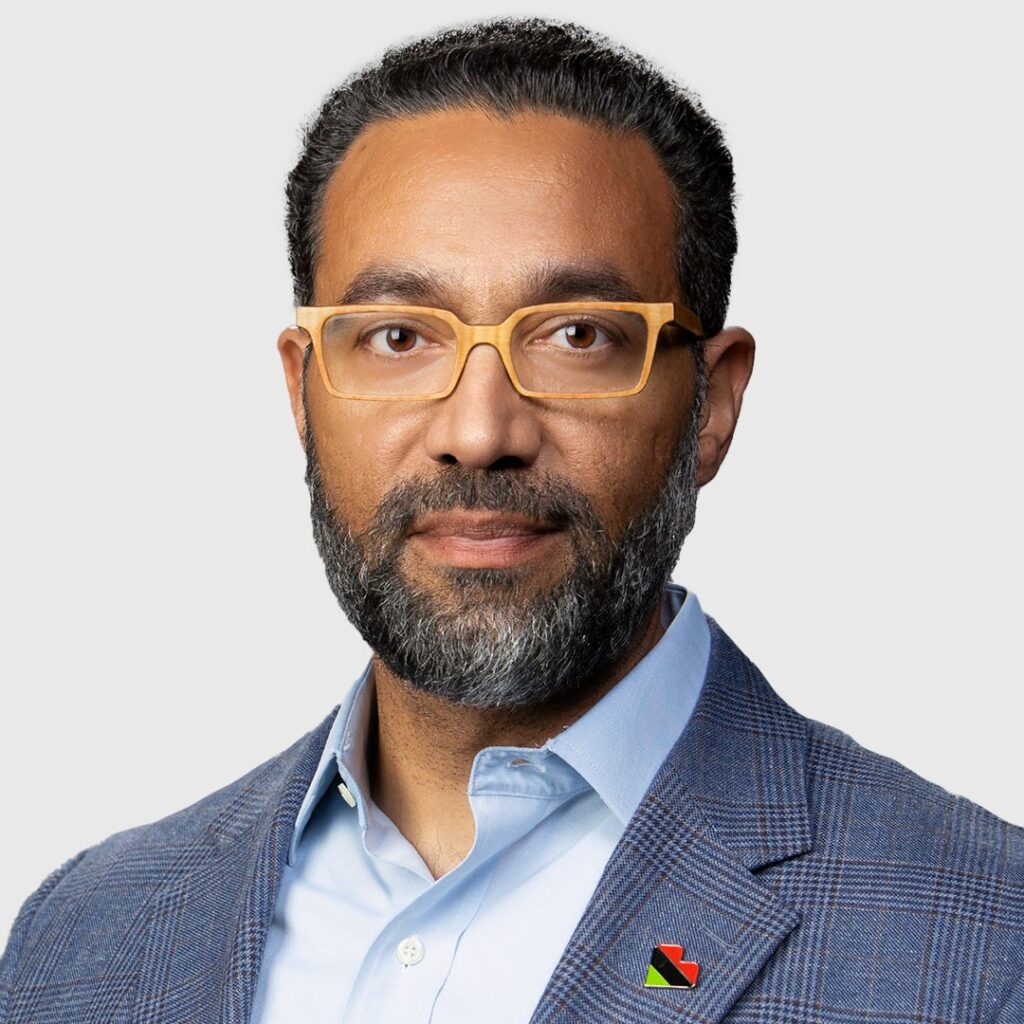
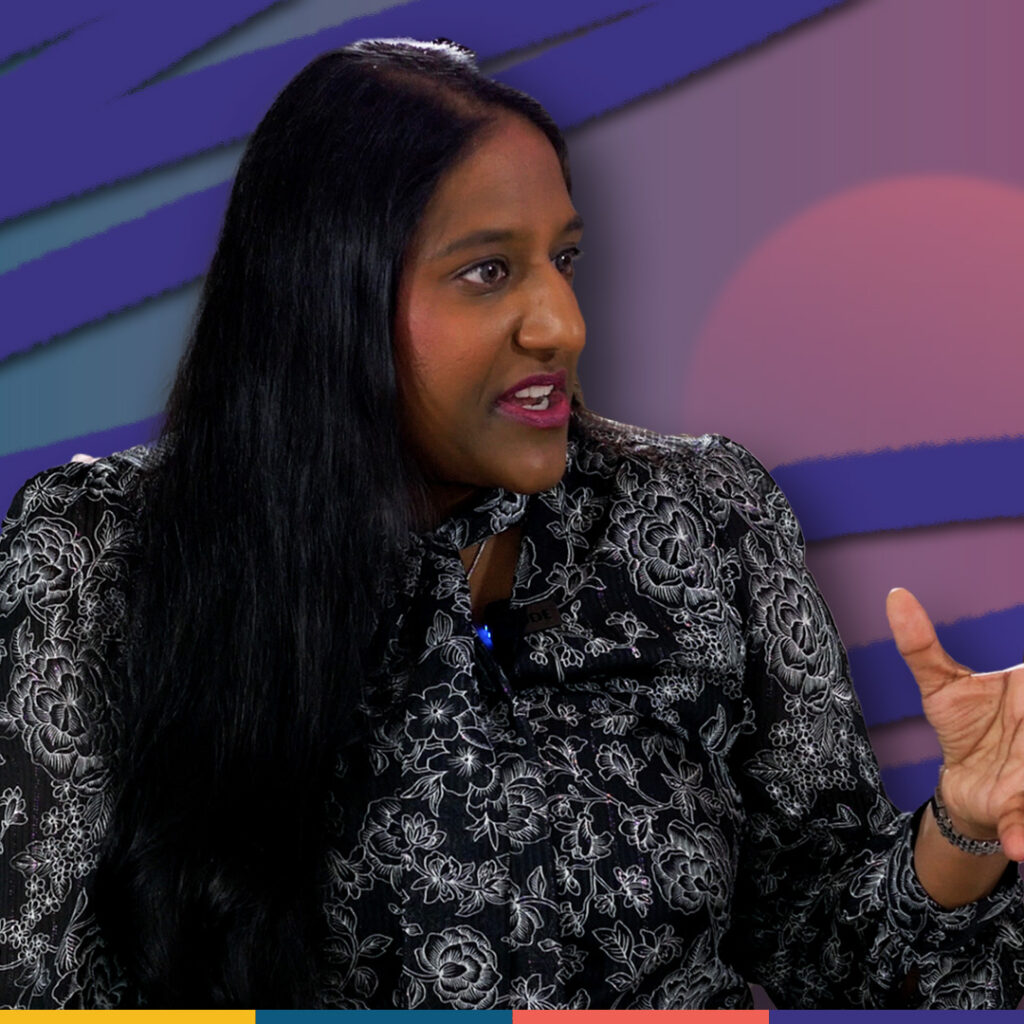
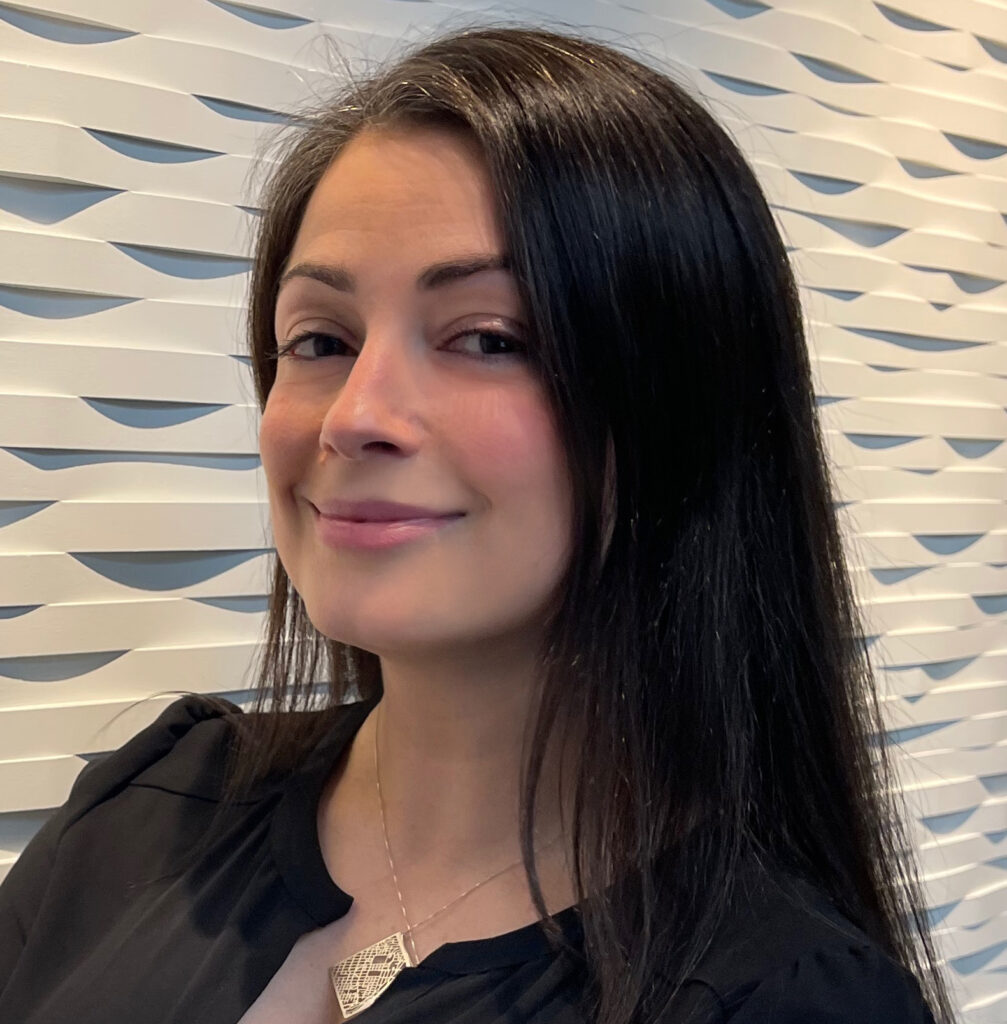
Mary Walter, BS, DPN, RN, is the managing director for quality and accreditation at HMA Health Management Associates. She joins host Chris Hemphill to urge healthcare leaders to focus on patients on Medicaid. By engaging those who are underserved, she argues, executives will benefit their entire population. This special episode was recorded at ViVE 2023

Sign up to learn about future episodes of Meeting of the Minds
Key Points
- When designing healthcare programs, keep providers and patients in mind by thinking business agnostic, payer agnostic, and provider agnostic.
- Analyze subgroups to identify where they are and the barriers they face. Use that information to find ways to bring care to them.
- Ask customers and providers for their input. They should be your primary sources when doing model of care development.
Watch the Full Episode
Watch a Highlight
Sign up to learn about future episodes of Meeting of the Minds
Read the Transcript
Chris Hemphill: So we are here at ViVE 2023 and really excited to have a conversation with Mary Walter today, who is the managing director for quality and accreditation at HMA Health Management Associates.
We wanted to discuss the Medicaid population. We want to be very frank and very real about the challenges faced by people who are underserved. But we also want to talk about the things on the horizon that you, as healthcare leaders and innovators, can do to help and work along with this population. Let’s not limit our thinking after this conversation to just our Medicaid population.
Health equity issues impact people across the board–Medicaid, commercially insured, and uninsured. So the types of things that we think about for this [Medicaid] population, even in terms of building a business case for addressing these health equity needs, can apply all across the board.
You’re spot on. We have to make sure that we really do healthcare delivery no matter what lines of business it is–commercial Medicaid, Medicare, marketplace, and other community-based organizations, like safety net facilities and organizations.
So what drew you to Health Management Associates?
It is truly diverse. We have strategic focus areas, not only in my area, which is accreditation and quality, but we have justice systems, we have behavioral health, we have regional Medicaid managed care, and we have Medicare strategic focus area. We have delivery of service, we have I.T. and technology, right here. We have 15 different strategic focus areas. So what made me excited is that I would be part of this amazing team to help our clients out there truly transform healthcare. It fits my passion around how we can impact the delivery of care.
You bring such a rich background having led efforts at top insurers and now at HMA, could you talk about the things that have led you to focus on people who are underserved?
It goes back to when I was four years old and I was adopted from Korea. I came into the United States very, very sick. I had tuberculosis. I had major skin ulcers and rashes all over my body. My hair actually felt like a horse’s tail. Now, think about health care in Korea in 1967. Think about when I was born in 1963. Those first four years, I didn’t have necessarily health care.
When I came to the United States all of a sudden I was I had good accessibility to health care. My family was not very well-off, but they knew that they had to get me healthy. And so I was able to get the treatment and I was able to resolve all of those issues that I had.
I think about that access to care. That ability to have the type of healthcare that I needed to heal was really, really important for my survivability because, if you know anything about tuberculosis, you can die from that disease–and very quickly, as a four-year-old child. So I was in a pretty critical care condition in terms of outpatient care and almost hospitalized because of that.
Then I think about growing up in a community where I was probably the only Asian in a very small rural town in Iowa. My parents could see that my ethnicity, as well as how I would adapt to that community, was going to be a big climb and challenge for me.
Thank you for bringing up your personal history. For the folks listening to this, what do you think somebody should come away with from this conversation?
Every person in the United States deserves healthcare and they deserve it in a way that will keep them healthy. Think about this, by 2044, the U.S. Census states that racial and ethnic minorities will be the majority of the United States population. Think of that proportionally in terms of future costs.
The other thing is 10.6%–oh this really grieves my heart–of African-Americans don’t have any insurance, but yet white people, 5.9%. So half, half. In addition, 21.5% of Hispanics 20 years and older are diabetic, but yet the white population is 13%.
So you can see the disparity right here in the statistics. And then the other thing that really grieves my heart is that on April 11th we will have Medicaid redetermination. What does that mean? That means that 92 million people are going to have to show evidence that they are Medicaid-eligible to stay on the plan.
There’s a prediction that 20 to 25 million [edit note: estimates vary] will lose coverage. Now, rewind. I am four years old. I’m a Medicaid child. I deserve healthcare.
So losing access for things like having moved and not receiving communication around reactivating, that’s a major challenge that our Medicaid population faces. Can you talk about who the Medicaid population is?
When you think about the Medicaid population, you think about women’s health, you think about children’s health, and you think about the population that is at risk. So I think about the African-American woman that has the highest risk in terms of mortality and morbidity, in terms of OB risks and delivery. So that’s something to pay attention to.
I think about the child that has specific special needs, the disabled child. I think about the child that has specific conditions and diseases. They deserve to have equal and equitable care. And I think about the deaf and hard of hearing. Anyone that has challenges around their health and challenges around getting the right kind of care and truly having a quality of life. These are the individuals that we’re talking about, women and children specifically.
So we’re talking about a safety net for people that are in extremely vulnerable scenarios.
And we can’t forget behavioral health because behavioral health is an integral part of every individual from the management of that individual to population health management. So you can’t separate physical from mental health or behavioral health. They are very integrated. It’s whole-person and population health and it must be coordinated, it must be integrated, and it must require a cross-functional team to be able to bring the delivery of care that each and every single one of those individuals deserve.
As we talk about the business case that healthcare organizations might have to make to address these Medicaid populations sustainably, what do you see on the horizon that might be helpful to generating that business case to start focusing more on health equity?
When we take a look at programs, services, and products that are being developed with managed care organizations, value-based purchasing with our providers, with our hospitals, with the healthcare delivery system, we have to think about making it easy for the members and making it easy for the providers. It does not need to be complicated.
I’ll give you a perfect example. In terms of this Medicaid redetermination. All of those individuals risk losing healthcare coverage, in fact, they will lose healthcare coverage. Whatever we are offering, let’s say I have 25 years of managed care experience, that we invest in community-based organizations. We invest in these programs, we invest in technology, and we invest in the ability to reach these individuals.
And in that same mindset, when they lose coverage, why not enroll them in marketplace? But if it’s marketplace, let’s make sure that we had that same investment in the community organization, the same investment with the providers, the same investment with those partners that are providing that delivery of care, including behavioral health. Because here’s where the disruption occurs, Chris.
When they go from one line of business to another, all of a sudden, if that doctor isn’t in the same network between the two lines of business, that’s a disruption to care. Think about the programs. If someone is asthmatic, is in a diabetes program and all of a sudden they change to a different line of business that doesn’t have the same diabetes program, or they have to reenroll in something different, that disrupts the continuity of care.
If we think thoughtfully as leaders, when we design and transform home healthcare, let’s think lines of business agnostic, let’s think payer agnostic, let’s think provider agnostic.
What you’re bringing up is process reform, making sure that people don’t have these unnecessary barriers that get erected, and disrupt the continuity of their care.
Absolutely. Because I think about the providers that are out there. There are different programs for different managed-care organizations, there is a lot of variation and differences. Imagine trying to manage six different managed-care programs in one population. If you really think about healthcare in terms of having healthy babies and then all the way to end of life, there are some things we can do to standardize some of those programs.
There are standard best practices out there from a clinical medical evidence base that can dovetail into payer-agnostic types of programs. That can be a win for the member, for the provider, for the community-based organizations. There’s got to be a tie-in to that as well. And then pharmacy and behavioral health, all of that in concert and working cross-functionally to be able to make it easy for the providers.
I have a perfect example. There was a TeenScreen program in an integrated delivery model in which I worked. We decided to add two suicide questions to the PHQ-9: Does the member have a plan for suicide and are they going to go through with it? This was a payer-agnotic tool, and it was rolled out in a particular market as a pilot.
The pediatricians were pessimistic about it at first, but what they discovered is they could screen across their entire population. It was payer agnostic. It identified risk and, through data and being able to look at the suicide rates per thousand, they actually decreased per thousand, and screening went up. The pediatricians were elated because they could do population health with a simple tool.
We made sure that there was clear coordination between IT system and process and people to be able to ensure that medical-to-behavioral health coordination was intact, whether it was routine, urgent or emergent. We had the safety net processes and services to back up that program. It mushroomed and it grew nationwide.
That story is really powerful because it focuses on some of the business aspects, and it focused on data innovation, capturing information that allowed healthcare providers to be able to act.
Here’s the cool thing. In that program, there was a win for the other payers because it was not only making a difference for this single payer, but it was making a difference for all the payers that provider was managing the care and being reimbursed for. So it was really a win-win for everyone.
Could you elaborate on how that went happened, and how it created the win for multiple payers within the network?
There was an evaluation from the pediatrician’s office that said that not only were they pleased with this particular payer that I worked for, but that they got feedback that they were going to go ahead and do this for the entire population and that they went to the other payers and asked what was there a value-add to this? And the other payers said, a huge value add. We’re not going to stop this. This is a great tool to be used for the entire population. So it was a win.
I had to ask you to elaborate on that one because I want people to focus on sharing, getting out of silos, and communicating with those that are our competitors to focus on patient needs. And it just leads to my next thought. Can you talk about other digital or data innovations that you’re eager to see people adopt, or are there other stories that you might have?
I think the COVID pandemic really got us to think not brick-and-mortar anymore, but how do we bring care to the member where they’re at? So I’ll describe it in two different ways.
The traditional way that we think about telemedicine is to be able to be by phone, or it can be virtual on the Internet. Those are two different quote unquote, telemedicine approaches. But let’s get creative with the Medicaid population. One of the things that I think is very important is: how about free clinics or clinic opportunities in the schools? The children are already there. Why not partner with the school systems? There’s a school nurse within the school systems.
Collaborate with them, collaborate with the Boys and Girls Club, collaborate with the YMCAs out there. Any community organization that’s present, there isn’t any reason why we can’t deliver care there. Some people will say, “Well, immunizations have to be refrigerated.” All right, so a mobile van, put it in refrigeration, go to the Boys and Girls Club. Do all the risk and legal things that you need to do to be able to run the program, but deliver the care there.
Why not? Because that’s where they’re at and they’re not always going to come into a brick-and-mortar clinic office. And by the way, you remove the barrier of transportation, you remove the barrier of inconvenience or whatever the excuse is. But we have to think thoughtfully about taking it and technology to where the members live.
And by the way, Chris, you don’t know this, but my grandfather was a doctor. He did medical care in the home. And we have been returning to that in the last few years. But let’s think about home. Let’s think thoughtfully about innovative ways to be able to reach this population without always having them come into a clinic.
Now, obviously, if it’s urgent, if it’s emergent, this is where my nursing hat comes in. Then we have to make sure that transportation and all the other things that those members need are going are availabe to them in a timely way, whether it’s urgent care centers or 911 emergency.
It’s really a merging of a data strategy that results in a delivery strategy. So it depends on not just looking at entire population results but looking at these subgroups and identifying where they are and where those opportunities might be to better connect with them.
There has to be a coordination. Providers need to know what these community based organizations are. I mean, those clinics that are in their community, they pretty much know. But what I’m saying is the coordination between provider, community-based organizations, the health plan and any other partners that are part of that coordination, that that communication has to be streamlined and it has to be streamlined through the various systems from that point of care to capturing successful quality metrics.
We know that most people want to do good for patients and I can’t think of anybody who is out there actively trying to cause harm to entire populations. But we have been slow to adopt solutions that help our most vulnerable. Could you talk about some of the barriers that organizations are facing to be able to address the needs of these populations?
I think it’s really around understanding who the population is. We develop this wonderful model of care, this transformation of care. We work with our providers, we work with our community-based organizations, and we think we have the answer. But did we ask the member if this is something that they want?
I have two examples. In one of the organizations I worked for, we actually developed what we thought was the most amazing transformation of care. We pulled in some members and asked them what they thought. They said it’s not quite what we want. It goes back to that tree diagram. We gave them 10 different ways to get care but they just wanted a tire and a rope. I think we’ve got to get to simplicity.
The second part is there’s a really good breast cancer screening project that I was very much involved during my Lean Six Sigma training. I just decided we’re going to ask our members: “Why is it that you’re not getting a breast cancer screening? Help us understand.” And they said it wasn’t because it wasn’t important. They understood the importance of it. Okay. Scratch that one.
I know it’s painful. That’s not the reason why I’m not getting a mammogram. I mean, all the reasons that we, in healthcare delivery, thought were reasons why they’re not getting a mammogram.
They said, you know what? Your incentive isn’t high enough for me. In the Medicaid population, a lot of women at that age are taking care of their daughters or sons’ children, or grandchildren. So, therefore, I have to hire a babysitter. I’ve got to take that inconvenience of no money for food. And $25 is not going to cover food or babysitting.
Your incentive is not high enough. We said, well, what would do the trick? They said, you know what? If you got it up to $50, I think we would consider that. Do you know what, Chris? Our breast cancer screening rate went up, and it was statistically significant across the population. It was that simple. We don’t ask our members. Te voice of the customer should be our primary source to do the model of care development and the voice of our providers.
Earlier in the conversation, we were talking about data to identify the subgroups and populations in need. But that’s not enough. Just knowing who it is and even developing a plan for them internally is not enough until you start listening to their voices.
Every healthcare worker, every individual that wakes up every day, wants to do the right thing. We all do. And we do it with great and positive intentions, but we can’t forget who we are serving absolutely.
We’ve talked about finding these populations and how these initiatives are formed. But how do we socialize this among leaders and what types of metrics and KPIs should we focus on to report? Is it successful? Should we pivot? What are the types of metrics that people should be focused on in these initiatives?
It’s a set of measures for primary and secondary prevention. So primary prevention, you know, we think about screening, like breast cancer screening, colorectal cancer screening, those are specific process measures. And then there are other measures around diabetes, A-1 C levels, results, and eye exams
We look at other areas as well. Asthma, you know, there’s behavioral health measures and pharmacy measures, etc. But, you know, at the end of the day, it’s really about taking a look at the population and looking at the risk stratification and seeing where they’re succeeding in terms of rates for those primary and secondary prevention measures that I just mentioned, but also the total cost of care.
Then let’s add the experience side of the members because again, it gets back to the voice of the customer. Are they happy? Are they getting their appointments in a timely manner? It’s very concerning for members when they can’t even get their annual physical within 30 days because the providers can’t get them in till 60 to 90 days. Or a specialist, in some areas you have to wait four and six months to get in.
So if I’ve got a condition as a member and I’m very concerned about that, that 4 to 6 months is not soon enough. These are the things that we have to think thoughtfully about around. We generate all these beautiful metrics, but what metrics are most important to the membership that’s out there?
There’s just one question that we always finish up with, if you were able to change one thing in how we deliver healthcare in this country, what would that be?
I would like to see us address the inequity of health care. When I think about my four-year-old child experience, I had accessibility, availability, and equitable care to some extent. No child should go to bed hungry. No child should be without shelter. They need to know that they are cared for, that people care about their welfare beyond just food, water, and shelter, and that they have healthcare services delivered in a way that provides quality of life.
I have quality of care of life today, Chris. I want every child, every person in the United States to have that same level of care. And we can do it. We can. It takes everyone, but it takes us communicating. It takes us working in concert. It takes policy development from the federal to the state to the local to the managed-care organizations through the partnerships of the health care delivery system.
And I might do one more value-add here. So it’s not just about race, right? It’s about sexual orientation, sexual preference. We have a population that deserves equality, no matter what age. Health care is not a privilege. It’s a right and it’s a right that everyone should have equitably across their lifespan.
For the people that want to continue this conversation and better understand how to break down these barriers that you’re discussing, what’s the best way to get in touch with you?
Health Management Associates, look me up on LinkedIn or email me at MWalter@HealthManagement.com. Easy to get hold of me.
We scratched the surface on health equity and we’ll continue scratching in various different areas. One thing I want to highlight for the folks listening or watching is to continue down that path. If you’re looking for some advice and thoughts on driving health equity initiatives and strategies at your own organization, we had a great conversation with Dr. Creshelle Nash, who is the medical director for health equity programs and initiatives at Arkansas Blue Cross and Blue Shield.
Sign up to learn about future episodes of Meeting of the Minds