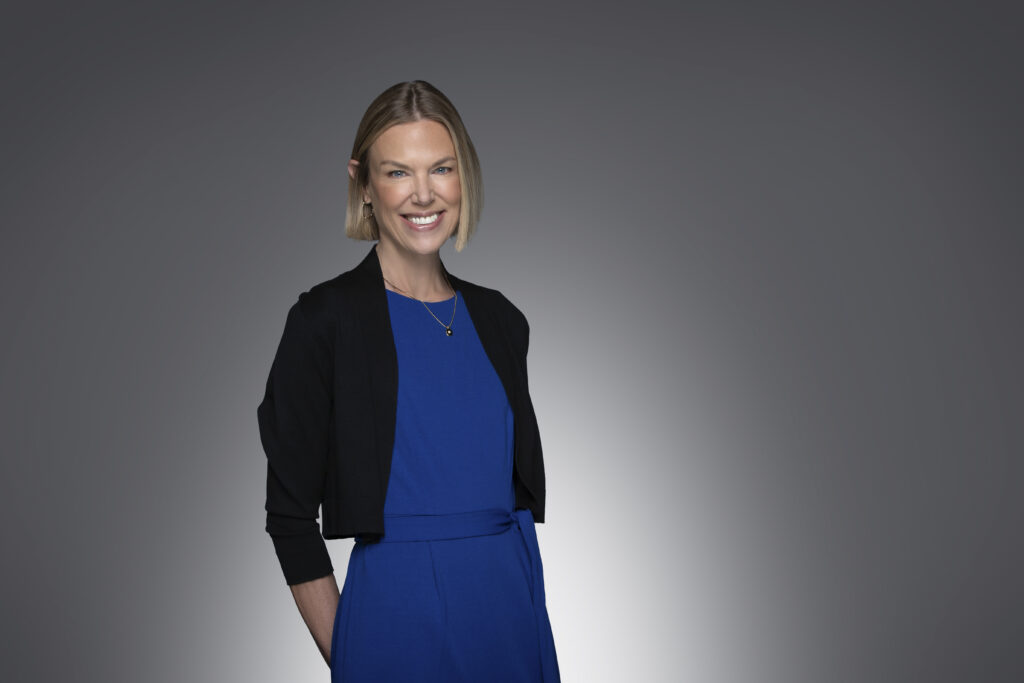
Ashley Randolph endured three premature births. Debilitating nausea, scary bleeding, and the prospect of her babies having lifelong health issues were made far worse by the dismissive and sometimes downright cruel way she was treated by healthcare workers and the system. During each pregnancy, she was forced to research treatments on her own and fight to receive them. And the mistreatment didn’t stop after the babies were born; it followed her right into the neonatal intensive care unit (NICU), a place where research has found significant variations in the quality of care by race and ethnicity.
Not wanting other Black families to experience what she went through, Randolph founded GLO Preemies and co-founded the Alliance for Black NICU Families. Both organizations advocate for equity and provide education and support all the way through the child’s 18th birthday. Randolph is also the first Black chair of the California Perinatal Quality Care Collaborative (CPQCC), an author, a speaker, and was named Mrs. America Virtuous Woman of 2021.
As part of Woebot Health’s Diversity, Equity, Inclusion, and Belonging (DEIB) programming, Randolph shared her story with our team. She was interviewed by Steve McDonald, a senior platform engineer and a driving force behind our DEIB efforts.
(interview edited for brevity)
Take us back to the months leading up to Aiden’s birth in 2010.
I’m in college at Xavier University in New Orleans, studying biology pre-medicine with a minor in chemistry. At the same time, I was going to Tulane for public health. I was studying for the MCAT, I was working–completely busy. I have no idea how, but I was doing it, and I was succeeding.
Then I got pregnant.
I was in Louisiana by myself. My family was in California. Knowing they would be devastated that I was pregnant, I hid it. At about six weeks, I felt nauseated. Then I start bleeding. I went to the emergency room multiple times during my first trimester. I was told, “You’re going to have a miscarriage. Just let it pass.” So I kept studying for the MCAT and doing what I had to do for school.
Second trimester, I’m still pregnant. My nausea is so severe now I can’t leave my dorm. I go to the school doctor who informs me there is no family housing and I must leave campus immediately.
Now I’m living in a bad neighborhood, and I’m too sick to get to campus to eat, which is all I can afford. So I apply for food stamps, and eventually, I have to drop out of school altogether.
At about six months, the doctor does a blood draw and tells me my child may have a cleft lip, too many chromosomes, and too many toes–he gave me a complete list. Then he advised me to have a late-term abortion. Looking back now, I should have gone for further testing, a second opinion. I should have asked, “how can you get all that from a blood draw?” Still, I said, absolutely not. I will have my baby.
About two weeks after that, I started having pre-term contractions. I moved back to Sacramento at 32 weeks. I had Aiden at 34 weeks and zero days. November 26th, 2010, Black Friday.
From the beginning, they were saying, he was not going to make it. He’s now 12. He has bad vision and will need eye surgery before he turns 18, but he also skipped a grade and is classified as a genius in California.
Tell us about your next pregnancy, with your daughter, London.
I’m in Houston at this time. I started having pre-term contractions at four months. I knew that’s what they were only because I had them with Aiden, so I started looking online for information. The progesterone shot kept coming up. It’s called 17P for short, and it is a weekly shot that may help with contractions. (Edit note: there is some debate over the efficacy of this drug.)
My doctor never mentioned it to me. So at my next appointment, I brought it up. I was devastated that I had to ask her for something that she already knew about, but also really happy she agreed to try.
Unfortunately, Medicaid did not believe I needed the shot and wouldn’t pay for it, so I was forced to move back to California. MediCal approved the shot the same day.
At 32 weeks, I moved back to Houston to be with my boyfriend, now my husband, and I had London at 34 weeks, on May 29th, 2014.
Her NICU stay was emotional. I did not know that Texas doesn’t provide resources in the NICU, like Sacramento did after Aiden’s birth. The staff there even called Child Protective Services on me because they could not figure out why my child came out premature–this even after my doctor had specifically told them, “She’s just a girl who has preemies. There’s nothing wrong with her.”
It’s around this time that your idea for GLO Preemies comes into view. Can you talk about that?
I was thinking, “Lord, I don’t know what I’m going to do with the rest of my life. I dropped out of school with two semesters left. I have two babies now. Where am I supposed to go?” And I just wrote out, “GLO Preemies.” G-L-O, stands for God’s Little Ones. It just came to me. It was supposed to be a support group for African American moms in Sacramento, but it has grown to be so much more.
You explained what the acronym stands for, but why those words?
Because I kept my faith. I knew something better would come out of this. I didn’t know what, but I just had a feeling. The babies are really protected by something greater than what we know. They’re fighting, and there’s really nothing we can do but help support them. We can try to make it easier for them to fight, but the fight is really their own.
Let’s segue to Jamie, your youngest. In 2015, you learned you were pregnant once more. You had just given birth to London. You recently formed GLO Preemies. Can you share what you learned about the state of your mental health at the time?
I was really emotional. I could be irritable, and many things did not make sense to me. I learned later, through my work at GLO Preemies, that I had undiagnosed postpartum depression. And when I found out I was pregnant again, I knew I didn’t want to deal with the healthcare systems in the South, so I went back to California.
But even there you had some trouble with your care.
As I was checking in for a doctor’s appointment, the receptionist said, “I’m sorry, the doctor can no longer see you. She sees you and your baby as a liability.”
I didn’t know what to say. I felt like the whole waiting room was looking at me. And the doctor, who had been standing behind the receptionist, didn’t say anything. It’s my second pregnancy within a year, my body is tired, and I’ve more than likely just finished vomiting in the bathroom. I just walked out trying not to cry.
MediCal could not find another doctor who would take me that late in my pregnancy and with two prior premature births. I ended up seeing an ultrasound tech once a week until I delivered Jamie at 36 weeks. She was was under five pounds.
Reflecting on the experiences and challenges over these three pregnancies, what do you think is the most important thing you learned?
A mother knows best. Because even when the healthcare professionals said, “No, this shouldn’t happen,” my motherly instinct said, it will happen.
Tell us more about GLO Preemies and the work you do.
It started in 2014 as a small support group in Sacramento. I just really wanted to connect with other moms who understood what I went through.
Then we started working with First 5 California and Stanford CPQCC. Before I knew it, I had a program at GLO Preemies.
We stay with Black NICU families until the child turns 18, and our care extends to mom, dad, baby, and any siblings. We offer free tutoring, IEP (Individualized Educational Programs) support and reviews, mental health counseling, doula support, and a mobile NICU store where families can order items for their household or their babies. We have career support for the parents. We have parent support groups. We help dads with child support. And we ship care boxes to NICUs throughout the United States and to NICU families until the child turns one year old.
Would you expand on the thinking behind the decision to provide comprehensive, long-term support, versus just until the family gets out of a NICU?
I’ll do it in two words: generational change. It breaks my heart that America is letting Black babies be born early and not following them to make sure they’re getting the resources and support they need to thrive.
They already fight so much when they’re small, and then we just let them go after they leave the NICU. We’re the only nonprofit that stays with our babies until they’re 18 years old.
Are there some areas that you haven’t yet explored as far as support, that you’d like to?
For about two years, I’ve been trying to raise money to build a NICU city–facilities almost like little communities–in every state. Each would include a pregnancy center with a NICU and have programming and temporary housing for the families.
Next year, I’m just going to push forward with a mobile NICU city instead–maybe five to eight buses in the states that need it the most. We will work our way out to everywhere else in the United States from there.
Could you share a little bit more about some of your proudest moments or accomplishments?
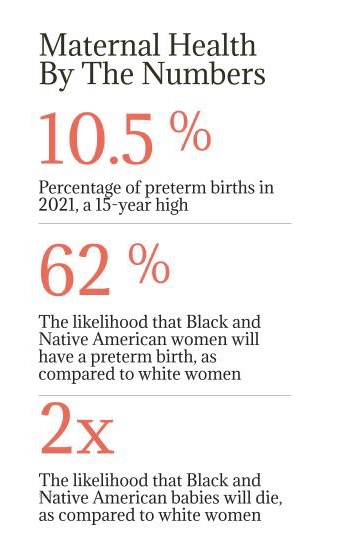
My first one would absolutely be becoming the first Black chair at CPQCC based at Stanford. But a lot of things that are my proudest moments are really moments that I feel like should’ve already happened for other people. So I’m the first Black chair and the first parent chair. I’m super happy and proud, and I thank them very much. But why are we, in 2023, just now seeing people of color as leaders? Mixed emotions.
Could you share a few words about each of your children, their personalities, and their favorite things?
Aiden just turned 12. He is a spotlight. He’s been leading talent shows since he was small. He loves the microphone, and he definitely loves the stage. He has a sports podcast show on the GloPreemies Roku TV channel. He’s in mathletes, he’s in chess, he’s in all honors.
London, she’s quieter, but when you put her on camera, she’s a firecracker. She loves to read, and oh my gosh, she loves dolphins. I believe she’s going to work with dolphins. She has this obsession with them.
Jamie is very into arts and crafts. She draws. She is definitely into theater. I recently caught her singing and found out she has a voice like Mariah Carey. So I am absolutely going to try to put her in singing classes.
Those are our three little stars. I’m very grateful for how they’ve ended up compared to where we started.
Interested in donating to or volunteering with GLO Preemies, click here.