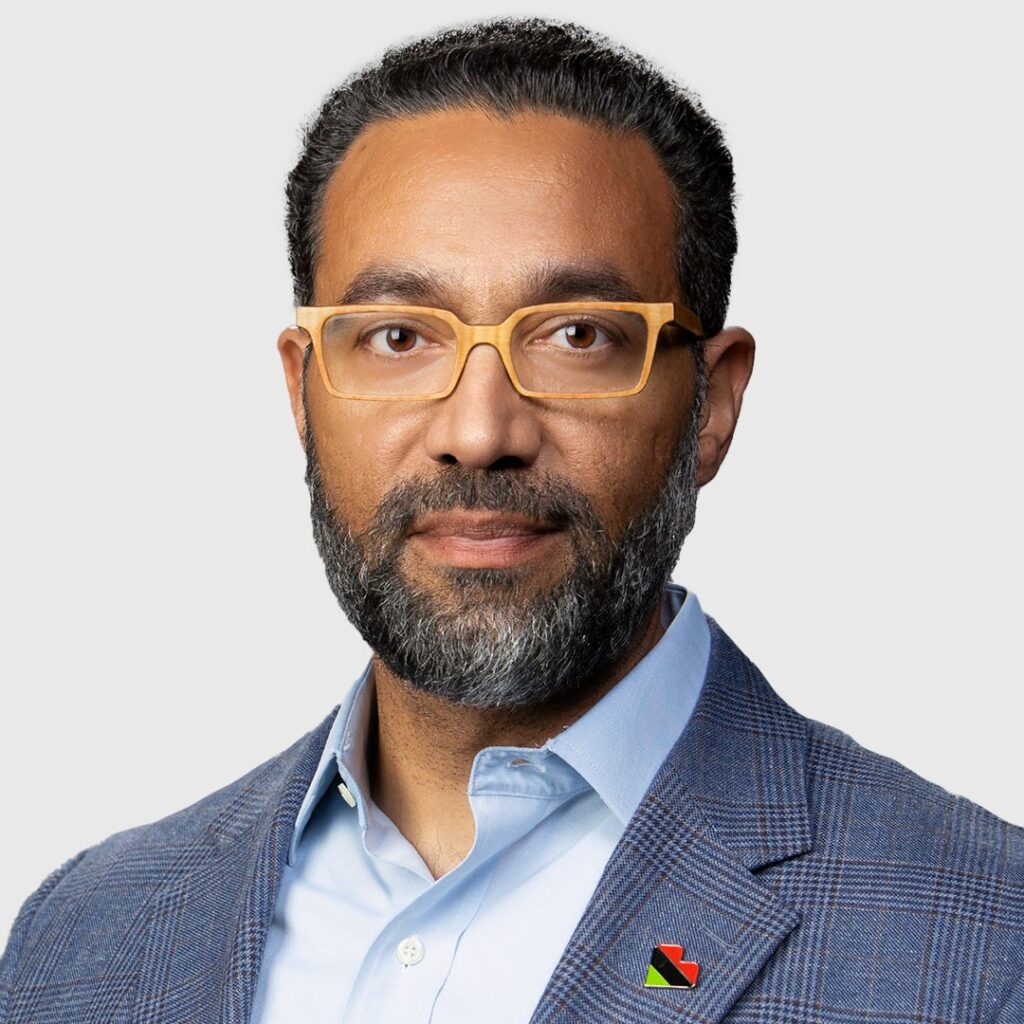
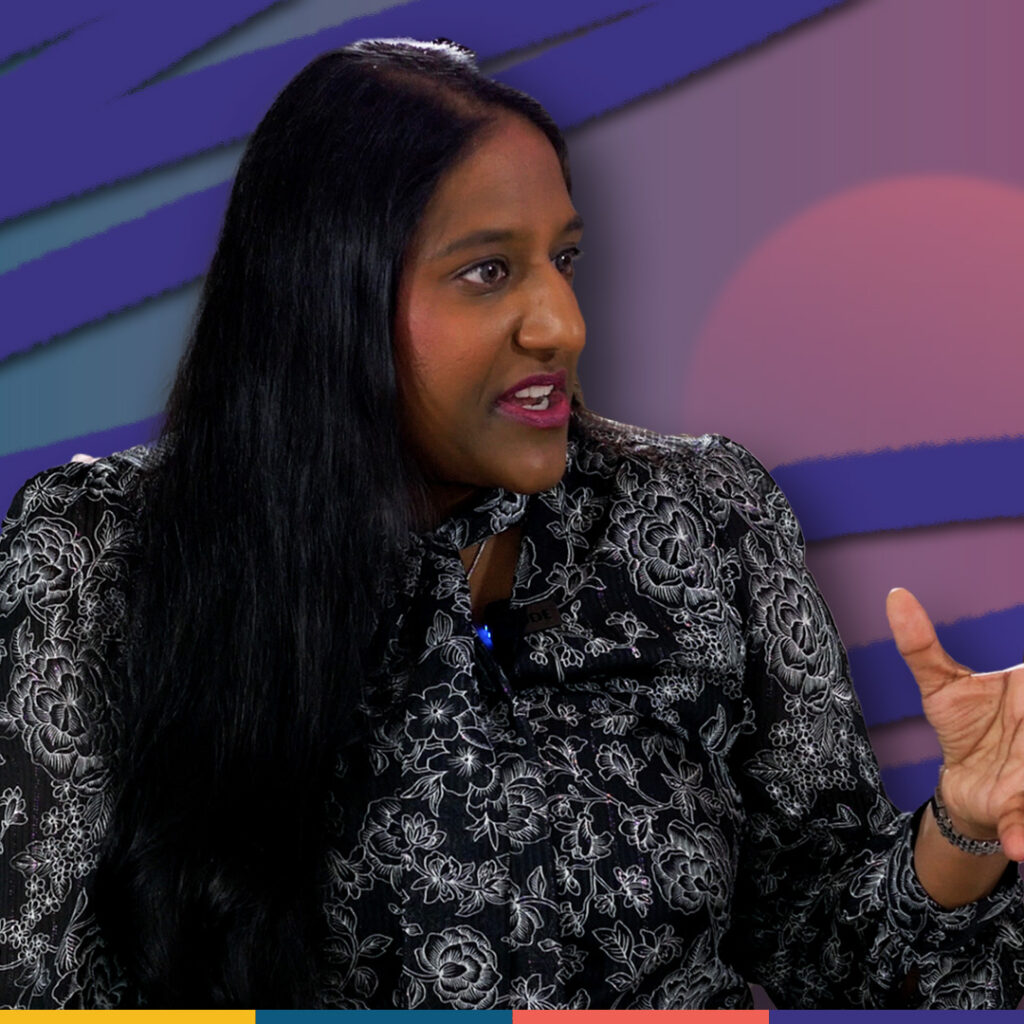
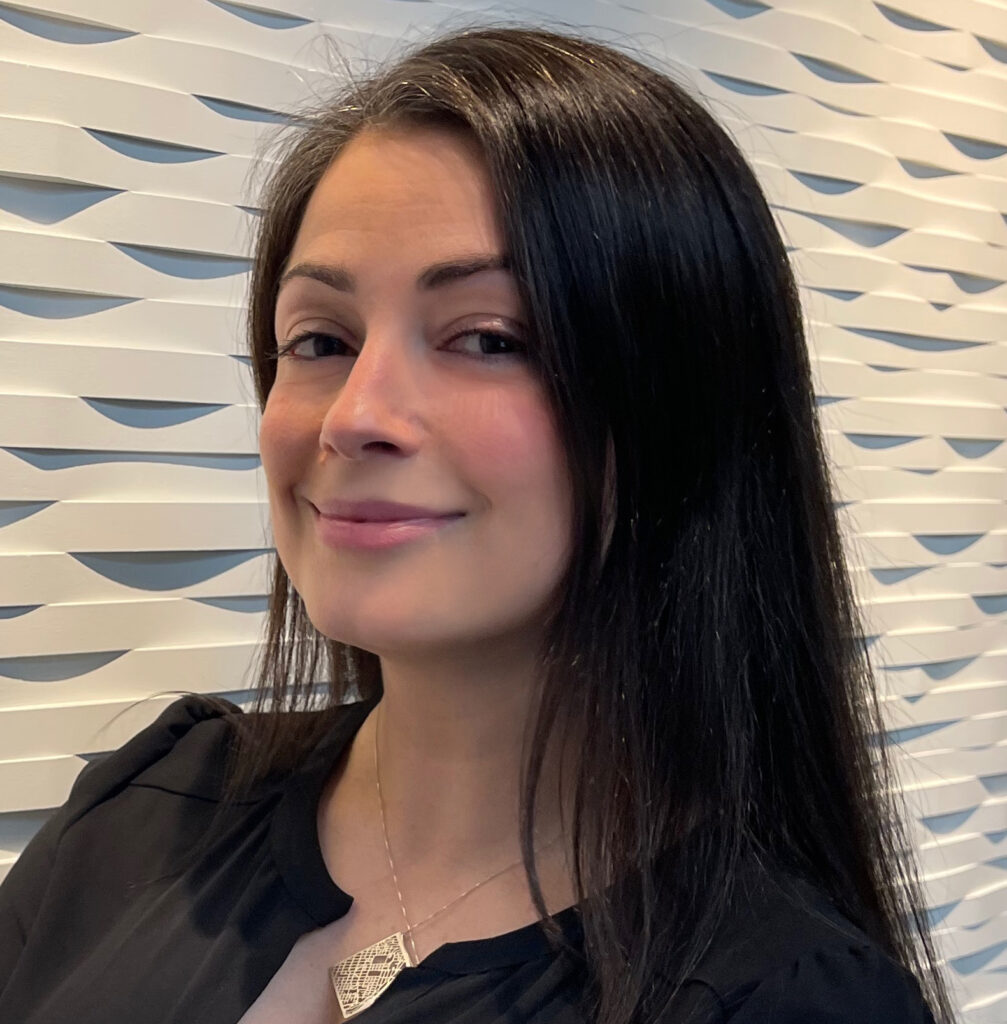
Dr. Creshelle Nash leads Arkansas Blue Cross and Blue Shield‘s health equity programs. She joins hosts Carolyn Greene, PhD, and Chris Hemphill to discuss the organization’s framework for infusing equity into all of its policies and programs.

Key Points
- Equity efforts must be infused throughout the organization; if siloed, they will fail.
- All equity efforts must involve partnerships with the communities you serve.
- Health equity can bring down costs and utilization while improving quality of care, but it is a long game in terms of seeing ROI.
- Digital health solutions present an opportunity to advance equity but may need to be adapted to each community.
Sign up to learn about future episodes of Meeting of the Minds
Watch the Full Episode
Watch Highlights
Sign up to learn about future episodes of Meeting of the Minds
Read the Full Transcript
I’m Chris Hemphill with Woebot Health, and this is our third Meeting of the Minds Livestream.
Our mission for Meeting of the Minds is to rewire healthcare leadership to be able to stay ahead of the constant change that’s happening in healthcare technology, policy, economics, and other issues.
This helps to support Woebot Health’s overall mission, which is around radically accessible care. In the past, we’ve focused on healthcare worker burnout, digital innovation, structural racism, and many other topics that you can find just by looking up Meeting of the Minds Woebot on YouTube.
For today’s topic, what we’re discussing is healthcare equity. We hear this term a whole lot, but what do we mean when we say health equity?
According to the Centers for Disease Control, the CDC, health equity is the state in which everyone has a fair and just opportunity to attain their highest level of health. The problem is that that definition has a lot of wiggle room. Fair and just is subjective. And opportunity, that term can imply some moving goalposts. So what if we took that outside of the conceptual realm and started asking some targeted questions?
- Can the poorest in our communities afford or access the healthcare services that they need?
- How do utilizations or claims among our Black consumers or Asian members compare to overall rates?
- What are we doing to ensure safe, stigma-free access for our lesbian, gay, transgender, and sex and gender minority members and patients?
- Do patients with mental health needs have reliable, timely access to care?
- And also, especially with the folks that we have on today from Arkansas, what about our rural members? Do they have timely access to the services that they need and can they access them consistently?
So when we start looking and slicing across demographics and social determinants of health, these equity questions become much more difficult in that broad definition. So I want to introduce Dr. Creshelle Nash and Dr. Carolyn Greene. They are confronting some extremely difficult questions with regard to health equity. Their backgrounds are in the state of Arkansas.
- Arkansas ranks 46 in the nation for life expectancy.
- Nearly 40% of Arkansas report symptoms of anxiety and/or depressive disorder compared to a national average near 32%.
- And 41% of Arkansas’s population is in rural areas, versus about 14% nationally, so about three times the national average.
There are so many tough disparities that Dr. Nash and Dr. Greene are working on. To kick it off, Dr. Carolyn Greene is our co-host today for Meeting of the Minds. And I just want to give a quick background on Dr. Greene. She’s a leader in a bunch of different areas at the same time. Clinical psychology, research, government, and the private sector. She has leadership roles in translational research at University of Arkansas for Medical Sciences, where she’s also a clinical psychologist. Also, she serves as the national manager for the Department of Veteran Affairs Digital and Mental Health Program, which serves 22 million veterans. Also, and finally, she sits on Woebot Health’s Diversity Advisory Board.
So Dr. Greene, what are you hoping that people are able to get out of today’s session?
Dr. Greene: Hey, Chris. So I am so thrilled to be here with Dr. Nash. Even though we work down the street, we don’t run into each other at all. And I’m hoping that people can understand the intersectionality and how rural America has the same challenges, some of the same challenges as urban America. We have diversity and poverty and all that. And then, on top of it, the rurality. And I think that one of the reasons why Arkansas doesn’t really get as much attention as maybe it needs to considering those disparities is because I think people don’t necessarily understand rurality. So that’s the main takeaway I’m hoping people get.
Chris Hemphill: That’s fantastic. And thank you for bringing up the term intersectionality. Thank you for bringing up the rural aspect as well because that really means that these impacts, various disparities that people might have, veteran status, rural status, et cetera, those compound.
And now our guest, Dr. Creshelle Nash, also a multifaceted clinical leader, completed her primary care and internal medicine residency at George Washington University and got her Master’s in public health at Harvard University.
Currently, she works at Arkansas Blue Cross and Blue Shield as the Medical Director for Health Equity and Public Programs. She serves in faculty at UAMS’s Department of Health Policy and Management, where she’s also the co-director of the Racial and Ethnic Health Disparities Service Learning course. So you can see that Dr. Nash has devoted her career to developing health equity initiatives.
That’s a big emphasis on this call, is putting them into action. One big thing that we want you to walk away with is a feeling and understanding of how to enact the things that we are talking about. Take it out of that conceptual level and put it at the practical level.
So Dr. Nash, we live in a health system, we live with a health system and an insurance system that’s built on and honestly fraught with disparities. Can you just give us your story on why you’ve taken this challenge of addressing health equity issues and what it’s looked like getting to where you are today?
Dr. Nash: First, let me say thank you for allowing me to be here with you today. I’m really excited about this discussion. It always invigorates me to talk to people about my passion, about our passion and why we’re here today.
Dr. Greene, thank you for your first statements because I just realized that I am walking intersectionality, which is why I do what I do. I was born in rural Arkansas, a preemie baby. Three pounds, two ounces. And my parents and my family have this story of me growing up being very small and my mother, a teenage mom, being afraid of me in poverty.
So walking through my personal life and my professional life, this thread has always been health equity. Coming through public schools first, having a public school education and then being able to compete on a national level and go to school, go to medical school, then end up there and be seeing patients and seeing the differences in equalities, seeing the differences in access. And, ultimately, throughout my academic career, getting further upstream. And now after practicing medicine for 15 years at UAMS, but after that, coming to the health insurer space, the health plan space, and being able to bring that health equity framework and understanding. So my life and my professional development really has been all about this, and it’s my passion. It’s really in my DNA.
Chris Hemphill: Thank you for digging deep and making that connection between how you grew up and the multiple intersectionalities you addressed and how that’s ultimately translated into your career today, which we will dig a little bit deeper into in a second with our questions.
Dr. Nash, how should healthcare leaders be focusing on health equity? What’s the mental model or framework for when health equity should start entering that strategic conversation?
Dr. Nash: That is an excellent question, and my first reaction is that it should be in every conversation in the healthcare and health space. I have begun this is first starting, like you did, with the definition. We have to understand what it is. Now in the public space, we hear lots of words. We hear diversity, equity, and inclusion. We hear health equity. We hear social determinants of health and all those different things. They’re interconnected, but what do they mean? And then, to your point, what do they mean for action on a day-to-day basis? We can stay in the theory for a long time, but it starts with the definition and understanding what that is. And then, in my framework, as I told you from my career, I’ve kind of learned if I’m bringing a health equity framework to population health management into the enterprise, that means that I am looking in a framework from an end to end.
On one end, it is quality healthcare. Who’s getting quality healthcare? But when I step back further, it’s who has access to healthcare? That gets you into the insurance space. Then before you have insurance, you live in a social environment. You are in a social environment and in a physical environment that supports healthy behaviors or it doesn’t. And that environment has resources or it doesn’t have resources.
So I’m going to get further upstream. What determines what those resources are and where they are? They’re different in different communities. They’re different in northwest Arkansas. They’re different in the delta. And we have to understand all that. And once we reach all the way upstream to addressing resources and directing resources to where they need to go, that’s when you’re addressing health equity.
So that’s my big picture framework that is really disease agnostic because there are certain commonalities but differences in different areas and different populations. So I would say define it, understand the framework, but then if I blow it up that big, you’re wondering, “Well, what the heck do we do?”
Dr Greene: I’m about to interrupt and ask you that exact question. Could you tell us about some specific programs you’re working on? Because if health equity touches everything, what is the scope of your team?
Dr. Nash: You have to depend on partnership. A health plan, a health system can’t do everything. We have to determine what our role is, but one thing that I want to add in there is look at our policies, our processes, and our programs to ensure that we are not driving disparities. So that’s another important critical point. We have to be a partner at the table, tables that we probably aren’t used to being at, but also look internally. And so that’s part of what we’re doing at Arkansas Blue Cross Blue Shield. This is a journey. It’s not a destination, and we are beginning our journey.
When you ask, “What does my program do?” my first answer is it’s not a program. We can’t programize this. It is really a framework and an initiative that… I use a diffusion model. I try to touch every single area of the enterprise in terms of who we are, what we do, and how we do it. And a part of that always has to be intentionality and moving to action.
As you know, everybody’s been living through the pandemic for the last three years. And that heightened awareness and gave us an opportunity to actually name and explain health equity inside and outside my organization and get traction to start moving around issues such as maternal health, diversity, equity, and inclusion in our workforce, marketing, and all those different things. So I would say that my program is one of an initiative as it’s diffusion in touching communities and partnerships, in touching patients, in touching internally, and not to try to silo health equity into its separate area. Because that, again, is going to make it unsuccessful and probably unsustainable.
Chris Hemphill: Yeah, I think that’s a huge point, and particularly starting with that framework, where we’re focusing all the way down on the quality that people are receiving on a one-to-one level, then the access, then the community resources that they have. You can’t do that as just completely a separate issue. That’s not something that’s bolted on after everything else comes through. So I like the way that you framed it up, in terms of having these initiatives and thinking permeate through everything that the health system or payer provider is doing.
Dr. Nash: But the flip side of that, and the challenges of that, is that we typically think in very much silos. So that’s a challenge on a day-to-day basis.
Chris Hemphill: So that day-to-day challenge, breaking down silos, in all the conversations that I’ve had has just been one of the hardest things to do. How do we reach out to the other sides of the organization? How do we get different folks to work with each other? This is a big opportunity.
Could you talk about some of the things that you and your team do to be able to bring other leaders into the fold and coalesce around new thinking and new issues like this?
Dr. Nash: My work focuses in really three big buckets. One, it’s education, both internal and external, with an intentionality for health equity. One of the things you will hear me say quite often is that equity is a part of quality. Equity is quality. We can’t say that we are providing quality care or have a quality healthcare system if it varies by something as subjective as your skin color, your sexual orientation, even urban versus rural status in this country.
I think data is critical, as we all know. I come from a public health space, and so when I came over to a health plan, I was salivating about claims data and how we can look at racial and ethnic health disparities, and other health disparities. How do you quantify and identify disparities along any of those factors, urban versus rural status, gender, and then inform yourself and devise an intervention and test for ROI. The data is critical. So I’m working with data teams constantly to get to that level, but also to make sure that in our data, in our process, that we are not baking in bias.
So it’s education, it’s data, but it’s to your point of moving to action. How do we move this information, move what we’re doing to action? Action in terms of hearing from and partnering with local communities because we can’t do it all. So it’s about partnering, and I am boots on the ground, literally, in the Delta, in northwest Arkansas, building those relationships, finding people who have been in this space doing the work, and figuring out how we are value-added together as opposed to in separate silos.
Chris Hemphill: The points you bring up actually tightly relate with a question that we got, which asks about… “What are some strategies and programs that you’ve engaged with or heard about successfully bringing leaders from multiple sectors?” What are some areas that you’ve brought in people from multiple sectors, and she also asked about rural communities.
Dr. Nash: I will say that as a company, as an enterprise, our learnings were great during the pandemic, during the crisis. Our CEO, Curtis Barnett, asked me, “Dr. Nash, what can we do to make sure that communities are reached in Arkansas during this crisis?” And, of course, I had an answer. We’ve been thinking about this for a long time, and I am already a part of a group of external stakeholders, from minority physicians to faith-based leaders to political leaders all across the Delta. So we brought all those people together and we actually leaned into vaccinating and educating and bringing resources to local communities, even down to Black Mayors Association in those areas. So bringing stakeholders together, but also bringing the resources, whether those resources are information, whether those resources are connections to where immunizations are or about all the things that were happening, real time, boots on the ground.
And so that was a real-time example that I can bring to other efforts that I’m doing now and we’re a part of. We don’t have to drive everything. I think the health plans and the healthcare arena can be at the table. There are other efforts going on in the state called a health equity collaborative that brings all the different stakeholders together. Community development, education, transportation, and technology around the table for collective action. So the opportunity is there, and I think different areas of the country are in different stages. We are early, but this state, as you told earlier, is critical. And I think this opportunity exists to plant some seeds for the future, so in the next 10 years, we’re not sitting in the same place, having the same discussion.
Dr. Greene: So we’re among friends here. I will tell you that when I meet with some people in Arkansas and they say that they’re interested in health equity, I have a hard time believing that it’s more than talk. So what kind of pushback have you had, and how do you sniff out whether someone’s a real partner or not?
Dr. Nash: That is an excellent question that I navigate daily. I am very intentional in my interactions, and not only do I listen to people’s words, but I watch what they do. That lets me know what’s going on, but I have gotten some pushback. But I need to hear that pushback so that we can respond and understand how to navigate.
For example, I wrote an op-ed in the local newspaper about maternal health and got really nasty trope back that was very misogynistic and very, very, very nasty about women and about Black women. So it’s out there and I need to know it’s out there, so what do I do? I counter that with messages all the time. All the time, in a very intentional way, but also I’m doing the hard work underneath to plant the seeds and to find my allies around the company and then externally, because those are the people that are going to walk the walk.
Chris Hemphill: One thing I was wondering about is pushback from leadership. I’m curious about some of the barriers that you might have encountered in those efforts.
Dr. Nash: So when I think about some of the barriers, I made reference to the silos, our silo thinking sometimes. So I call myself a dot connector. I’m a dot connector, externally and internally. But some of the other barriers: what’s the ROI on this effort? And you have to have an ROI in 12 to 18 months.
These types of issues take a lot of time and a lot of boots on the ground. And the ROI efforts are coming, but are not proven there yet. And that takes longer time.
I will say some of the other challenges are people assume that health equity and what we’re doing is sort of a PR thing, which it is not. Or it’s a fad that’s going to go away, so I’m just going to lay low and wait and see. Well, that is not true.
And in this world, in this context, health equity really is a strong business strategy. That’s what I’m talking about in the business side of the space. There is an economic argument to be made through cost and utilization, through lost productivity, to employers and all of that. So I navigate those barriers by understanding what they are and then countering them.
Chris Hemphill: We want people to focus on the underserved because it’s the right thing to do, but we have to come up with these various justifications from that business perspective. You brought up a very huge point in terms of how we have to communicate about these issues and what we have to bring to the table other than the fact that we want to make sure we’re giving people access.
Dr. Nash: There are studies, and a lot of it has come through the TRI at UAMS, helping us to determine what is effective in reaching communities. For example, we know community health workers are very important because they’re community experts in local communities, whether we’re talking about the Marshallese community in northwest Arkansas or African American community or Asian community in the state of Arkansas. Lay health workers as a part of health teams can be critical and has been shown to impact cost and utilization, has been shown to impact quality. So the information is out there. We just have to counter it and bring it to the people who don’t really know or understand.
Chris Hemphill: The dot-connecting that you’re referring to that’s a lot of effort. That’s a lot of interdepartmental relationships. Someone just asked about the staff and resources needed to do that. Can you give us a lay of the land on the operational part of making these kinds of health equity dot-connecting issues happen?
Dr. Nash: So, again, my framework has been not to create another silo, but I need to grow a whole bunch of more dot connectors. And those dot connectors are in a lot of different places, like inside Arkansas Blue Cross Blue Shield, in our employee resource groups–we call our diversity, equity and inclusion efforts Inbluesion. So in Inbluesion, we have employee resource groups (ERGs). We have an African American ERG, we have a women’s ERG, and an LGBTQ+ ERG, which I lead. So bringing their experience, our workforce’s experience, this is marketing 101. Who are you trying to reach? Your workforce has to look like, has to inform who you’re trying to reach. So that’s a dot to connect.
There’s a dot to connect with case managers. We talked about maternal mortality and maternal health. Well, in the health plan, we have case managers who are working with expectant mothers. Do they understand health equity and cultural humility and what they need to do? So that’s another dot, so dot connectors are happening all over the place, including with our large employer clients, because they’re asking questions. Everybody’s asking. “So what are you doing about health equity and diversity, equity and inclusion?”
And the other dot I’ll connect that we all need to be aware of as healthcare. There are a lot of different agencies, state, federal, and otherwise, and accrediting, who are asking the same questions. So this is the right thing to do. This is a business imperative to do in terms of the growing diversity of our world and of our state, but also from a regulatory point of view. So I try to pull all those levers, depending on who I’m talking to.
Dr. Greene: Okay, I’m going to jump in and ask a question. Go back to that workforce development issue, because that’s actually a space where I do a lot of work. I co-direct one of these fellowship programs and had some different infrastructure to try to have a more diverse workforce of scientific researchers. And it does take a lot more work to reach, to recruit for more diverse populations.
I hear other people saying, “Well, we just can’t find any good talent.” And it’s because obviously they haven’t looked far enough. But I think there is some reality to, age-wise, it’s hard to get senior people that are diverse to really lead these efforts. And I’m just wondering, how long have you guys been at it? Do you have the same problem that I’m running into of the senior cohort just not necessarily being diverse enough to really help the junior cohort come up?
Dr. Nash: Yes, because that’s history. That’s the history of this state. That’s the history of this nation. But mentorship is critical. Mentorship, not only that I do personally wherever I am, but also growing those mentors. And I’m identifying health equity champions all across the company that can serve and help to develop leadership. Because success for me, that is, if I get hurt tomorrow, somebody else can pick this up and take this on, and they’re ready for it. So mentorship is very important.
And we have that going on at Arkansas Blue Cross Blue Shield also with an infusion of health equity. And like I said, we’re still early in this process. I don’t want to make it sound like we got it all figured out. We’re on this journey. We’re on this journey just like everybody else. But I am so excited and I am so glad to be working in an organization that not only is giving me space to work in my passion, but I really think has a passion for the long term because I’ve seen bits and pieces of it all over the place. Now it’s time to coalesce it for us to move forward into the future.
Chris Hemphill: So we were talking a little bit earlier about data and how it’s important to be able to look at these subgroups, address intersectionality by looking at how the population fits in. And it got me. I want to ask this question to both of y’all actually, but this is around the role that technology might play in helping with health equity issues.
I’m curious if there’s any kind of technologies that you’re focused on to help bring more access, address some of those things in the framework that you addressed, or if you see technology as more of a risk in certain ways, if not used correctly.
Dr. Greene: Well, I’ll jump in with an answer because this is a question that keeps me up at night, literally. For most of my career, I worked at Department of Veterans Affairs in developing digital mental health programs. And I always thought what we were doing was expanding access to care for underserved populations and making sure that they can have evidence-based mental health treatment just as much as anyone else across the country. And I think all of that is true, but moving to Arkansas, I’m also seeing that the digital divide is more real than I recognized, and that some of the mobile apps and online programs and wearables, that they can really benefit healthy people who are engaged in their health. And there hasn’t been as much research on how effective they are with people who are kind of resistant to technology and resistant to their health.
So there’s a digital literacy that some people just don’t have of knowing how to really leverage those technologies. And I do fear that we may be contributing to more disparities, but we just got to figure out how to do it. And I won’t go too rogue on this, but just planting a seed with Creshelle because I’m going to ask her about it later offline, but I think that the community health workers could be a really good ally in this. If we could train community health workers on how to do Zoom, how to do online tracking for blood pressure, all of those different kinds of things and have them be the ambassadors for technology out to rural areas, I think that might help us close the gap.
Dr. Nash: I would say ditto, ditto, ditto. First, let me say that I’m old school. So when I trained in physical medicine, I was doing a physical exam, actually touching a patient. So my first reaction is, “Oh, what are you talking about? You have to be-” …But I understand technology as a tool, not a replacement. And we have to bring that health equity lens, that focus, which is exactly what you just did, to the technology space.
What typically happens is when technology or innovation happens, those at the top of the socioeconomic ladder benefit from it. And it sometimes trickles down. Sometimes it doesn’t. And that can drive disparities. Now, I’ll give you an example of bringing a health equity framework in the real world.
So in our maternal health effort to reach rural women, we have a maternity app, Maven Clinic, which is a wonderful app. And they get it, the diversity issue. They bring a diverse workforce, more diverse than we have in the state of Arkansas. But when I look at who we’re reaching, we’re still not reaching into rural areas. So that lets me know I can use this tool, but what do I need to add? What is the mitigation so that we make sure that we’re addressing health equity? Those are the questions that I’m asking all the time in all the different areas through data, through the silos. And I agree with you totally. I think community health workers can be an important part of that. And the digital divide has to be addressed. Has to be. We have areas in the state that do not have broadband access still, but technology is moving on.
Chris Hemphill: Gigantic vital concern to bring up because I think a lot of the emphasis on technology is simply on the tools themselves. But what you’re talking about is that those tools need ambassadors. They need support. They need something to understand what meaningful adoption, meaningful engagement is, and then some lever, some operational structure to get that out in the hands of the people that actually need it.
Dr. Greene: I think there’s a generational thing that happens, but rural areas do have this added burden of the lack of broadband access or the lack of consistent internet access.
When you’re working in an urban community, poor people can go down the street to Starbucks and get their wifi. Here, there’s no Starbucks in 50 miles. Where am I going to go? So I think that, back to the intersectionality, some of the bridges that we need to make to make it more user-friendly for different communities, I think it does vary based on the location and what else is available in that location.
Chris Hemphill: There’s a question that we always ask of every guest. So this question, simple, simple, deceptively simple, but if you could change one thing about the way that healthcare is delivered in this country, what would it be? And I’ll start with you, Dr. Nash.
Dr. Nash: That’s the $64 million question, right? Or billion or whatever the case may be. When I think about that question and I think about health equity, what I want the healthcare arena to understand is that we’re all in this together. Because we have inequities, because we have disparities, we’re all worse off. And if we understand that, I think that’s going to get us away from the us versus them mentality that we have that I think drives a lot of what we deal with. So what I would say is I wish the healthcare system understood that we’re all in this together, that to help the least of us is to help everyone.
Chris Hemphill: We are. We really are. And a lot of us v. them that happens is among people who share similar problems and similar backgrounds. So you have people fighting over this and that, but they’re disparaged in various ways that they’re not even acknowledging that us v. them. Dr. Greene?
Dr. Greene: If you’re giving me the magic wand, I would make it that healthcare is actually incentivized as opposed to illness care. Flip the whole thing where the richest doctor is going to be the person who can keep people living to past a hundred years old. That’s going to be the fancy doctor that’s driving the Mercedes. That somehow the whole system will revolve around teaching you to take better care of yourself, having resources to take better care of you, and recognizing who needs more of those resources, as opposed to waiting until people are sick to try to then fix things that are broken. Let’s keep them from breaking in the first place.
Chris Hemphill: Strongly agree on that.
Dr. Nash: Amen.
Chris Hemphill: We’ve asked this question of each guest, and what’s come up more than half of the time is we need to change how these payments are made. We need to incentivize care for the people that have need. I love your idea. That really personifies it, Carolyn, about the doctor who can keep people consistently living above 100. That’s the one that gets the Mercedes. So love that concept, love that thought.
And, again, big thank you for… I think this has been incredible, this session, I don’t know where this 46 minutes went, but we would be glad to delve in deeper on any other issues and things like that that you’re focused to on addressing. So big thank you again. I can’t thank the audience enough for being engaged and just keeping conversations and thoughts flowing. For folks that want to reach out, keep in touch after this conversation, Dr. Nash, what’s the best way people can find you?
Dr. Nash: I am at CRNash@arkbluecross.com.
Chris Hemphill: Carolyn, what about you?
Dr. Greene: I’m CJGreen@uams.edu.
Chris Hemphill: Fantastic. Well, thank you again. And for the audience, you can keep up with future sessions by signing up for our newsletter by clicking the link below. If you want to continue looking deeper into how healthcare leaders are addressing equity and disparity issues, our conversation that we had with Clover Health‘s CEO, Andrew Toy, on structural racism in healthcare is a good follow up to this one. So you can search for that on YouTube, or if you’re already watching this on YouTube, you can click the link that shows up on your screen. But with that, thank you. Thank you again for everybody who stuck with us in this conversation.
Sign up to learn about future episodes of Meeting of the Minds