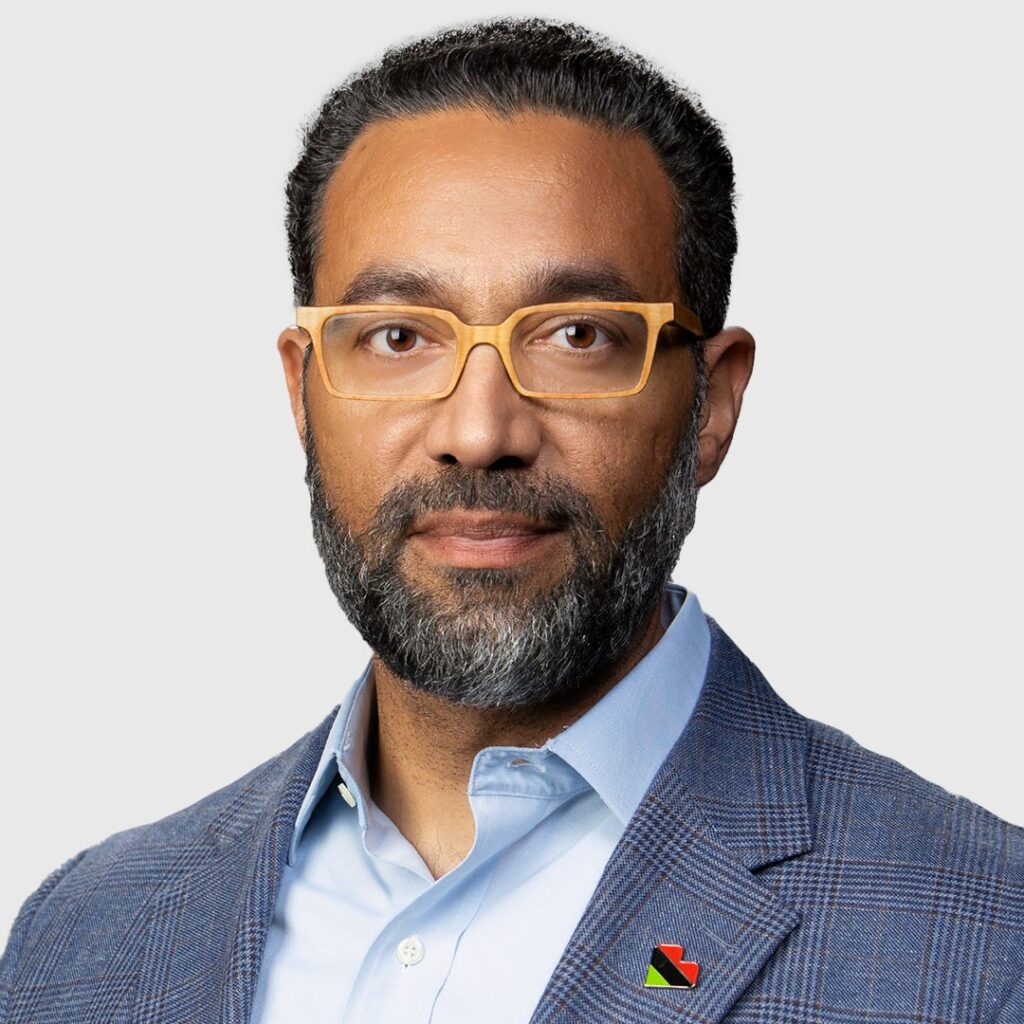
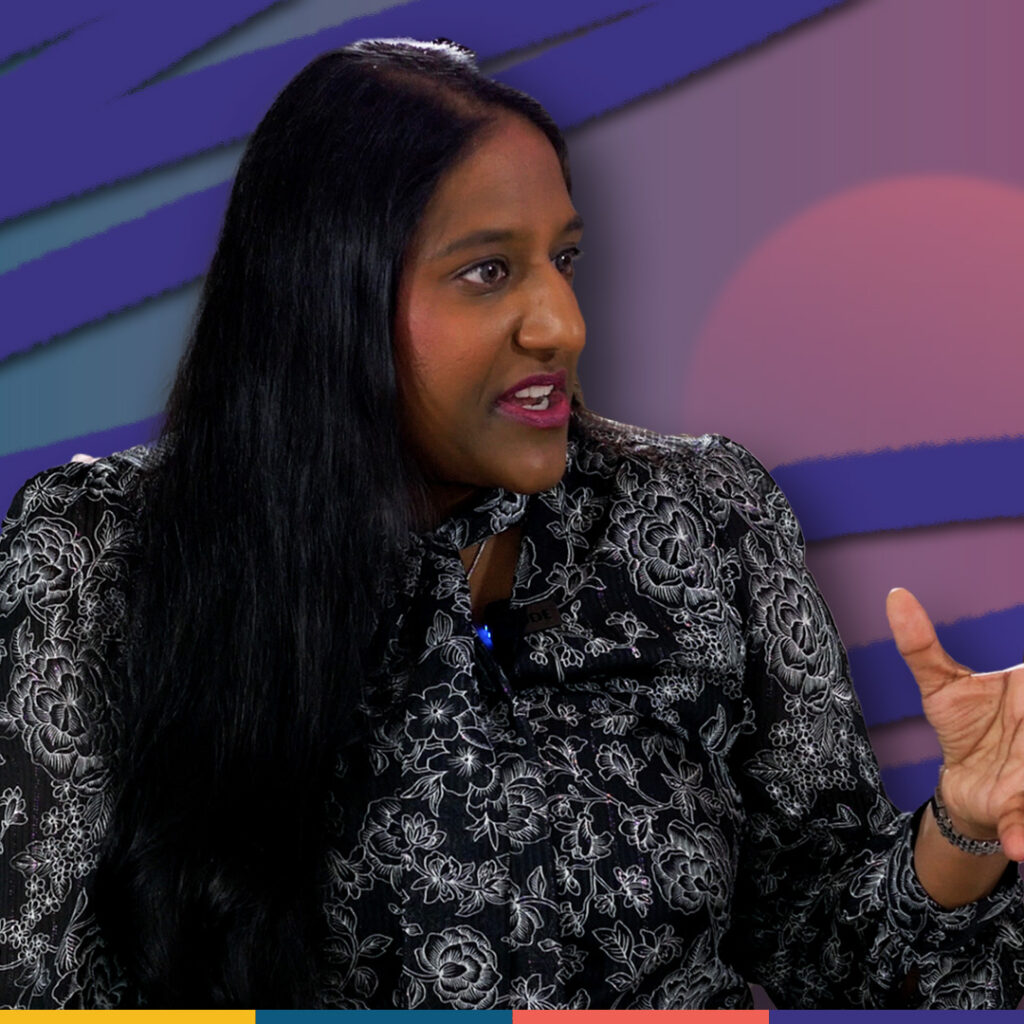
Dr. Thomas Cornwell, National Medical Director at Village Medical at Home, joins Senior Director of Commercial Intelligence Chris Hemphill to discuss home-based primary care and how it’s helping to improve the quality of life for patients and their caregivers. This special episode of Meeting of the Minds was recorded at MedHealth Innovation Summit in Detroit.

Key Points
–Success with value-based care depends on four things: 1. Attribution. You need to let the insurers know who your patients are. 2. Documenting diagnoses. Since providers are paid more for sicker patients, those diagnoses impact payments. 3. Quality. Star ratings incentivize doctors to make sure their patients get preventative care and control their chronic conditions. 4. Utilization management or cost. Value-based care requires that doctors do everything possible to keep patients out of the hospital.
–Value-based care has created the economic engine needed to advance home-based primary care, which is proven to save money.
Sign up to learn about future episodes of Meeting of the Minds
Watch the Full Episode
Watch a Highlight
Sign up to learn about future episodes of Meeting of the Minds
Read the Transcript
Chris Hemphill: We just had a great conversation with Dr. Aaron Friedkin over at a Homeward Health, and we’re excited to carry on with more conversations out here at the MedHealth Innovation Summit. It has been amazing. Just seeing the Detroit community come together and, you can’t see them in the background right now, but you’ll be able to see it as more people gather in the background. You’ll be able to see how many people are representing Detroit med tech.
So that’s really exciting to see and even more exciting is just being able to have a one-on-one conversation with someone who’s leading the charge not only in the world at large in healthcare, but also he’ll be doing a presentation later, but Dr. Thomas Cornwell coming to us from VillageMD. Anything you’d like to say before we start going in?
Dr. Thomas Cornwell: I’m just I’m excited to to talk with you today about both what’s happening here in Detroit as well as what’s happening with VillageMD.
C.H.: So one thing that’s really exciting about the conversation– we were just talking a little bit earlier about. Currently, Dr. Cornwell is the National Medical Director at VillageMD, but his story comes with a lot of personal sacrifices in terms of how he’s delivering care and honestly, fighting for a healthcare model–home-based health–that he believes in.
This number is really astounding, I read about it. He just told me about it, but 34,000 house calls. Could you talk to me about the inspiration behind focusing on house calls? And for folks that don’t understand the impact or significance of making house calls, could you talk about the nature of that and what got you focused on that path?
T.C.: You know and when you talk about sacrifice, yes, sacrifice financially, but you know how rewarding it is just making a difference and people’s lives. And so in that respect, it’s been hugely rewarding, but yes, you know, financially it has been difficult. And so what really… this was not my idea. Like many people, I didn’t realize house calls were still a reality in the 1990s, but I had done some missions work in Mexico and Africa. I volunteered one day a week at a Federally Qualified Health Center on the west side of Chicago taking care of the uninsured, and so someone who wanted to bring this house call mission to Chicago knew this was kind of a part of my heart, wanting to take care of really disenfranchised people. We heard a little bit about that this morning here in Detroit. Those that are disenfranchised in the healthcare system.
And so what was interesting is most of my patients in Africa, in Mexico, in the inner city were disenfranchised for financial reasons. The homebound were disenfranchised because they couldn’t get to health care, and so in 1993, we started to bring healthcare to them. I actually had a van that had an x-ray machine in it with an x-ray processor, a chem analyzer, a CBC blood count machine, but because you can’t do as many house calls as you can in the office, and our chargeback then was only $59.37 in terms of what Medicare paid for. The organization actually went bankrupt in 1995, and my wife supported us in 1996 because we both felt called to this house call mission, and she was the children’s pastor at our church. Not too many doctors have to be supported by their children’s pastor wives, but it was because of the just remarkable, remarkable outcomes–miracles–that we were seeing taking care of these homebound patients, helping them stay out of the hospital, helping them, if it’s their goal, to die at home. And we can get into that later. But what’s so neat for me is having gone through this–and it wasn’t for this, but, you know, since then, I’ve been named the most caring impactful geriatrician in the country by the American Geriatric Society. I’ve been honored in Congress, but more importantly, now with this new value-based care, there is an economic engine to doing the right care again that we can get into.
On a personal level, just reflecting, my grandmother recently passed away in a hospice facility, and there was a big advocacy, but she wasn’t able to get a lot of things that she needed at home. So it’s amazing to hear that incentives are actually shifting to make that a more viable model. Could you talk a little bit about what in the past prevented that from being a viable model to the now shift towards home health?
T.C.: It has been the for-service payment mechanism. Fee-for-service pays for everything you do. And so the more you do, the more money you make, regardless of the outcomes, and so you can make more visits to an office than you can in the home, and it took changing that payment structure. There is this newer payment structure called value-based care, where we are given a certain amount of money to take care of patients. And we want to keep them healthy because now if they get sick, we have to pay for it. So, literally, in the fee-for-service system, the sicker the patients are the richer the healthcare system gets, right? So if you drink too much, if you smoke, if you don’t exercise, if you eat poorly, if you don’t do your preventive screens, like mammograms and colon cancer screening, and you get bad things, the health system makes more money. Under value-based care any sickness our patients get we have to pay for, so we are hugely incentivized to keep them healthy, to engage them in their care, and to keep them well.
That addresses a kind of perverse incentive structure, like, the sicker the…
T.C.: It is horribly perverse. Yeah. It is horribly perverse.
l feel like there are a lot of people in our audience who have been at traditional systems for years that might have had struggles with value-based care. And I think it’s going to be a really good point of conversation, how to make that work, but it leads to a bigger question. There’s all kinds of things you could have done, and carry your focus in a whole bunch of different places. What attracted you to VillageMD? How did that become part of your journey?
T.C.: It was just fortuitous. I was leading a non-profit called the Home Centered Care Institute. I got a very large, $15 million gift to help spread home-based primary care nationally, and they were looking for a medical director, so they came to HCCI, not for me, but they came just wondering iif I had any recommendations. I looked into it, and it has been one of the biggest blessings in my life because again, I now have an economic engine behind what I am doing because they are one of the best value-based organizations in the country.
So now that there’s this economic engine that actually backs a mode of care that’s demonstrated to have better outcomes. What makes VillageMD able to operate under this modality successfully, and I asked that because, the shift to value-based contracts in a lot of organizations has been slow. It’s been challenged with a lot of difficulties. A lot of organizations haven’t seen the savings that they were looking for and able to do it profitably, so just curious on how VillageMD makes these economics work.
T.C.: I believe, it was 2013…Wayne Gretzky, years back said, you know, why is he so great? He skates to where the puck is going to be, not to where the puck is, and so in 2013, they decided, we think the puck is going to value-based care. They started with 14 primary care providers in Houston in 2013, they are now over 3,000 providers in 14 states, 22 markets, and 250 practices, and they’re actually creating two new co-located clinics with Walgreens. These are not just kind of like a small closet carved out of a Walgreens. These are six exam rooms, a central nurses station, an outer waiting room co-located clinics. They’re doing two a week for five years. And what is exciting for me, too, in terms of always having been attracted to those disenfranchised from healthcare, as part of the deal, half of these new clinics are in HHS designated, Health and Human Services designated underserved areas. You saw the data. We heard Dr. Phillip Levy talking from Wayne State University this morning about these healthcare disparities where there are areas that just don’t have primary care, and so not only are we just growing enormously because of where value-based care is going, but also we’re doing it in a way that we can service those that are not getting healthcare right now.
What are the building blocks…because it’s amazing to hear about taking this primary care model, taking this value value-based care model and making it work under this economic model. What are some of the things that VillageMD does to be able to make this a reality?
T.C.: I don’t know how granular to get in terms of the technicalities of value-based care, but there are certain things you really need to do well. One thing, because we have to pay for everything for our patients–if they go to the hospital, if they see a specialist, if they get home health, if they get hospice–we need to pay for it. You need to have a pretty savvy business structure, right? You’re you are both the insurance company as well as the provider because you’re paying all the bills, and so that is just one thing, but in terms of the four things that you really need to do well–one is called attribution. You need to let the insurers know who your patients are. That might sound simple, but even if, you know, you see a patient twice, and they go to an urgent care center three times, you know, the insurance company might think the urgent care is their primary, you know what I mean? So there’s there is an art to making sure. One of the big things is getting your patients to tell Medicare, “this is my doctor.” Okay. So that’s attribution.
One is we are paid more for sicker patients. So you need to do a good job documenting the diagnosis that your patient has because those diagnoses impact your payments, and so disease burden, attribution.
And then one quality. There are things called star ratings, so you want to make sure you are so incentivized that your patients get their mammograms, that your patients get their colon cancer screening, that you control their high blood pressure, that you control their diabetes. These are all things that Medicare tracks and so not only is it important for your quality scores, but this keeps your patients well or catches disease early to drive down costs because you pay for the cost.
And the last thing is those costs. We call it utilization management. We do everything possible to keep these patients out of the hospital, and that is the reason why they are so interested in home-based primary care because nothing in the literature saves more money on the sickest patients in society than providing them house calls.
Interesting. So, now there’s an economic engine that rather than you’re sicker, I pay you. You’re sicker, you get paid more now. There’s an economic engine to seek out those things that not only bend cost curves but also deliver care–like when I’m thinking about my grandmother–deliver care where people would prefer to have it.
T.C.: One of the things that actually make it easier is, and we heard this again this morning in Detroit, is 5 percent of the population consumes 50 percent of the cost. You heard this morning, I think it was, he said 25 percent of the patients consumed 90 percent of the… But so, 5 percent consumed 50 percent. One percent, the sickest 1 percent, cost an astounding 22 percent of all healthcare dollars. One in a hundred consumes one in $5, at a cost of over a $110,000 a patient. So if we can target, and we can, data analytics is huge. We target these sickest patients, and then we surround them with services like house calls, like care management, like clinical pharmacy, and one that we can discuss called CAPABLE, which is an amazing program that I think is just such a great example that we’re doing in Houston.
So earlier before our conversation now, I was saying, hey, can we dig into a really specific project that brought all these elements together? And you said, “I’m capable of that.” I thought you were just saying that you were capable.
T.C.: So people are gonna have to Google CAPABLE [Community Aging in Place—Advancing Better Living for Elders] Johns Hopkins, because I don’t know what the acronym stands for. They’re pretty smart that they created an acronym out of capable, but it is a too-good-to-be-true program, and literally, when we call patients with it, and as I describe it, you could see how you might be a little like, yeah, right. But what we do is on these sickest patients, and this has been studied at Johns Hopkins over 10 years to show that it reduces costs. So instead of paying for hospitalizations, we pay for CAPABLE. What is it? Over a four-month period, the patients have to be low-income, functionally impaired, and complex–multiple medical problems. We, over a four-month period, bring in an occupational therapist to work on their safety and function, and we bring in a nurse to work on their multiple medical problems. But what is magical about the program is after the second OT visit? We bring in a handy worker with a $1,600 budget that we pay for, and we get no reimbursement for this. But the handy worker puts in grab bars and raised toilet seats, and ramps. So people can get out of the house again. Smoke and carbon monoxide detectors.
When there was this freeze in Houston in February of 21. If you recall, where the whole city shut down for three days. We bought $50 space heaters for some of our CAPABLE patients. When you think about it, $50 gets you so little in healthcare, but what do you think those space heaters did for our 80-year-old frail, impoverished homebound patients in terms of their healthcare? You know, if they prevent an emergency room…These are things that we can do under value-based care because we can shift, by keeping them out of the hospital, by keeping them well, we can shift those costs into providing better care.
I know we’re focused on costs and that provides the incentive structures to make certain kinds of movements. I’m actually thinking about, like, what this incentive structure that you’re operating under has gotten you to think about where to spend these dollars. Because it’s a question of $50 to put a space heater in someone’s home and make their life more comfortable versus allowing them to have an extremely uncomfortable, uncomfortable life, and then once, any kind of intervention is done, it’s not a $50 intervention, it’s on the tune of thousands or hundreds of thousands.
T.C.: They talk about you know, primary care is being comprehensive, cradle-to-grave, as well as taking care of the whole body, whole person-centered care, comprehensive, continuous, and coordinated. And again fee-for-service, there’s no payment for coordinated care. And so people talk about just being lost in the healthcare system. Well, we don’t want them to be lost because that ends up, you know, people end up in an emergency room. So we also have over a hundred nurses and social workers in care management to really help people with those other needs. Whether it be, and you talked about mental health, whether it be, you know, mental health needs or just navigating, you know, a disease process, like cancer where they need to get multiple services.
Again, not only is this what is best for our patients, but by coordinating that care and preventing bad events, we save money. And so better care and better for us.
I’m really curious to dig even more into the mental health perspective because when we’re thinking about integration before this conversation, I wasn’t thinking about handyman integration into the healthcare system, but behavioral health integration, the whole health concept, I’m curious on what that looks like or what your thoughts or approaches are at VillageMD on the mental health side.
T.C.: We know there’s such a lack of mental, good mental health services in our country. Why? Fee-for-service does not reward mental health, so there’s a limit to it in the country. Well, for us mental health, poor mental health leads to a lot of costs. So again, we want to keep our patients healthy. And so we just partnered with an organization called Mindoula. I think they’re in 36 States, but it’s called a collaborative model, where they provide counselors for our patients virtually. And so licensed clinical social workers as well as psychologists.
And then what they also do is they provide psychiatrists, but not to directly see or talk to the patients, to provide the primary care doctors and nurse practitioners and physician assistants support. So we have access any day. And we can contact them electronically, say, this is what’s happening with the patient. You know, we have them on this antidepressant. They’re not doing well. What would you recommend? Do we need to increase the antidepressant, do we need to switch the antidepressant? Do we need to add an antidepressant? So we have the direct counseling, so the counseling services are direct for our patients, but then we have these great psychiatrists that can provide us the knowledge to take care of our mental health patients better, and because it’s virtual, it’s so easy to spread throughout all of our markets, and I know you’re from Atlanta, and that’s actually one of the two markets where we’re going to start the program, and so we’re so excited to pilot this and then to rapidly expand it to the other 14 states that we’re in.
Well, I mean, this is a huge conversation topic. I was at the Future of Mental Health conference up in Boston a couple of months ago, and I know that they’re doing another conference, and I’ve seen just behavioral health integration on the menu, on the radar, with so many different types of institutions. I’m curious, are there any, in terms of measuring the effectiveness of this, goals or metrics that you’re looking at monitoring? What’s going to be an indication of a successful pilot when you get down here to Georgia, where I’m from?
T.C.: Part of our algorithm for predicting who, so what we do is we have these algorithms that predict a patient at risk for hospitalization. And behavioral health is part of that because we know mental illness creates emergency department use as well as hospitalizations. So one of the outcomes will be reduced healthcare utilization in the hospital, but the other thing, you know, the nice thing about depression is there’s this survey called PHQ-9, if you’re aware of that, and so it asks the nine aspects of symptomatology for depression, and it’s based on a 27 point scale, and every five points is significant in terms of mild, moderate, high, very high depression. And so you can actually see that change, as you give them this better care–their scores come down.
Fantastic. So I’m guessing you’ll consistently deliver that survey to those under that care.
T.C.: One every three months.
That’s actually an aspect of behavioral health that we focus pretty heavily honest–this measurement base care concept, which, going into the company, I was thinking, oh, we measure our outcomes, but really a number under 20 percent of behavioral health providers are actually using measurement-based care. So it’s interesting seeing that you guys, that y’all are taking that and expanding that throughout the DNA of the pilot.
T.C.: It’s embedded in our EMR. So, in fact, everybody gets a PHQ. The screening test is called a PHQ-2. So if that’s zero to two, you don’t have to go any further. But if it’s positive, then you want to do that whole PHQ-9 to really see where they are on this scale because it actually guides treatment.
So we’re talking about measurement-based care on the behavioral health side. When we expand it to the types of metrics, a little bit earlier and you talked about some of your predictive algorithms and things like that, I’m just curious, from your perspective as national medical director, what leadership focuses on in terms of metrics to know that you’re leading these projects well and improving the health of these populations you’re working with.
T.C.: And so there’s this term admits per thousand and ED [emergency department] visits per thousand patients, and so that’s a huge one because that is where the costs are, but then there’s all the quality metrics, they’re called HEDIS measures [Healthcare Effectiveness Data and Information Sets], and that’s all those things we mentioned before, the mammograms, the colon cancer screening, and stuff like that. We want our patients to get what are called annual wellness visits (AWV). It’s huge both in terms of that attribution because it has a higher weight in Medicare, that if you did their AWV, you are most likely going to get that patient attributed to you.
But the AWV also does things like advanced care planning, which is so important to really know what patients’ wishes are, both for now–who they want to be a medical decision-maker if something were to happen to them. But also in terms of end-of-life care.
I’m actually in charge of end-of-life care for our organization. And so I do a lot of work with that. We have measures for that. Was it discussed in the last year is one of our measures. One of the measures is do they have a scan power of attorney in their chart. Is it a part of the problem list? Because we want what the patient wants in that problem list so all providers in the system know what that is. And finally, there’s this, if you spend 16 minutes discussing Advanced Care Planning, Medicare now pays about $85 for that, and so if it’s been billed in the past year are we having these important discussions so that we can do what our patients want? Like your grandmother, 70 to 80 percent of people say they want to die at home. Only a little over 30 percent do, and I would consider a hospice house really being at home. It’s not in the hospital. It’s surrounded by supports, surrounded by families, surrounded by love, surrounded by peace, surrounded by comfort. That is what we try to do. And not only is that what 70 to 80 percent of patients want, but again, in value-based care, we are rewarded for doing what they want, having them at home versus having them at the hospital.
So another question that this leads to is, we’re talking advantage of new things that look at upstream issues and their downstream impact on health and incidents and costs and things like that, and VillageMD is obviously been able to operate in the space very well, but on the traditional player side, for the folks who are at standard brick-and-mortar facilities, when they look at firms like yours and others who are coming in, new entrants in the market, how should they be thinking about the disruption that’s occurring in the market?
T.C.: Just as a country, the fact is, healthcare, I truly believe, cares. But it’s very good at following the dollars, and if we incentivize sickness, I think our system shows us, we spend double all other industrialized countries. When you look at 11 industrialized countries, we score the worst in terms of outcomes.And so we’re just not getting the value for our dollar because we incentivize, financially, sickness, as I said earlier. You know, the worst your behaviors are the richer I get, and I can tell you under value-based care, we will pay for nicotine patches. We’ll pay for counseling, we’ll pay for whatever we can to help you quit smoking. And so I really think that value-based care is here to stay. The problem especially, I think, for hospitals is they have been so rewarded for fee-for-service that it’s hard to change those big ships in terms of going into value-based care. We know, we heard this morning, Wayne State University is doing a great job of trying to keep Detroit healthy. And that is what I think, as a country, we need to do, we need to reward good outcomes not just doing things.
Absolutely, and just curious, with you opening in various retail facilities, Walgreens, are there opportunities for partnership with, if there are more downstream issues detected, are there opportunities for partnership, or how would you see the traditional provider role relationship with the VillageMD.
T.C.: So the big partnership is obviously with Walgreens,those two new clinics that we are creating a week for five years. We’re actually on target to have 200 new clinics already started by the end of this year, but the other partnership is with the providers, the doctors in the community. The way we make these Walgreens work is we acquire practices, and then we move the practice and the patients into the Walgreens, these brand new beautiful clinics, so that they already start with the sizeable patient population. The problem with value-based care is that because you have to pay for the hospitalizations, for the specialists, practices aren’t in the position to take on that infrastructure or to take on the risk. And so by joining Village Medical, it’s kind of a win-win, where they can take advantage of the wonderful primary care they do by keeping patients out of the hospital.
A study out of the Commonwealth Fund showed that if you have a primary care doctor versus just specialists, your outcomes are better, plus you save 33, you spend 33 percent less on healthcare. Better. Reduce costs. And that is what we’re trying to spread in this country. But so these primary care providers can join us. We teach them better value-based care, and then we can quickly spread this wonderful care in the country, so it’s a win-win opportunity. They can become involved in value-based care, and we have more providers to expand these clinics in the country.
Well, I’m really thankful that you shared the results of value-based care and then got deeper into the economics and what kind of infrastructure that you’re talking about to help make it work. It raises a big question. And this is a question I actually ask everybody, but we’ve talked about economics, we’ve talked about home health care delivery. We’ve talked about patient preference and the whole range of things.If we’re to zoom in on one thing that needed to change to better deliver care, there’s one thing that you could change about how we deliver care, or mental health care, what would that one thing be?
T.C.: The global one thing is happening. And that’s value-based care. We have to, as a country, reward good health, financially, not reward sickness. And then I think the one thing under that big umbrella is improving end-of-life care in this country. It is something that I have been doing since 1993, and I use the word incredulous.
How can the one ailment that’s going to happen to all of us, our country be so poor at taking care of? So, if you think about it prenatal care. Think of what we do to create a successful birth. Well-child care, immunizations, think of what we do to create a good childhood, right? What do we do for pre-end-of-life care? What do we do to ensure end-of-life care is as quality as beginning-of-life care? And we leave it to chance. Very little is done. And so it creates such crises. It creates so many people who don’t want to be on machines. And by having these proactive conversations, and really doing kind of pre-end-of-life care.
You know, in my practice that I was with that, when I in the last 10 years was at Northwestern in Chicago, we had from 2003 to 2019, we had over 3,000 deaths about 20 to 25 percent of our patients died a year. Seventy-five percent died at home. Half the hospitalization in the last 90 days of life, a sixth of the ICU, and 29 percent of Americans are in the ICU within 30 days of death. And if you want to suffer, if you want to be short of breath and in pain, that’s the place to be. It is not a quality end-of-life, and it’s so expensive. And so if there were something that I could immediately change in this country it would be that we start these conversations and just strive to have truly quality end-of- life, that is not suffering, that is peaceful, that is surrounded by loving family. And so that would be my wand. If I had a wand, that’s what I try to do.
Well, I’m keeping a running tally, and you being the second person I’ve interviewed and asked that question–both brought up incentives, the incentive structure. And the, ah, but bringing in the end-of-life care, that that’s a huge perspective and I imagine that when we talk about the cost figures,1 percent costing, what about 22 percent?
T.C.: Twenty-five percent of all dollars are spent on patients in the last year of life, and again, if we were creating quality end-of-life, you might say, well, it’s expensive. But the fact is it shouldn’t be expensive, especially if we fulfill their wishes to be at home. We’re just not doing a good job, and it’s wasting an awful lot of healthcare resources that could go to some of the better things that we heard about this morning at this wonderful Summit.
I just want to, I hope that people watching have just gotten a whiff of what it means to follow something that you believe in, follow a model that might not be the most financially rewarding, but rewarding in the fact that you know that when you were delivering those 34,000 visits, you knew, that it worked, and you got fulfillment out of knowing that you were doing the right thing for these patients, and over, over time the incentive structure changed to allow for that to happen at a larger scale, but I really hope that people watching have been able to get a sense from that. For folks who want to communicate with you or keep up or follow up. What’s the best way to reach out?
T.C.: LinkedIn is always a good way, and if they can, you know, mention this podcast because a lot of people reach out, so I know what it’s about. I just so love letting people know about home-based primary care. This nonprofit that I started the Home Center Care Institute. If they are interested just in terms of learning about how you do this home-based primary care, they have a ton of free resources, videos, learning modules on their website, as well as people that they can talk to about how you get involved. They’re doing a conference this month in San Diego on how to do house calls. And so that is the one resource in the country if they want to learn more about home-based primary care.
C.H.: Well, fantastic. Remember whenever you reach out to Dr. Cornwell mention Meeting of the Minds, and I have to say we’re glad to have you, and for the folks who are watching or listening, really appreciate you sticking around for this conversation. I thought there were a lot of meaningful messages shared out of that, and if you want more Meeting of the Minds conversations, you can always register to receive our emails on woebothealth.com, and we would be happy to talk with you next time.
Sign up to learn about future episodes of Meeting of the Minds