Breaking Barriers in Behavioral Healthcare: Dr. Taft Parson III –...
Summary: Dr. Taft Parsons III, Chief Psychiatric Officer at CVS Health, discusses his journey into behavioral health leadership and how…
Measurement based care shows significant potential even among complex patients with many special needs. However, for these programs to work long term, incentives and multiple stakeholders need to be aligned. How to start down this path?
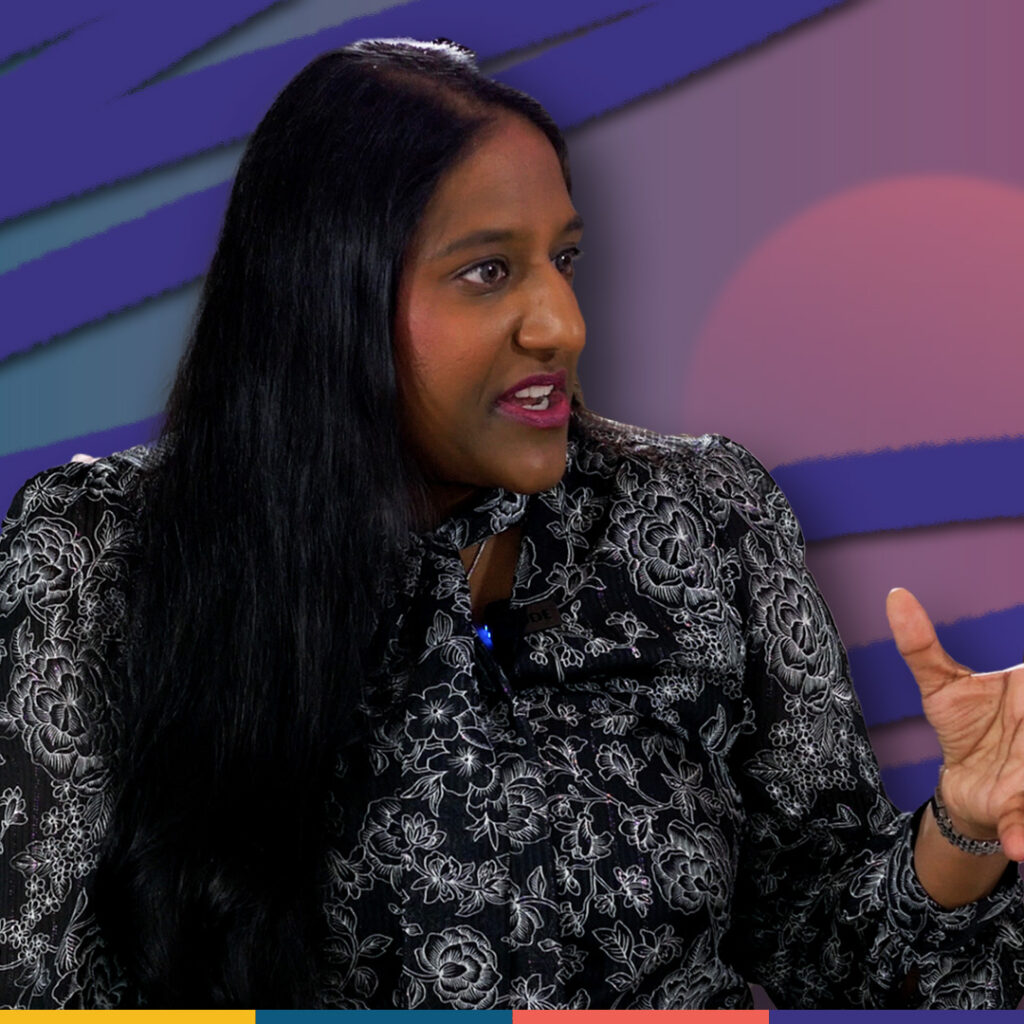
Melissa Reilly, Evernorth Behavioral Health Service’s Chief Strategy Officer, joins us to talk about how her personal experience paved the way for prioritizing patient needs, addressing challenges, and collaborating with stakeholders to improve mental health outcomes.
(edited for clarity)
Chris Hemphill: Chris Hemphill with another Meeting of the Minds. What we’re addressing today is a continuation of our conversation on measurement based care. You might recall or might have seen or heard the episode that we had with Dylan Ross, who is the vice chair for measurement based care at the APA American Psychological Association. In that episode, we focused on the ability to impact patients with depression and anxiety and ultimately the poor adoption of these programs. What’s led to that and how to introduce these programs in a way that doesn’t drive burnout to an already burdened staff.
But we want to drive the conversation deeper and bring diverse voices, stories and perspectives so that there’s a deep understanding of the many aspects around measurement based care, why it’s important and the types of results it can drive, but also the hurdles that you might face while driving those results. To help us out with that in the best possible way we have Melissa Reilly, who is the Chief Growth Officer of Behavioral Health Services at Evernorth.
Melissa Reilly: Hello! Thank you for having me.
What we were thinking and hoping that you could get out of this were some key learnings around measurement based care, how to tailor measurement based care initiatives to special populations. So, taking that general conversation and driving it deeper to more specific and unique needs that people face, there’s a one size fits, one in health care. Overcoming challenges around adoption, focus on health equity and understanding the economic impact and how that evolves with measurement based care. Does that sound like a fair way to kick off the cover?
It’s one of my favorite topics, so I’m excited to dig in.
Can you tell us your story and your background and why the measurement based care conversation is important to you?
I’m privileged to have spent my last two years with Evernorth Behavioral Health in a growth role, kind of looking and getting the chance to think about what should the future of behavioral health really look like. And in order to understand and define our future, it really helps me to think about like my past and my personal motivations for getting into the behavioral health space.
My behavioral health journey started with my family and with my nephew. We were actually fortunate because my sister was such a caregiver and advocate for my nephew Matthew, that she got him enrolled in an early childhood education program at Yale. And so we got some of the absolute best applied behavior analysis (ABA) therapy out there. And I actually saw how with the right goal setting and the focus on outcomes, you could see incredible improvements. I compare it to other friends and family members that might have experienced ABA. And I think about some circumstances where a friend was really having a challenge, getting more than just a babysitter, kind of in her ABA experience. And so for me, that was my real world experience with special populations.
When I think about Evernorth being an innovative health services company and our ability to touch over 26 million lives every day, I think about Matthew and that it shouldn’t be a coin toss that determines what level of care your child gets.
This is something that excites me about everyone who I’ve been working with in the mental health space is that the spark often comes from very personal scenarios. And I really appreciate you sharing your story and how you’ve kind of mobilized into a position where you can focus on a population of 26 million. As Chief Growth Officer of Behavioral Health Services, can you define what that focus is and how you fit into this role?
We have been defining measurement based care as really the focus on quality outcomes instead of just the narrow focus on the provision of services. Let’s say that in common language. As we look across the population, we want to make sure that the care that’s being provided actually helps make someone better or improves the quality of their life instead of just paying for a service that is rendered. The biggest challenge is considering the multiple stakeholders that actually have different incentives that walk in to the equation. I’ll give you my personal example. You have my sister as the parent, oftentimes the insured, not always the insured. You have a health plan or a health services company that might actually be paying for it. You have the provider. And then you might have the patient, which might be a dependent, not necessarily the insured. And sometimes you have technology enabling companies kind of in the middle. So you’ve got all these stakeholders and sometimes different layers. And at the end of the day, the outcomes that all may want may not actually be aligned. For us, that’s been the most unique part of the entire journey. And measurement based care is, how do we create that stakeholder alignment through partnership that incentivizes all parties to have the right behaviors?
What’s in your day to day, in your role, and what’s your focus on helping to drive this?
My job originally was to spend a lot of time looking at like how we introduce Evernorth to market. But now one of the things that I actually spend a lot of time on is starting to vet partners, spend time with our partners that we believe help us enable and unlock measurement based care at scale. I also spend a lot of time with our clinical teams and our product innovators looking at how we take down barriers in the access to care. When I started in this field, 20 years ago, there was stigma, like nobody grows up being like, hey, I really want to work at a health insurance company. And certainly, in my last school days, I wasn’t like I can’t wait to get into health care! But I always saw it as a space where there’s these deep problems that can still be unlocked. My job now is really looking at the point of view of all stakeholders, and it’s really about how do we take down those barriers that would stop people from getting that quick access to care. I mentioned stigma in health care. I really do believe that there are people out there that think those of us that are affiliated with like a Cigna or a name of another payer that we spend a lot of time thinking about how to stop and block access to care. In my week, I can’t think of one minute where I’m actually focused on how do I deny care. The majority of my time, 80% of it is really spent on knocking down those barriers and thinking about how to enable that quick access. There are so many barriers that need to be removed for this to be really successful at scale.
Could you give a very basic definition of measurement based care and how it differs from a general population to specialized people?
I actually think in behavioral health, you almost start with the presumption that everyone has anxiety and depression. I’m not clinical, so maybe clinicians would disagree with me. But if you think about it from a very logical perspective, and you think about the elements of good behavioral care, you really start with someone raising their hand or having their hand raised for them, that there is something going on and then they consent or sometimes not consent to an assessment of health status. Based on how they talk about what’s going on with them, resources are offered, oftentimes therapy. That then is used to say if what we’re doing is really helping to improve someone’s health outcomes or make someone better. Oftentimes, especially in the commercial space, you don’t always see these severe mental illnesses as they’re not like always apparent. There is this presumption of a baseline, that people can function. When we’re talking a little bit more about severe mental illness, we go up into a lot of those higher levels of care. Oftentimes, people will present inpatient or at the hospital. Certainly we have solutions that are seeking to address that. But in behavioral health, you really do have a lot of opportunities to intervene and meet someone oftentimes before they escalate into that higher level.
We’ll look at like kind of our EAP. It’s supposed to be that baseline for people that want to access care. We look at a typical EAP engagement somewhere in the neighborhood of like 2%. So while we know there are other places where people are starting to access that care, if only 2% of a population is using services when we know the need is somewhere between 25%, maybe all the way up to 50%, that’s an awful lot of people walking around with those unaddressed mental health needs in the mental health space. I don’t think you can even have a conversation about measurement based care unless you start to address the access, because that’s really the start of the journey.
What were some of the challenges leading to that that drove a change to bring them into a program?
I would say there are about four areas right now. We are very acutely focused on autism at the top of the list. And coming out of COVID, it is just so heartbreaking to see how many children, how many families are struggling with loneliness, a lack of vitality. I think there’s so much more we can do in that space. We’ve also looked at how through our PBM or pharmacy benefits management, you can see a lot of things that come in like prescription drug utilization. We’ve looked at how unmet behavioral needs come through pharmacy utilization, where you don’t have a behavioral health visit. We’re so lucky because we have a really unique data set that is fully integrated: medical, pharmacy and behavioral. Some other areas of focus for us are oncology, looking at mental health and the cancer journey. As a cancer survivor myself, I can count on my one hand how many times my mental health needs were asked about, and this was only about like 15 years ago. So we think that’s a space that deserves a little bit more attention. And we’re also leaning into people kind of in that rising risk level, those that would have more severe mental illness.
I appreciate you sharing that. And honestly, you know, we do talk a lot about behavioral health integration in the primary care setting. That’s because 60, 70% of mental illness issues appear in that primary care setting. There’s such an unmet need, especially around specialty care and mental health.
As I’ve been traveling to a lot of these conferences, friends have been continuing to introduce me to different academics in this space, and that really helps us gather these different perspectives. As we think about some of these special populations, I have to bring in that it’s important to build that trust between the patient and the provider. When I speak with providers, they ask me if I feel like they’re actually practicing measurement based care today. I think so many of them actually are. I can see a lot of their great work evident in the care that they’re giving. Our providers are fantastic humans that are in it for a really great reason. I think we’re going back to what we talked about a little bit earlier as it relates to some of these special populations. It’s not that our oncology providers don’t want to address mental health needs, but as you look at how their workflow goes, there aren’t always these opportunities for them to ask these great questions about mental health. But I have to say I am super positive, optimistic.
Was there a scenario in your tenure or that you’ve seen in which there was no measurement based care in place and you gradually introduced to to that population and providers?
Yes. And we continue to be really focused on this work as well. We’ve been working on a collaboration which takes an employer and an innovative technology company in the autism space, a really future forward provider group, and we’re actually all collaborating around the use of the technology in order to return back some really innovative data in the measurement based care space for autism. We have a technology enabler that’s actually rolling during the therapy session with consent that allows us to look at are the goals achieved? There are a lot of people out there that might be listening going, wow, that is way too Big Brother, But we have the provider, the parent, the child, everyone is consenting to this happening. And what it actually does is it removes this unbelievable amount of administrative burden on the providers who are giving that care. I think it really helps to scale the return of outcomes back faster. Our hope is that this will be more commonplace and we will learn from the measures that we collect and that will continue to propel this space forward.
Let’s talk about learning from measurement based care. What have you started learning about populations and, from a practitioner perspective or strategic perspective, what’s changed now that you’re seeing these checkpoints and measuring these various data points about people’s visits?
First of all, I don’t want to create the perception that we weren’t collecting the data before. I talked about that great integrated medical behavioral pharmacy data set. Let’s look again at our autism population. One of our partners was sharing that tying your shoe is actually one of the measures that’s collected. And I think to myself, when I look back to my nephew or even my own children, do I really value the shoe tying? Is that a goal that I would really want my child focused on? Or is there a goal like being able to sit near your desk or complete your paper or make it through the day in your classroom that might be a goal I really want to be focused on instead of the shoe tying. I just think being able to see the data and roll around in it on a spreadsheet is just so enlightening. In terms of are we focused on the right things? Is our shared definition of success all aligned? Like it is it is way too hard to be able to collect back all these measures, which now we know many of the provider groups are able to capture and share, but it’s way too challenging to be able to scoop them all up and do something meaningful with it. And I think there’s also these perceptions that we’re going to then use that data to deny care. We’re really focused on access, not the denial of care, but that perception is out there. And so that really starts to create that reticence around some of the sharing.
How do the conversations around driving adoption of these practices happen, or how how do you influence the adoption?
They’re really collaborative. Where I’ve seen a lot of success is like actually kind of putting our cards on the table. I realize I’m now asking you to capture more data than you would have or use a different tool of software than you would have before. There has to be incentives exchanged for being able to do that. And I think there is a receptiveness to the upside incentives. Ultimately, there’s also got to be downside incentives if those measures are not achieved. And so those conversations are really delicate. They’re partnership conversations. They’re not like vendor and contractor conversations. They’re very much more done in the spirit of partnership and often with multiple parties at the table. I just am so excited for that. I just feel like it really changes the dynamic that we’re all kind of in this together, trying to make it better.
So it’s a matter of taking conversations and approaches that might have been adversarial in the past and establishing this isn’t just rules coming from on high. There is like there’s a return on, on the effort that you put in?
Absolutely. It really feels like you’re changing years of established rules of engagement. Because you’re looking at innovative contract measures and you’re sharing, well, I can do this. Today I’m able to do this. I can’t get all the way to here where I know you want to go, but let’s start here. Let’s get that data. Let’s see how that flows. And then let’s pick up some additional measures. We’ve been really excited about trying to capture time to care more at scale. You would think that would be so easy. But you have to think about when does the watch start? Does it start when the person calls in? When they have a claims issue? And when does the watch end? We’ve got some great research that says therapeutic alliance and medical cost savings can actually be enabled in some conditions with one visit. But in our early research, we had really leaned more towards, you know, it’s the third visit that starts to make the difference. Even as we’ve refined some of those analyses and sliced and diced the population differently, we’ve seen more savings emerge in some of these special populations. So that’s really helped us hone in on and made behavioral health less of an art and more of a science. I’m really cheering for that.
I’m curious about how you see measurement based care evolving over the next call it year, three years. What are some of the things that you see in the future that are going to help in driving a greater adoption for measurement risk?
A friend of mine was talking about the high trust movement and how great it’s been for technology companies. Maybe some would disagree with that, but it creates a set of standards around what companies must do for their technology. Be safe. That’s probably the easiest way I can explain high trust in a minute. When I think about the behavioral health space, where I see this evolving is I do think standards will start to emerge. There’s going to be a natural forcing function around standards, and we’re hoping to drive that, but we know we can’t drive that alone. We need partnerships to be able to do that. My hope is that there will be more interoperability. Standards will make it easier for us to send measurement back and forth to each other.
The final thing that we do on our episodes is to give you a superpower or a magic wand, and this allows you to change one thing in how care is delivered. What would it be?
I like my magic wand to have lots of waves, but I think I would just love to have more capacity to be able to ingest more measures more quickly from more providers. That continues to be a limiting factor. That lack of standards that we just talked about means we can’t pick them up from each of the providers as quickly as we would like. That is just my goal. What I focus on every day is how do we ingest more of that data, more quickly? Because understanding that data helps us make better decisions and helps us get people to the care that they need more quickly.
It sounds like you’re coming from a perspective of what can we learn about the situation that people were in when they came and sought care that we can use to then make better decisions and improve the process later on?
Absolutely, because it’s really about making the lives of the humans that we’re serving better, not making it harder for them to get the care that they need. And within the mental health space, you need more data to make those better decisions.
What’s the best way for our audience to keep up with you and the conversation?
Go to evernorth.com and check out what we’re publishing with our partners.
Measurement based care shows significant potential even among complex patients with many special needs. However, for these programs to work long term, incentives and multiple stakeholders need to be aligned. How to start down this path?
Melissa Reilly, Evernorth Behavioral Health Service’s Chief Strategy Officer, joins us to talk about how her personal experience paved the way for prioritizing patient needs, addressing challenges, and collaborating with stakeholders to improve mental health outcomes.
(edited for clarity)
Chris Hemphill: Chris Hemphill with another Meeting of the Minds. What we’re addressing today is a continuation of our conversation on measurement based care. You might recall or might have seen or heard the episode that we had with Dylan Ross, who is the vice chair for measurement based care at the APA American Psychological Association. In that episode, we focused on the ability to impact patients with depression and anxiety and ultimately the poor adoption of these programs. What’s led to that and how to introduce these programs in a way that doesn’t drive burnout to an already burdened staff.
But we want to drive the conversation deeper and bring diverse voices, stories and perspectives so that there’s a deep understanding of the many aspects around measurement based care, why it’s important and the types of results it can drive, but also the hurdles that you might face while driving those results. To help us out with that in the best possible way we have Melissa Reilly, who is the Chief Growth Officer of Behavioral Health Services at Evernorth.
Melissa Reilly: Hello! Thank you for having me.
What we were thinking and hoping that you could get out of this were some key learnings around measurement based care, how to tailor measurement based care initiatives to special populations. So, taking that general conversation and driving it deeper to more specific and unique needs that people face, there’s a one size fits, one in health care. Overcoming challenges around adoption, focus on health equity and understanding the economic impact and how that evolves with measurement based care. Does that sound like a fair way to kick off the cover?
It’s one of my favorite topics, so I’m excited to dig in.
Can you tell us your story and your background and why the measurement based care conversation is important to you?
I’m privileged to have spent my last two years with Evernorth Behavioral Health in a growth role, kind of looking and getting the chance to think about what should the future of behavioral health really look like. And in order to understand and define our future, it really helps me to think about like my past and my personal motivations for getting into the behavioral health space.
My behavioral health journey started with my family and with my nephew. We were actually fortunate because my sister was such a caregiver and advocate for my nephew Matthew, that she got him enrolled in an early childhood education program at Yale. And so we got some of the absolute best applied behavior analysis (ABA) therapy out there. And I actually saw how with the right goal setting and the focus on outcomes, you could see incredible improvements. I compare it to other friends and family members that might have experienced ABA. And I think about some circumstances where a friend was really having a challenge, getting more than just a babysitter, kind of in her ABA experience. And so for me, that was my real world experience with special populations.
When I think about Evernorth being an innovative health services company and our ability to touch over 26 million lives every day, I think about Matthew and that it shouldn’t be a coin toss that determines what level of care your child gets.
This is something that excites me about everyone who I’ve been working with in the mental health space is that the spark often comes from very personal scenarios. And I really appreciate you sharing your story and how you’ve kind of mobilized into a position where you can focus on a population of 26 million. As Chief Growth Officer of Behavioral Health Services, can you define what that focus is and how you fit into this role?
We have been defining measurement based care as really the focus on quality outcomes instead of just the narrow focus on the provision of services. Let’s say that in common language. As we look across the population, we want to make sure that the care that’s being provided actually helps make someone better or improves the quality of their life instead of just paying for a service that is rendered. The biggest challenge is considering the multiple stakeholders that actually have different incentives that walk in to the equation. I’ll give you my personal example. You have my sister as the parent, oftentimes the insured, not always the insured. You have a health plan or a health services company that might actually be paying for it. You have the provider. And then you might have the patient, which might be a dependent, not necessarily the insured. And sometimes you have technology enabling companies kind of in the middle. So you’ve got all these stakeholders and sometimes different layers. And at the end of the day, the outcomes that all may want may not actually be aligned. For us, that’s been the most unique part of the entire journey. And measurement based care is, how do we create that stakeholder alignment through partnership that incentivizes all parties to have the right behaviors?
What’s in your day to day, in your role, and what’s your focus on helping to drive this?
My job originally was to spend a lot of time looking at like how we introduce Evernorth to market. But now one of the things that I actually spend a lot of time on is starting to vet partners, spend time with our partners that we believe help us enable and unlock measurement based care at scale. I also spend a lot of time with our clinical teams and our product innovators looking at how we take down barriers in the access to care. When I started in this field, 20 years ago, there was stigma, like nobody grows up being like, hey, I really want to work at a health insurance company. And certainly, in my last school days, I wasn’t like I can’t wait to get into health care! But I always saw it as a space where there’s these deep problems that can still be unlocked. My job now is really looking at the point of view of all stakeholders, and it’s really about how do we take down those barriers that would stop people from getting that quick access to care. I mentioned stigma in health care. I really do believe that there are people out there that think those of us that are affiliated with like a Cigna or a name of another payer that we spend a lot of time thinking about how to stop and block access to care. In my week, I can’t think of one minute where I’m actually focused on how do I deny care. The majority of my time, 80% of it is really spent on knocking down those barriers and thinking about how to enable that quick access. There are so many barriers that need to be removed for this to be really successful at scale.
Could you give a very basic definition of measurement based care and how it differs from a general population to specialized people?
I actually think in behavioral health, you almost start with the presumption that everyone has anxiety and depression. I’m not clinical, so maybe clinicians would disagree with me. But if you think about it from a very logical perspective, and you think about the elements of good behavioral care, you really start with someone raising their hand or having their hand raised for them, that there is something going on and then they consent or sometimes not consent to an assessment of health status. Based on how they talk about what’s going on with them, resources are offered, oftentimes therapy. That then is used to say if what we’re doing is really helping to improve someone’s health outcomes or make someone better. Oftentimes, especially in the commercial space, you don’t always see these severe mental illnesses as they’re not like always apparent. There is this presumption of a baseline, that people can function. When we’re talking a little bit more about severe mental illness, we go up into a lot of those higher levels of care. Oftentimes, people will present inpatient or at the hospital. Certainly we have solutions that are seeking to address that. But in behavioral health, you really do have a lot of opportunities to intervene and meet someone oftentimes before they escalate into that higher level.
We’ll look at like kind of our EAP. It’s supposed to be that baseline for people that want to access care. We look at a typical EAP engagement somewhere in the neighborhood of like 2%. So while we know there are other places where people are starting to access that care, if only 2% of a population is using services when we know the need is somewhere between 25%, maybe all the way up to 50%, that’s an awful lot of people walking around with those unaddressed mental health needs in the mental health space. I don’t think you can even have a conversation about measurement based care unless you start to address the access, because that’s really the start of the journey.
What were some of the challenges leading to that that drove a change to bring them into a program?
I would say there are about four areas right now. We are very acutely focused on autism at the top of the list. And coming out of COVID, it is just so heartbreaking to see how many children, how many families are struggling with loneliness, a lack of vitality. I think there’s so much more we can do in that space. We’ve also looked at how through our PBM or pharmacy benefits management, you can see a lot of things that come in like prescription drug utilization. We’ve looked at how unmet behavioral needs come through pharmacy utilization, where you don’t have a behavioral health visit. We’re so lucky because we have a really unique data set that is fully integrated: medical, pharmacy and behavioral. Some other areas of focus for us are oncology, looking at mental health and the cancer journey. As a cancer survivor myself, I can count on my one hand how many times my mental health needs were asked about, and this was only about like 15 years ago. So we think that’s a space that deserves a little bit more attention. And we’re also leaning into people kind of in that rising risk level, those that would have more severe mental illness.
I appreciate you sharing that. And honestly, you know, we do talk a lot about behavioral health integration in the primary care setting. That’s because 60, 70% of mental illness issues appear in that primary care setting. There’s such an unmet need, especially around specialty care and mental health.
As I’ve been traveling to a lot of these conferences, friends have been continuing to introduce me to different academics in this space, and that really helps us gather these different perspectives. As we think about some of these special populations, I have to bring in that it’s important to build that trust between the patient and the provider. When I speak with providers, they ask me if I feel like they’re actually practicing measurement based care today. I think so many of them actually are. I can see a lot of their great work evident in the care that they’re giving. Our providers are fantastic humans that are in it for a really great reason. I think we’re going back to what we talked about a little bit earlier as it relates to some of these special populations. It’s not that our oncology providers don’t want to address mental health needs, but as you look at how their workflow goes, there aren’t always these opportunities for them to ask these great questions about mental health. But I have to say I am super positive, optimistic.
Was there a scenario in your tenure or that you’ve seen in which there was no measurement based care in place and you gradually introduced to to that population and providers?
Yes. And we continue to be really focused on this work as well. We’ve been working on a collaboration which takes an employer and an innovative technology company in the autism space, a really future forward provider group, and we’re actually all collaborating around the use of the technology in order to return back some really innovative data in the measurement based care space for autism. We have a technology enabler that’s actually rolling during the therapy session with consent that allows us to look at are the goals achieved? There are a lot of people out there that might be listening going, wow, that is way too Big Brother, But we have the provider, the parent, the child, everyone is consenting to this happening. And what it actually does is it removes this unbelievable amount of administrative burden on the providers who are giving that care. I think it really helps to scale the return of outcomes back faster. Our hope is that this will be more commonplace and we will learn from the measures that we collect and that will continue to propel this space forward.
Let’s talk about learning from measurement based care. What have you started learning about populations and, from a practitioner perspective or strategic perspective, what’s changed now that you’re seeing these checkpoints and measuring these various data points about people’s visits?
First of all, I don’t want to create the perception that we weren’t collecting the data before. I talked about that great integrated medical behavioral pharmacy data set. Let’s look again at our autism population. One of our partners was sharing that tying your shoe is actually one of the measures that’s collected. And I think to myself, when I look back to my nephew or even my own children, do I really value the shoe tying? Is that a goal that I would really want my child focused on? Or is there a goal like being able to sit near your desk or complete your paper or make it through the day in your classroom that might be a goal I really want to be focused on instead of the shoe tying. I just think being able to see the data and roll around in it on a spreadsheet is just so enlightening. In terms of are we focused on the right things? Is our shared definition of success all aligned? Like it is it is way too hard to be able to collect back all these measures, which now we know many of the provider groups are able to capture and share, but it’s way too challenging to be able to scoop them all up and do something meaningful with it. And I think there’s also these perceptions that we’re going to then use that data to deny care. We’re really focused on access, not the denial of care, but that perception is out there. And so that really starts to create that reticence around some of the sharing.
How do the conversations around driving adoption of these practices happen, or how how do you influence the adoption?
They’re really collaborative. Where I’ve seen a lot of success is like actually kind of putting our cards on the table. I realize I’m now asking you to capture more data than you would have or use a different tool of software than you would have before. There has to be incentives exchanged for being able to do that. And I think there is a receptiveness to the upside incentives. Ultimately, there’s also got to be downside incentives if those measures are not achieved. And so those conversations are really delicate. They’re partnership conversations. They’re not like vendor and contractor conversations. They’re very much more done in the spirit of partnership and often with multiple parties at the table. I just am so excited for that. I just feel like it really changes the dynamic that we’re all kind of in this together, trying to make it better.
So it’s a matter of taking conversations and approaches that might have been adversarial in the past and establishing this isn’t just rules coming from on high. There is like there’s a return on, on the effort that you put in?
Absolutely. It really feels like you’re changing years of established rules of engagement. Because you’re looking at innovative contract measures and you’re sharing, well, I can do this. Today I’m able to do this. I can’t get all the way to here where I know you want to go, but let’s start here. Let’s get that data. Let’s see how that flows. And then let’s pick up some additional measures. We’ve been really excited about trying to capture time to care more at scale. You would think that would be so easy. But you have to think about when does the watch start? Does it start when the person calls in? When they have a claims issue? And when does the watch end? We’ve got some great research that says therapeutic alliance and medical cost savings can actually be enabled in some conditions with one visit. But in our early research, we had really leaned more towards, you know, it’s the third visit that starts to make the difference. Even as we’ve refined some of those analyses and sliced and diced the population differently, we’ve seen more savings emerge in some of these special populations. So that’s really helped us hone in on and made behavioral health less of an art and more of a science. I’m really cheering for that.
I’m curious about how you see measurement based care evolving over the next call it year, three years. What are some of the things that you see in the future that are going to help in driving a greater adoption for measurement risk?
A friend of mine was talking about the high trust movement and how great it’s been for technology companies. Maybe some would disagree with that, but it creates a set of standards around what companies must do for their technology. Be safe. That’s probably the easiest way I can explain high trust in a minute. When I think about the behavioral health space, where I see this evolving is I do think standards will start to emerge. There’s going to be a natural forcing function around standards, and we’re hoping to drive that, but we know we can’t drive that alone. We need partnerships to be able to do that. My hope is that there will be more interoperability. Standards will make it easier for us to send measurement back and forth to each other.
The final thing that we do on our episodes is to give you a superpower or a magic wand, and this allows you to change one thing in how care is delivered. What would it be?
I like my magic wand to have lots of waves, but I think I would just love to have more capacity to be able to ingest more measures more quickly from more providers. That continues to be a limiting factor. That lack of standards that we just talked about means we can’t pick them up from each of the providers as quickly as we would like. That is just my goal. What I focus on every day is how do we ingest more of that data, more quickly? Because understanding that data helps us make better decisions and helps us get people to the care that they need more quickly.
It sounds like you’re coming from a perspective of what can we learn about the situation that people were in when they came and sought care that we can use to then make better decisions and improve the process later on?
Absolutely, because it’s really about making the lives of the humans that we’re serving better, not making it harder for them to get the care that they need. And within the mental health space, you need more data to make those better decisions.
What’s the best way for our audience to keep up with you and the conversation?
Go to evernorth.com and check out what we’re publishing with our partners.