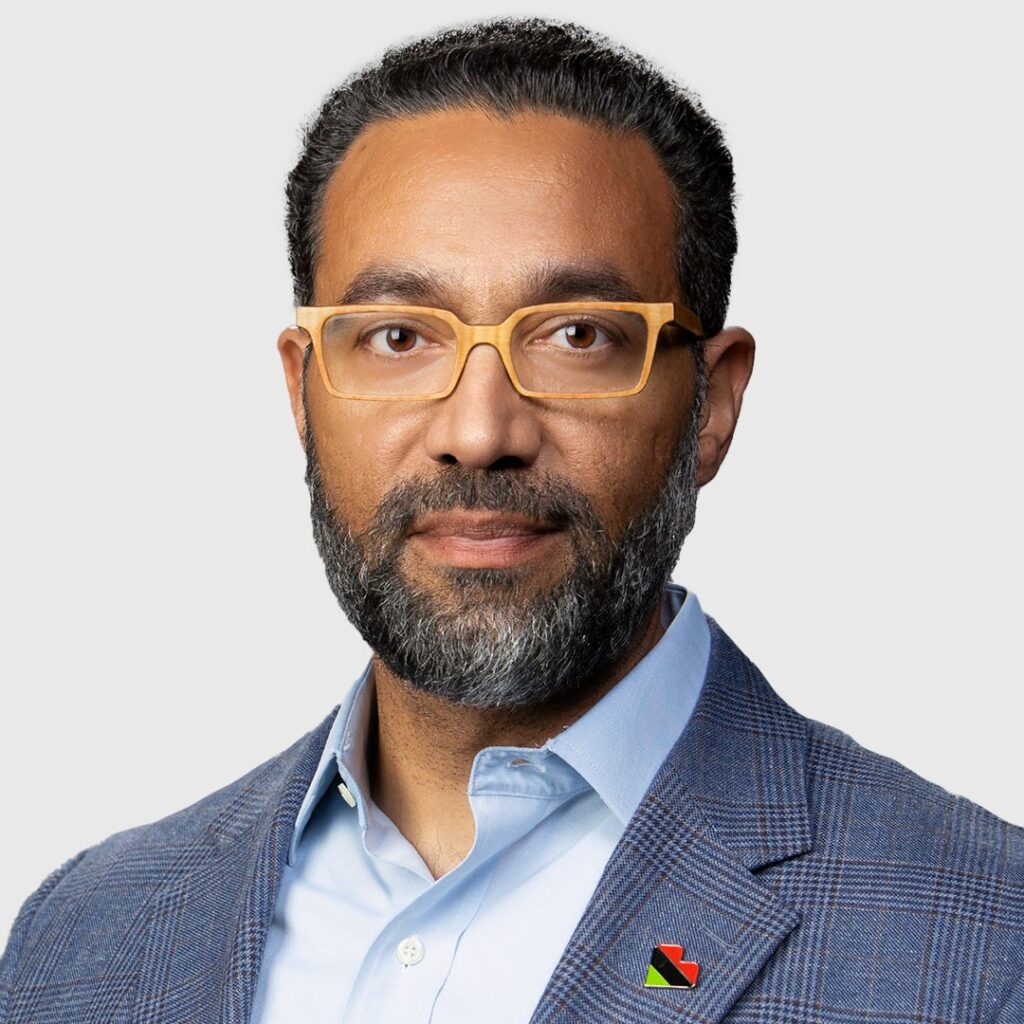
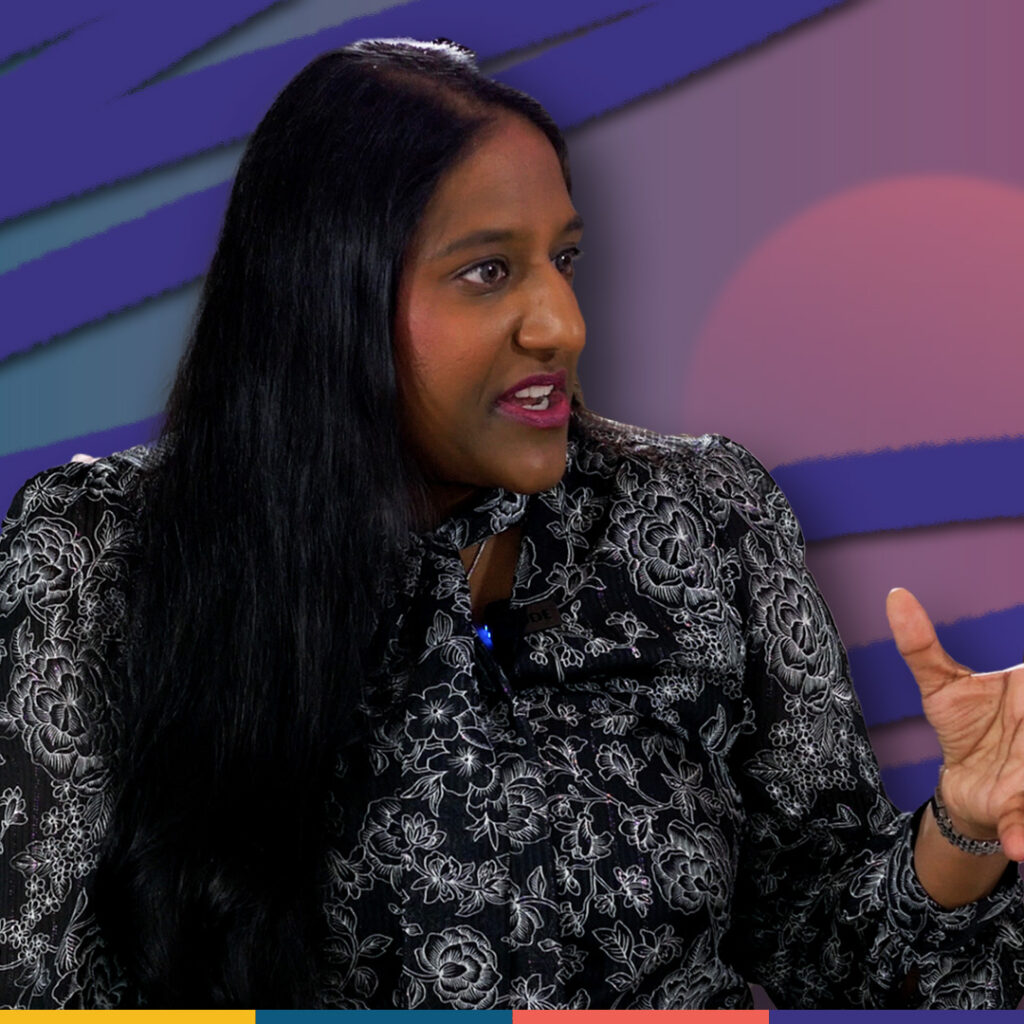
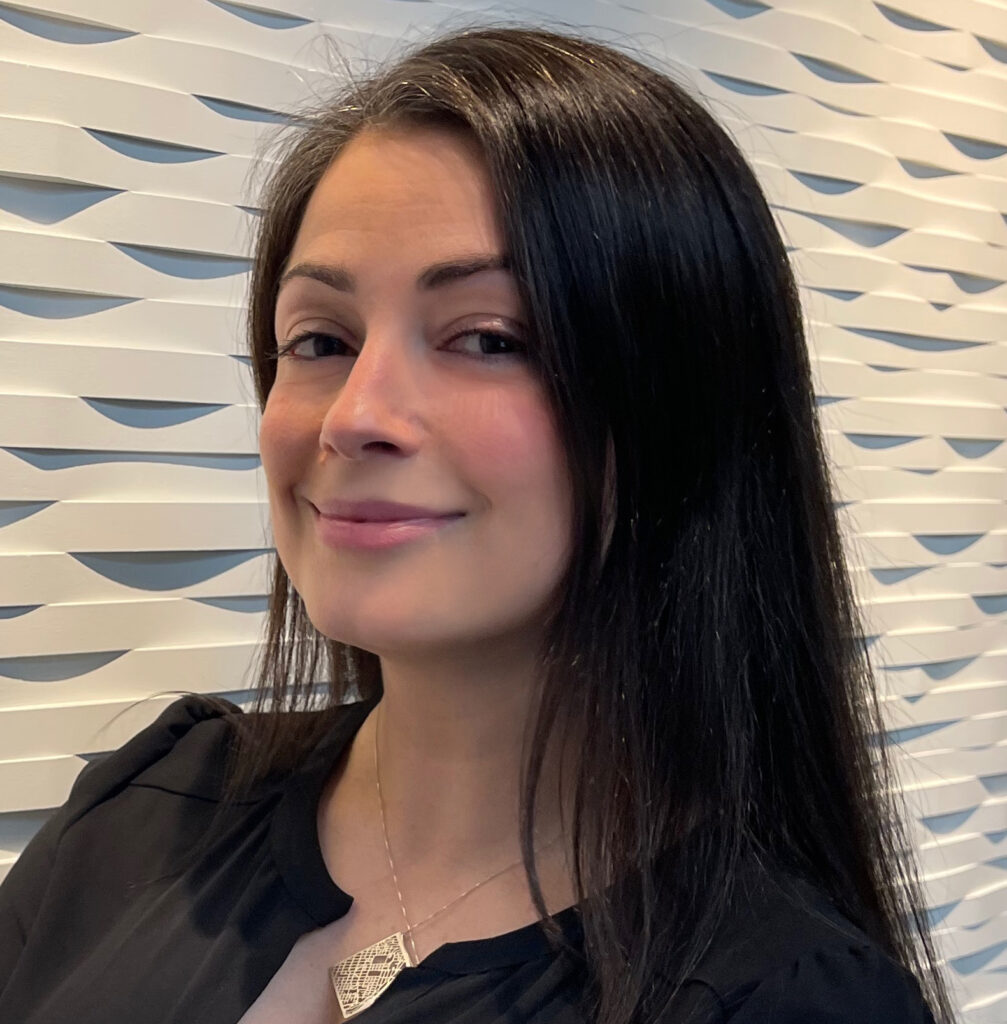
Despite its many benefits to patients, clinicians, and healthcare organizations, measurement-based care is not widely practiced. Dylan Ross, Ph.D., Vice Chair of Measurement-Based Care at the American Psychological Association, explains why. This special episode was recorded at Future of Mental Healthcare East.

Sign up to learn about future episodes of Meeting of the Minds
Key Takeaways
The benefits: Measurement-based care helps clinicians evaluate the effectiveness of treatment earlier in the process, allows patients to see their progress toward their goals, and produces data to inform organizations’ business strategies.
Barriers to adoption: Administrative burdens, lack of appropriate and standardized training, resistance to change among clinicians, and challenges related to reimbursement have contributed to low adoption rates.
Taking it to the next level: Once more widespread, there is an opportunity to expand beyond traditional clinically validated measurements to those that look at wellness, providing a more holistic view of the patients’ health.
Watch the Episode
Sign up to learn about future episodes of Meeting of the Minds
Read the Transcript
(edited for clarity)
Thank you for coming to another Meeting of the Minds. If this is your first time here, we look at the intersection between behavioral health, digital health, and healthcare strategy and policy to identify things you can take back to your organizations, whatever capacity you’re in.
Today, we’re talking about something extremely important because when we think about all these strategies and innovations from a care, clinical, or digital perspective, they all have to add up to something. They all have to inform future strategies. And how do we do that? A concept called measurement-based care. So here to discuss measurement-based care is Dylan Ross, who’s the Vice Chair, Measurement-Based Care at American Psychological Association.
Thank you. I really appreciate the opportunity to sit down and talk about such an important topic. Thank you so much.
We have discussed how we should have this conversation, and we want it to be actionable for people of all levels. Dylan, you gave a stat last year. While as nice as it sounds to be measurement-based and data-driven, only about 17 percent of organizations are actually using that, correct?
The research varies, but it seems like the most agreed-upon numbers are 19 percent of psychiatrists or physician-level care providers, 11 percent of psychologists, clinical level, Ph.D. level psychologists, and likely anywhere between 5 to 2 percent of master’s level clinicians report the use of standardized clinical measurement or measurement-based care. I would argue that in the master’s ranks, it’s likely less.
And more broadly, when we think about the formal definitions of measurement-based care, more times than not, it’s routine outcomes collection, but not necessarily the fidelity best practice of incorporating the standardized clinical information into case conceptualization, as well as making informed clinical decisions within the course of care to adjust treatment plans and really kind of dial in what’s going to be best for that patient using that information. So again, broadly, this is woefully under-practiced in the field and a significant area of opportunity and passion for me personally.
We hope to dig deeper into that passion, what you’ve seen beforehand, what you ultimately learned, and what drives you down this path. And I hope people listening can hear your points about it and its significant underutilization.
With respect to clinicians and all of the things that you’re asked to do by organizations, it does feel like there’s a possibility that if this isn’t implemented correctly or if it isn’t communicated correctly, then that could be the cause of a lack of adoption of these methods, right?
Completely. When we think about the facilitators and barriers to the practice of measurement-based care or even just the implementation of measurement-based care, many of these are just base-level practical things. And so, thinking just in a pragmatic fashion, talking with frontline patient-facing care teams, it comes down to: is it easy to collect this information?
So thinking about administrative burden in terms of collection. Oftentimes if there are screeners, they’re filed somewhere within the depths of a multi-page packet at intake, where there’s just a laundry list of paper-based questions. Those are often then scanned for electronic medical records, or it’s required for duplicative data entry.
There are a lot of inefficiencies around how we collect this information. Now, there have been some great advances around how technology can support this type of information capture and ultimately be ported into and stored in a discrete fashion.
But the realities of just collecting it, making sure that it is stored in a discrete fashion, meaning, each key piece of information is stored in a way that can be accessed by that clinician or by the organization itself, and for that information in the aggregate.
But long story short, there are just real-world friction points around the collection and in terms of practice, too. As we think about the pipelines in which we train our mental health workers in this country, there are just so many different types of clinical training programs at the master’s level, at the doctorate level, even in the kind of technician level, each one has a point of view.
And when we think about accreditation and standardizing, there’s a huge opportunity to drive better unity around how we talk about and train toward the collection. At the end of the day, I think the important point is that we do not have a prepared workforce today to ultimately step into this evidence-based practice and do it in a meaningful way that ultimately drives outcomes and moves the needle that matters most.
There’s one thing you said earlier I can’t get out of my head. You said that you’re passionate about this process. What’s driven you down this path, and how and why are you passionate about it now?
So by way of maybe a slightly extended introduction, I had the opportunity to work for Optum Behavioral Health within the payer space and saw the criticality of why measurement matters when looking at a network of over a half million behavioral health providers. And then, even before that, I’m practicing as a therapist for Kaiser Permanente, working at the national level to implement measurement-based care and oversee its maturation within the clinical context.
And so from practicing it myself to trying to implement it and improve it as well as to manage teams that were really encouraged to practice this, I’ve seen at each level, at the patient level, the provider level, at the payer level, as well as the broad practice level of how measurement-based care can ultimately affect change.
So the passion ultimately comes from wanting to improve our mental healthcare system for those that need it most. Like many, I came to this field with a personal story regarding my own family, my mother, and others within my family who have struggled with mental health for a good part of their lives. I’ve seen the failings and shortcomings of the system.
When stepping into a professional setting, I was shocked at how some simple questions were hard to answer, such as: Did my patient get better? Is this population of patients getting better? Forgive the overused analogy, but for mental health, behavioral health, and substance use, we don’t have vital signs as we do for physical health. If you have hypertension, you’ve got blood pressure. If you have diabetes, you have glucose levels. If it’s obesity, you have weight. There are objective ways to measure baseline and change over time.
At best, our field has created patient-reported outcomes, meaning validated tools where we ask patients to answer questions reflective of both symptomology– depression symptoms, anxiety symptoms, looking at overall function and functioning, well-being, and the like. And so, as a proxy, in the absence of vital signs, we use this patient-provided information in a structured and systematic way to collect that information over time.
So back to the question of passion. All of this sounds really academic, and I realize that. I had no formal training in measure-based care, yet also held a clinical license at the master’s level, held a Ph.D., am an organizational psychologist, and also have a broader system-level view. But it wasn’t until I started using these types of measures and collecting that information and bringing it into the session with the patient that I saw, this sounds a little cheesy, the magic of what can happen.
Feeding back this information, whether it’s through graphs in terms of you came in with your depression at this level, and over the course of our time together, it’s now reduced to this level. There’s a point of validation for the patient. There’s a lot of subjectivity to how psychotherapy is delivered. To cast a light on history here, talk therapy as we know it today hasn’t changed much since the 1880s. And as we think about that evolution, there are interesting kinds of power differential, like who’s the expert? Who needs help, and who’s the care provider?
So this kind of leveling can occur when you start to take steps toward a bit more objectivity within the subjective context. And so I, as a practitioner, found it extremely helpful when I was in those times of doubt regarding whether we were making progress. Is my patient getting better? To be able to look at these types of patient-reported outcomes and see their impact on the consumer and the patient, the client side. If anybody has had the experience in therapy of coming in and feeling a bit muddled in terms of where I am with my depression, where am with my anxiety, or my relationship issues, it’s that snapshot of time.
And so when we think about how limiting it is that as the clinician, your only available information, more times than not, back to the numbers of just underutilization of the practice, you only have what the patient brings in in that 50-minute session if we’re talking typical outpatient work, and so to be able to collect this information not only either right before or within a session, but also within and between sessions, track and trend change over time, and then ultimately apply all of the upside of using data in new and novel ways.
Again, back to that leveling within a system, patient level, provider level, practice level, and population level, suddenly, when you have numbers…you know the old adage, you can’t improve what you don’t measure. This is one of those situations where when you have that data, there is an opportunity to drive different types of change and measure its impact on the ultimate care process.
Your answer hit on something really important. Many people might look at what happens in, for example, electronic medical records and see data collection exercises that have no value for themselves or the patient. But you pointed to something that was a return for the patient’s time. Many people give up their data for various uses but get nothing back from it. But the picture that you painted is different than that.
I’ve worked in a model where we would collect information, often paper and pencil, and other times, an app-based collection, where it was really unidirectional. We asked the consumer, the patient, the client to provide information on how they are doing today. And when you break that feedback loop, it really changes the dynamic.
Interesting research points to the inverse- if we only provide that information to the patient themselves, we see a significant lift. Even if the clinician isn’t using it, there is a validating effect where providing mile markers of change can oftentimes be a bit blurry or subjective to the patient around, “Am I getting better or not?” is really, really helpful. It can motivate and activate patients, engage them in new and novel ways, and see progress. At the end of the day, it helps the care process outright.
And you mentioned electronic medical records. I think it’s also interesting to consider from an administration or an organizational perspective how this is really sensitive information and not only for patients, of course, but for the workforce. And, you know, there are many strong beliefs around the mechanisms of change within therapy.
I bet if you polled a room of ten various-level clinicians, 8 to 9 out of ten would say above all else, even above evidence-based practice, the relationship is the most important thing to ultimately affecting some change in therapy. And so there is this strong autonomy and a sense of ownership of clinicians around and the care they provide and how they provide it, as well as a strong sense of ownership of that relationship.
And so the minute that you start to take what ultimately is at times seen as a black box, the minute that door closes and they’re in the session room, a patient, a client, a consumer, and with the clinician, it’s just the two of them. And to start making that a bit more transparent at times can also feel a bit vulnerable for the clinicians.
As you know, I think there is a real distrust between the administration and the organization around how the data will be used. Are you going to look at how effective my care is in terms of me compared to another clinician? And it starts to invite many questions about how this information is used. So when we think about implementing measurement-based care, which is a very strong and powerful evidence-based practice, it’s really important to consider the change management aspects in ensuring that those who are going to be practicing this are involved from day one in understanding from top to bottom the why–even more so than the how–and really creating that contract of understanding within an organization and care team of trust and some of the boundaries around how this information can be used.
You brought up a return for a patient. At least in the data I’ve seen, and this is purely from a digital health perspective, people like to see how they’re trending over time. But curious about how you are getting clinicians involved. What change management approach do you have in mind for these efforts for clinicians?
How we engage a new set of clinicians that may be naive to measurement-based care is important and needs to be intentional. I would argue that most therapists, clinicians, and patient-facing roles within the clinical team want to see their patients improve. There’s a professionality as well that is within this context. Clinicians really see themselves as that professionals, and so continued professional development. Also, a gathering point between what is a value to the patient and what is perceived to be a value by the care team or that therapist often comes down to let’s work together to get the most effective outcomes in the shortest period.
Said another way: how can we reduce the suffering? So I think coming at it from a humanistic perspective is really important.
We find that when measurement-based care is practiced, especially practiced with fidelity, not only do clinicians pick up more reliably on a lack of treatment response earlier, but they’re also empowered to have those insights to make treatment changes sooner within the care episode. Said another way, it’s starting to look at the use of validated tools and systematic collection of patient-reported outcomes compared to clinical judgment alone.
The evidence is extremely clear that most clinicians over-index on clinical judgment. When they can invite in an additional data source and actually make changes sooner, make care more efficient, and ultimately more times than not, achieve what the patient feels is most important to them, which is achieve my treatment goals and symptom reduction, oftentimes increased functioning in the shortest period of time possible.
So there’s this kind of meeting of the minds in terms of the orientation of patient-centricity, the continued development of honing one’s practice continually, and ultimately being able to be more effective in the most efficient amount of time. And oftentimes, those are, in essence, salable points to the frontline teams.
But I will say this. I often would have conversations with my teams, you know, don’t take it from me. It really comes down to attraction, not promotion. And if I can find a single provider within a team or clinic practicing this, there is this moment of Aha.
And when it clicks, and they realize how powerful this practice can be in helping them help their patients, that voice becomes ultimately the most important in terms of scale and spread. That peer-to-peer collegial kind of promotion is really what will help drive earlier adoption, not administration alone.
Very important point because who would want to make the change if it is not validated in some way? Somebody makes that data-driven decision, and then it starts changing their practice, which serves as a light for others.
And the other piece, too. So often, measurement-based care embraces the use of validated tools that focus on the symptoms of sickness. Best practices also incorporate questions around Therapeutic Alliance or the patient’s experience of the relationship or the treatment process. So inviting in a different word that is within kind of a similar lexicon: Feedback Informed care.
That’s done a lot in bringing in this kind of meta-level conversation: Here’s the work we’re doing together around your fill-in-the-blank–anxiety, relationship issues, and so on. But then there’s also this. The structured use of, you know, to what extent do you believe that we’re focusing on your treatment goals? How comfortable do you feel talking about things within a session? The list is many in terms of asking the patient to provide a perspective on the care process.
Oftentimes it’s uncomfortable to have a direct conversation with your therapist saying, “Today I felt like we were working on your agenda. I didn’t feel like I had an opportunity to tell you that, despite what we’ve been talking about for x number of sessions, this event happened to me that was really important, and that would have been great if we had some space today to get into it.”
Oftentimes, that first question sets the course of the direction for the therapy, unfortunately. So being able to collect this information around, how is it working for you? how are we working together? do you feel like I’m working towards your goals? can start to create a safe space to have those conversations, despite how uncomfortable it can feel for the therapist themselves to either ask it or receive it.
Given its advantages for patients and clinicians, what can you say have been some of the barriers? Has it been poorly implemented in the past? The number hovering below 20 percent sounds like a really low adoption for something that should be more widespread. So what would you say has been the cause?
We talked about some administrative burdens. We talked about some therapists’ belief systems, biases, and attitudes. We talked about some of the shortcomings in training and ultimately achieving that prepared workforce that is competent and ready to practice this. But another important thing we’d be remiss, not to mention is just looking at reimbursement.
Unfortunately, the system that we work in today is really volume-based, fee-for-service. CPT codes ultimately guide much, and while there are codes and billing that can help pay for or at least offset some of the costs of practicing this, the reality is just dumbing down, and you get what you pay for.
We don’t have the right incentives today to pay for this ultimately. And there are some big questions that payers, national payers, and large advocacy professional accreditation groups are struggling with. On the one hand, there is a point of view that measurement-based care should be a part of therapy, so why would we pay for something that should just be happening anyways, when also holding the duality of, well, by the numbers, we know it’s wildly under practiced.
So from a viewpoint around increasing adoption and use, how might we put the right incentives around promoting a new practice or a set of behaviors? We need to think more broadly as a system where we’re not nickel and diming every service that occurs within a treatment episode and start evolving our thinking around more of a value-based or outcomes-oriented mentality regarding reimbursement.
You mentioned apps. Technology is a huge facilitator, and obviously, there are the human aspects of practice training and such adoption and use. But technology can be a tremendous facilitator of this. And so I think there’s a point in the near future where many of our interoperability challenges will be a thing of yesteryear, and looking at ways integrators across systems can help support this.
But today, we have siloed data inaccessible to many. Oftentimes just data is outright missing. And so when we think about how we leverage technology to make it easier for all within the ecosystem to be working off the same source of truth, whether it’s pharmacy, behavioral medical claims, clinical outcomes, provider-level performance, the list goes on.
At the end of the day, measurement is needed, measurement is effective, and measurement requires appropriate incentives. And we as a health care system need to first start by stepping into the shoes of the consumer, of the patient, of the client, and really design from that end user backward, but also taking into account other customers within the system, which are the most important group in terms of those that are doing the hard work of delivering, to their best degree, effective care.
So I imagine as you roll these systems out, data starts flowing in, and you start looking at current, clinically validated ways of measuring care over time. But those methods were created before this paradigm, so has it opened up new measures? What have you started measuring outside the common crop of clinically validated measures?
I love that question. Wholeheartedly quality has oftentimes been focused on sickness and efficiency. We need to pivot as a field toward more of a positive science, psychological orientation, meaning really start measuring the things that we’re striving towards, such as wellness, such as flourishing,
Harvard has been doing some really impressive work around reimagining how we conceive of quality, and they have created not only a validated screening tool and an assessment around flourishing measures but really getting towards that end goal. Success oftentimes is set at a low bar where somebody may achieve a clinically validated reduction in, let’s say, depression symptoms. But that’s such a small slice of our overall whole when we think about the holistic orientation of all of our lives, think of all the different domains–physical health, mental health, just some of them.
But as we expand that aperture into social, spiritual, community, familial, and economic, it starts to change the types of questions we can ask. And I believe we need to start challenging our health systems. We need to start challenging the bodies that ultimately pay for a lot of the activities that occur within healthcare to start thinking more broadly about effectiveness and quality and think about a broader view of humanity. And I know this is getting kind of out there, but thinking about this construct of flourishing, what is living a full life?
At the end of the day, a PHQ-9 score of nine or below ten doesn’t matter at all to a patient. They have their own set of interests, goals, and motivations in terms of what their hopes are outside of the care process. We need to keep up with being patient-centric in terms of designing measurement and quality assessment systems to stay in step. So we’ve got work to do, and there’s great work happening in that space.
I feel like we’re aligned there. There was a little secret thing I was trying to do when I asked that question: break it down to the idea that we’re more than just singular numbers. The idea is to move us away from just looking at these singular metrics and start learning from what we’re learning.
If I could add one more comment. Going back to the change management aspect, a phrase that I wish I had a quarter for every time someone refers to this concept of treat-by-numbers and cookbook medicine. These kinds of adages often come up in the context of starting conversations around implementing measurement-based care. And at the end of the day, there’s actually some truth to them. Yet, as we expand our view, this needs to be one part of a greater whole regarding how care is delivered, and it can’t be the only piece of information that is ultimately driving decision-making. And so, at the end of the day, I know I referenced that evidence points to these validated tools being more effective to work off of than clinical judgment.
But I want to re-emphasize that we can never remove the practitioner and, ultimately, the holistic set of all they bring into that care process. So this is a tool. This is an evidence-based practice, one that should be set alongside all of the other wonderful things that our mental health workforce is practicing.
A question was asked earlier today at the session: if you could wave a magic wand and change anything about our healthcare system, what would it be? This is the same question we ask at the end of each episode. So suppose panaceas do exist, and you can wave a magic wand. What would that be?
We need more humanity in healthcare. You and I had the opportunity earlier today at this conference to hear some provocative calls to action around equity and thinking about healthcare being more broad than just sick care.
My magic wand would be to ultimately redesign healthcare systems to really prioritize the value and humanity of all. And, through that process, ultimately, I would hope that we see many of the health disparities close and that we as a community take steps towards the justice of health. Unfortunately, we have a system that leaves so many outside healthcare.
For folks who want to see humanity restored but simultaneously want to measure our path there, how can people reach out to you?
Feel free to look me up on LinkedIn.
This can change how we help advance care for those that need it most, improve the practices of those delivering this care, and drive more efficiency and better outcomes through the evidence-based practice of measurement-based care. So feel free to reach out.
In addition to that, Dylan earlier referenced value-based care, which has been heavily discussed at this conference. We recently had a conversation with Antwan D. Williams about the actions you can take to start getting your hands dirty with value-based care initiatives.
Sign up to learn about future episodes of Meeting of the Minds