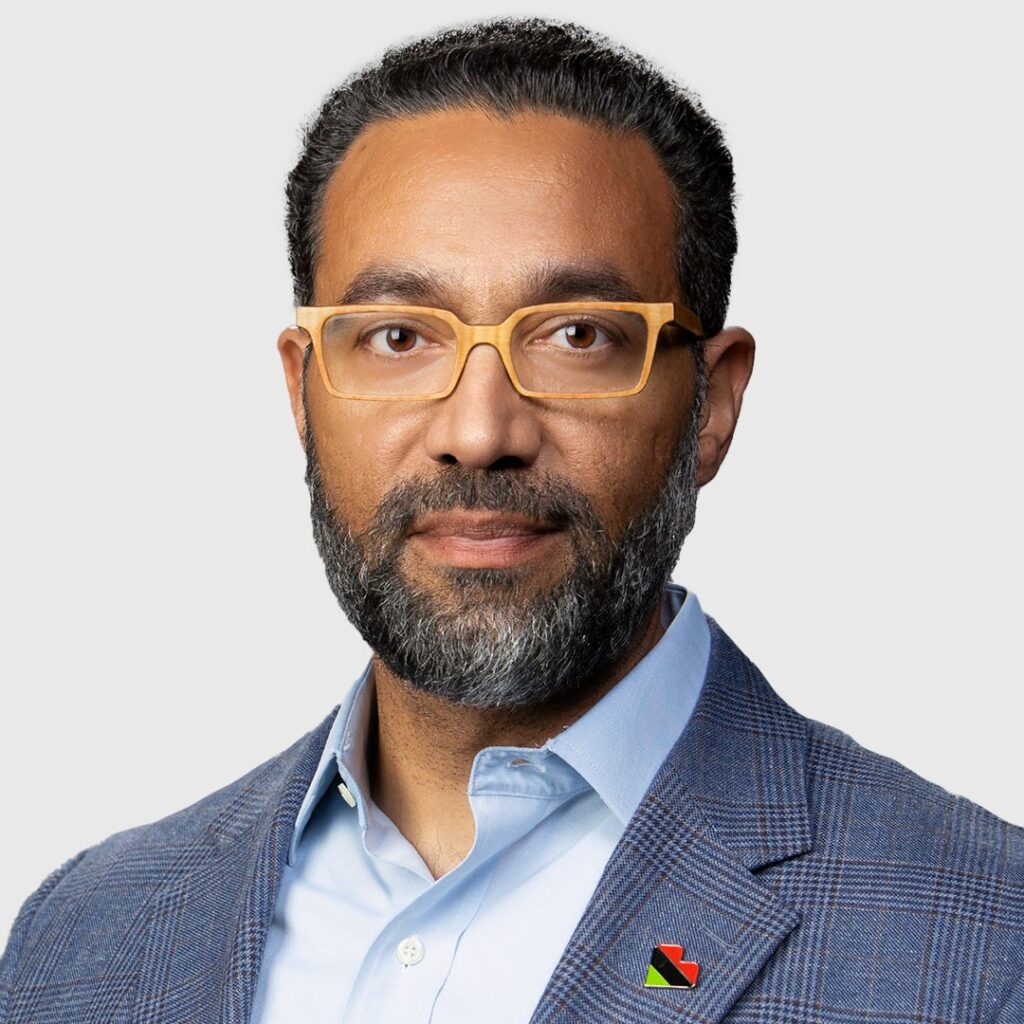
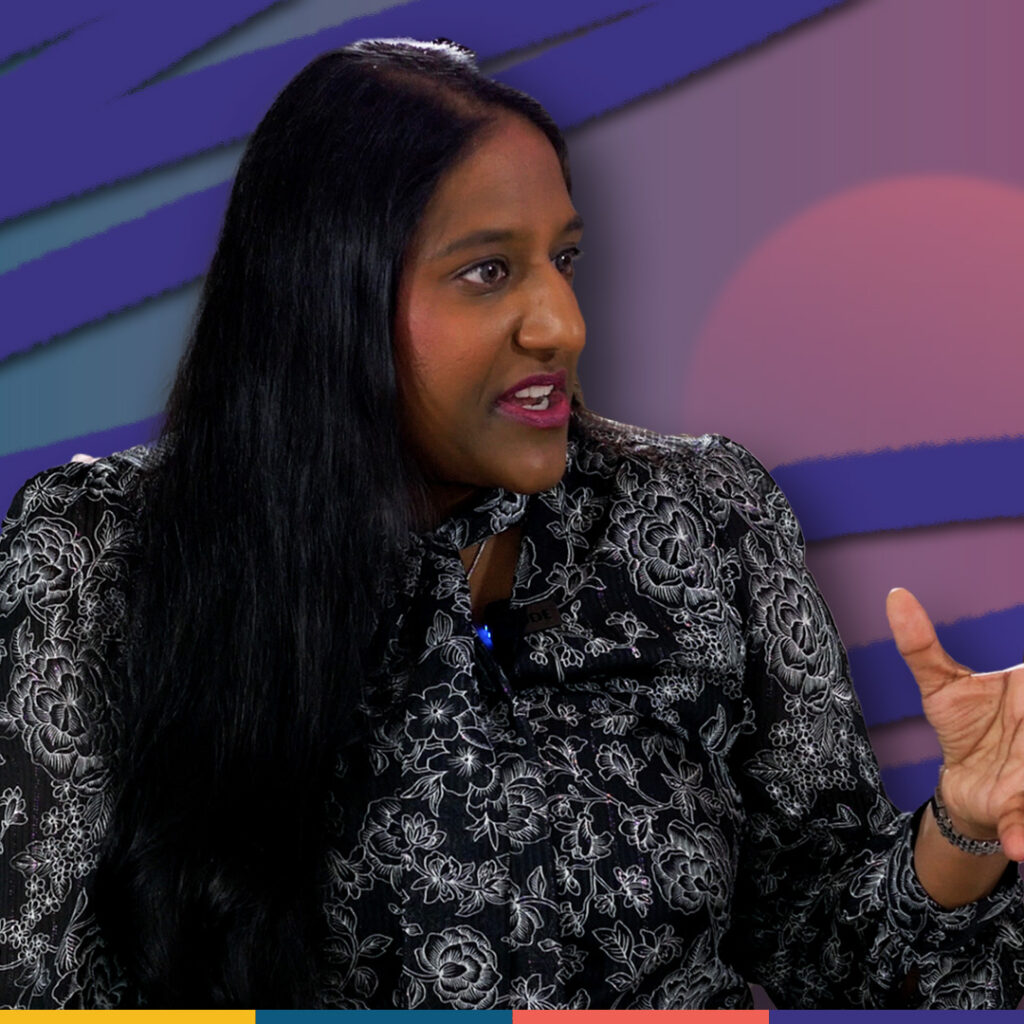
Antwan D. Williams is COO, Orlando Health South Seminole Hospital and co-founder of Advancement League, a membership organization for young healthcare leaders interested in change. He joined host Chris Hemphill to lay out a plan of action for transitioning to value-based care.

Sign up to learn about future episodes of Meeting of the Minds
The Three Cs
Connect with the community: Engaging the community helps you understand their needs and gets them involved in creating the change.
Collaborate with healthcare leaders from all parts of the system: Collaboration and coalition building is key to the transition to value-based care. Hospitals, pharmaceutical companies, insurers, politicians, and innovators must unite and own this shift.
Concentrate on incremental change: Even if only one metric is value-care directed, by showing movement in that metric, you’ll be able to earn buy-in from more people in your organization.
Watch the Full Episode
Watch a Clip
Sign up to learn about future episodes of Meeting of the Minds
Read the Full Transcript
(edited for clarity)
We’re over here at ViVE and bringing on Antwan D. Williams, COO, Orlando Health South Seminole Hospital , also a co-founder of the Advancement League. The session that we’re digging into is called, what’s that session called?
It’s called “It’s About Damn Time,” inspired by Lizzo’s song. So it’ll be on the hip-hop stage in a few hours. It’s all about value-based care and consumer pricing transparency.
That is huge. It’s about damn time. I think that that’s a subject that’s given people a lot of confusion, stress, and headache as they navigate between the fee-for-service environment and the value-based environment. I want to dig into that, but first a little bit on the Advancement League. What are the things that you’re doing for young healthcare leaders, for people who are thinking about these things, to be prepared to make the changes needed to realign the incentives in healthcare in the right way?
As I kick off my introduction, I like to say that beyond most things, I’m a connector of people. And I think that’s the foundation of the Advancement League. That’s the foundation of my role on the value-based care panel later today at ViVE. And I think it’s who I am in my day job as a hospital operator and hospital strategist.
We’ve been fortunate to pull together a community of amazing individuals who care about healthcare, do things the right way, and care about solutions. And I think you’ll see that as a common theme on the topics we’ll touch on today.
I’d like to dig into that theme as it applies to Antwan D. Williams, specifically when it comes to founding an organization, thinking deeply about alternate payment models, and how young leaders approach that. What has captured your interest in this movement toward alternate payment models?
I’m the oldest of ten siblings, and over the years, I’ve learned to listen. You must listen to messages in nine different ways when you have nine siblings. I think about the Advancement League and where we started. It started by listening. Folks were going to the same events, talking about the same topics at the time–ten, 15 years ago–talking about value-based care and how they weren’t seeing it at all.
They studied it all through graduate school and undergrad and got into their profession and hadn’t seen it in action. We said, ‘Wow, we need to build something new. We need to give folks another option.’ And that’s how the Advancement League started. And at the time, we were, and still are, passionate about community impact, about social determinants of health.
And I think we’re seeing the world catch up a little bit. We’re forever optimistic, but we know that time is ticking. The projections that we had around value-based care, around shifting from fee for service, were off. If we had gambled with our life, I don’t think we’d be having this conversation today. We need to move a little bit quicker, and we need to push on the powers that be to help us, help us do that.
One thing that I was really eager to dig in with you on is how the Advancement League focuses on getting the hands dirty.
We emphasize in capital letters DO, right? So it’s one thing to talk about these high-level topics and how applications can help us make better decisions in getting to the point where our hospital bill is as simple as our grocery bill. And then there’s another thing to understand: regardless of the solution, there are people behind those solutions that will reap the benefits of it.
So any time we meet in a place such as the beautiful city of Nashville, we prioritize a few things. One is to connect with the local leaders in the trenches, doing the work, who live here, and pass through the communities that need the help. And the other thing is to tap into the community’s needs.
We all study the data. We know the community health needs assessment, but we prioritize getting out there and talking to the people. And again, that concept of listening. So just yesterday, we had an ice cream social. We supported a local ice cream truck, a mom-and-pop business. We brought together several healthcare leaders from the area through the Nashville Health Care Council. We talked about the real issues that the city is facing, which we think will be the secret sauce to large-scale collaboration. And when we figure out value-based care, the secret to sustaining it.
Let’s go all the way to the basics, then, because one thing that happens when you have these terms that have a lot of academic research around them and then they get bandied about on social media,it loses meaning. Can you bring everybody back to a good basic definition of how you define value-based care?
Emphasis on the word value. So it’s not paying for something just to pay for it. You’re paying for something because it fixes something you need.
Think about the simplicity of a money-back guarantee. You go to a Midas or a Pep Boys or a Firestone and you get your oil changed. You know exactly what you’re paying for. And if things don’t turn out as you planned them to, what happens? You get your money back. I think value-based care is trying to get us to that point where you know what you’re paying for. You know how much it costs, and you know what the outcome should be in the end. If the outcome is not what you expect, you get your money back.
When I think about that utopia, it’s not complex. It’s not left hand, right hand, you know, insurers involved, and things of that nature. It’s that simple.
Well, it’s simple. It’s so simple that I want to plagiarize it because I think that when I describe it, it is very confusing. But when you think about getting your money back if the care isn’t delivered to your car appropriately, yeah, it kind of takes away that incentive issue that we have with fee-for-service.
The people should hear your definition, though, to balance it out, just to make this a one-stop shop.
How I describe it: What if I go to Midas and I have a car problem and they fix it, but then it breaks down and I come back? They’re getting double-paid. Rather than that model, where each time something happens, there’s an incentive for my car to be broken or an incentive for me to be sick.
We’re shifting the structure, allowing these organizations to take on that risk so that rather than me coming in over and over again, the hospital owns the risk, the health system owns the risk and the dollars around me. It changes the incentive structure and changes the whole way that they think about how my healthcare experience should be.
Love that. And let’s build on the car example again to really articulate the power structure–with great power comes great responsibility. As you think about the healthcare field, when you go to get your oil changed, and the guy or gal comes around the corner and says, ‘Hey, you also need your brakes flushed, you also need some new windshield wipers,’ you feel empowered to say no or yes.
But if you come in for knee surgery but before you go under anesthesia, you’re told you probably should get an X-ray or a C.T. You’re confidence level, unless you live and breathe and happen to be a physician, your confidence level to say no to any of those things, if you even get asked the question, are slim to none.
That’s where the responsibility comes in, and that’s what value-based care hopefully will solve. We, as healthcare providers, are incentivized to make it all make sense in one swing and not reap the benefits of charging for each of those individual things. We’ll get there.
Let’s talk about getting down and dirty. I’m going to have some questions about who should own these initiatives, as well as the types of transformations that people should focus on if they’re trying to grow their value-based care contracting or if they’re completely new.
But first, I was watching some interviews you gave about the Advancement League and some of the exercises participants do during the Young Health Leader Summit. Can you talk about that?
We have our Young Health Leader Summit coming up in North Carolina from July 31st through August 2nd. We build that summit on the foundation of community impact. Not volunteering, but actual community impact. So we break folks up into teams, we give each team cash from our sponsors, and we say, Hey, think tank-style, Shark Tank-style, you have 24 hours to do good in the local area.
So you have folks who are extremely smart, extremely passionate, and experts at what they do in their field, creatively collaborating with low resources, with not a lot of time to do good in the local area. They go out, they find the local leaders, and they partner. Some teams have combined dollars to make more of an impact. We think this does a lot for your mindset when you go back to your community and you’re thinking about strategizing is solving the world’s problems. You think about the kid or the family or the community organization that you helped at the Young Health Leader Summit. We hope that that lives on, at least to make sure you come to the next summit or join on as a member, and you keep that in your heart throughout the year as you’re serving in various capacities.
You’re having them break out of that four-walls mindset, break out of the idea that everything they need is within that health system. You’re getting them to think about the coalition building that that it takes to address health care needs outside of just the procedures that people can have when they come in for inpatient outpatient visits.
100%. And now we’re attracting people who are starting companies and figuring out the future of healthcare. So we’ve always said that the future of health is together. It will take the traditional hospital operators, the folks deciding to apply their education, to building solutions from the ground up. And it will take all of us coming together around these common goals to make the change.
We spoke earlier about studying value-based care in college. And obviously, you’re very focused on getting it into practice. Who should own that in the health system? Also, we’ve got innovators listening to this who are within nd outside of health systems, but from the health system context, who should own the transition into it?
Not to point a finger, but I think it’s the word ‘together.’ I’ll give you an example. Last year at our summit, we had a big conversation about cancer and the cancer moonshot. A lot of folks pointed out big Pharma and said, ‘Hey, they need to figure it out.’ They’re incentivized in different ways, etc. And we looked around and noticed we didn’t have Big Pharma in the room. So this year we have tracks such as Pharma as Friends, where we’re pulling in on pharmaceutical leaders and partners, payers as partners, we’re pulling in insurance companies, etc. We’re pulling in lobbyist politicians, etc., you know, health, tech, and then all of the traditional players to build this safe space for us to have conversations and to your point, roll our sleeves up to build solutions together. So I think it’s going to take all of us coming together again around those common goals, and I hope we can do that at a small scale in July and take it on beyond that as we exit.
Curious about doing that on a small scale. Do you have thoughts about how people get these initiatives started or grow them within their organizations?
I think it’s asking the question. To your point, you have organizations where they have a team of two and you have some with a team of 20. It’s sitting down constructively and thinking about how you’re incentivized, what you’re working on, and how you align the dots. Think about something as simple as a service line strategy, where we’re trying to grow market share for orthopedics and heart and vascular and urology and women’s services, one metric on my scorecard may be value-based directed.
That’s not a hard conversation with a team of two doing the work every day or a team of 20. That looks a lot different for someone who’s working in the pharmacy. But again, it’s trying to find those connection points and trying to measure it. And sometimes that’s one KPI, and sometimes that’s a whole initiative. So every bit counts, Every bit counts.
I hope that people listening get inspiration from that. They don’t have to wait for an entire board of directors or a multibillion-dollar company to change its strategy to start delivering value and growth simultaneously.
Oh, you’re spot on. It’s not always the large rocks. It’s what is one thing you’re doing to move the metric. Those incremental changes add up.
And when we talk about incremental change, I think that for organizations to put their backing behind things, you have to earn it. If you start small then and you’re trying to coordinate it with your peers, you earn it through the types of reporting and KPIs that you report on.
Could you briefly discuss what’s reported and how to socialize it among other leaders to help sustain these initiatives?
You mentioned earlier that the incentives are changing in the organizations that will bear the most fruit. Most will be the ones that have been tracking it for a while. Reimbursement models are changing, etc. So I think it’s going to look a lot different for everyone. But there are at least two or 20 people in your organization that can help you figure it out. It starts within each organization. So I won’t begin to try to answer that. But I think it’s self-reflection and everyone listening, just emailing and asking the question.
Any particular value-based care initiative that you think is an example people should study, any examples of people who have done things that you’d like to share?
There’s a young guy, Brandon Burket [VP, value-based care and population health]. He’s doing great work at Orlando Health. They’re incrementally making the shift and increasing the amount of patients covered through value-based care contracts. You know, in 2005 and 2018, we were hoping to hit this threshold of 20% of our patients under value-based care. I think they’re doing way more than that. So they’re a good model to look at.
Geisinger has some good money-back guarantees. Cityblock, Walmart Health, Hospital for Special Surgery out in New York, and DaVita are doing some fantastic things in the space. Those are the companies that you should look at. And then I have to shout out Henry Ford for their restructuring and collaboration in different ways. So Googling those organizations and connecting with the leaders will bear much fruit for everyone listening.
This is the question we ask everyone: if you could change one thing about how healthcare is delivered in this country, what would that be?
Oh, price transparency. As a consumer who has spent a lot of time in the hospital on the patient and supporting patient sides in the last 24 weeks, I would say that just extreme price transparency: what am I paying for? What did it cost? Just making it as simple as my Whole Foods receipt. If I’m not happy with the receipt, I know and can plan better.
How, as a connector of people, how is the best way for people to connect with you?
You can find the Advancement League on Instagram @AdvancementLeague. You can always reach out to myself. Antwan or my co-founder, Alex at Hello@AdvancementLeague.org. We’re on all the social platforms and we love to connect and we love to have good people involved.
Antwan, big thank you again. And for the folks who want to dig in a little bit more on value-based care and its impact on the patient, we have an episode with Dr. Thomas Cornwell from Village Medical.
Sign up to learn about future episodes of Meeting of the Minds