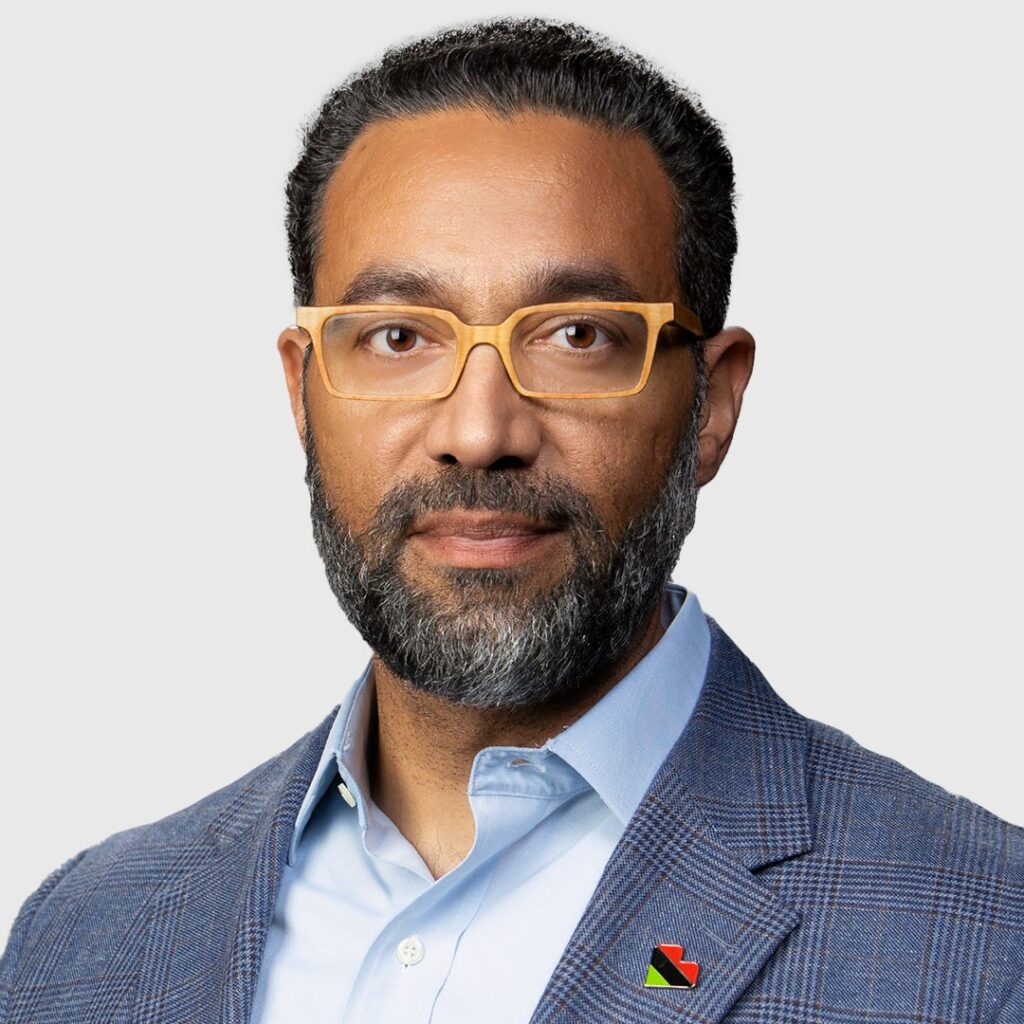
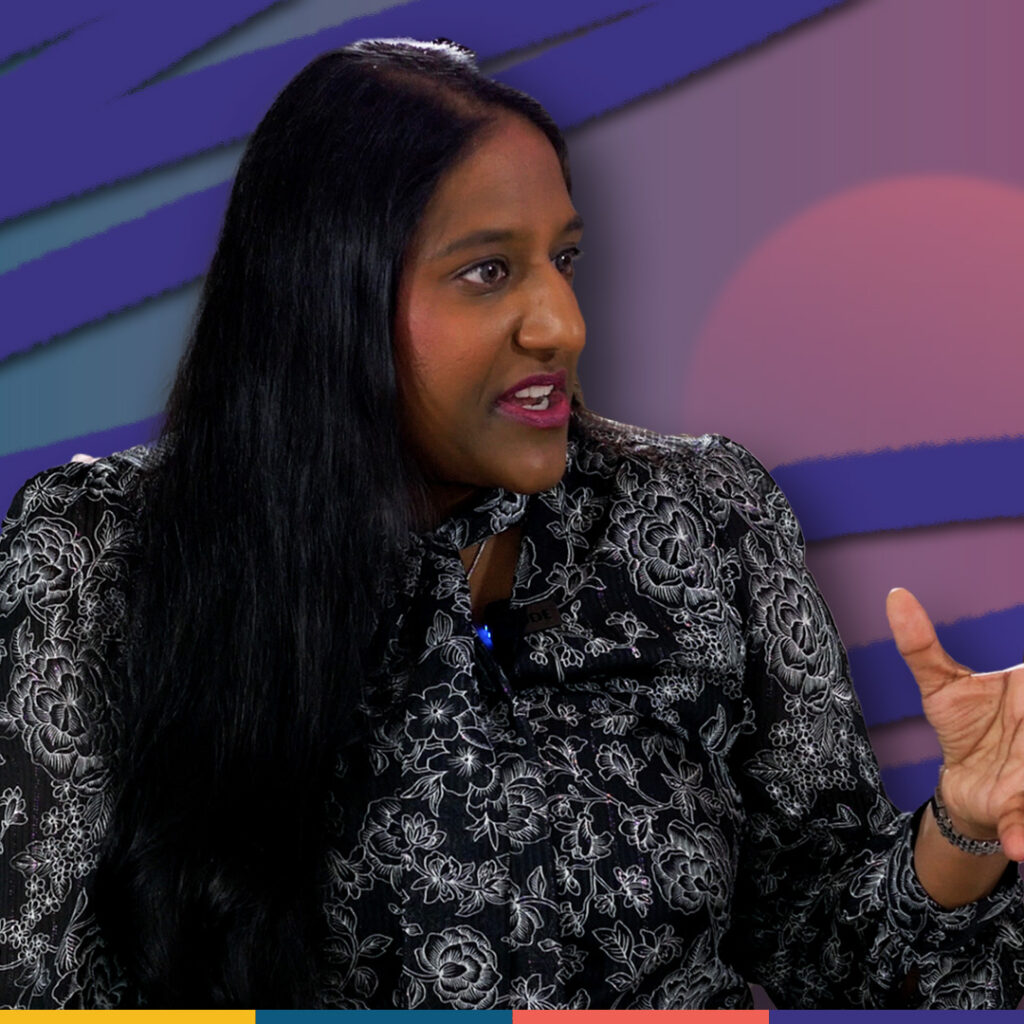
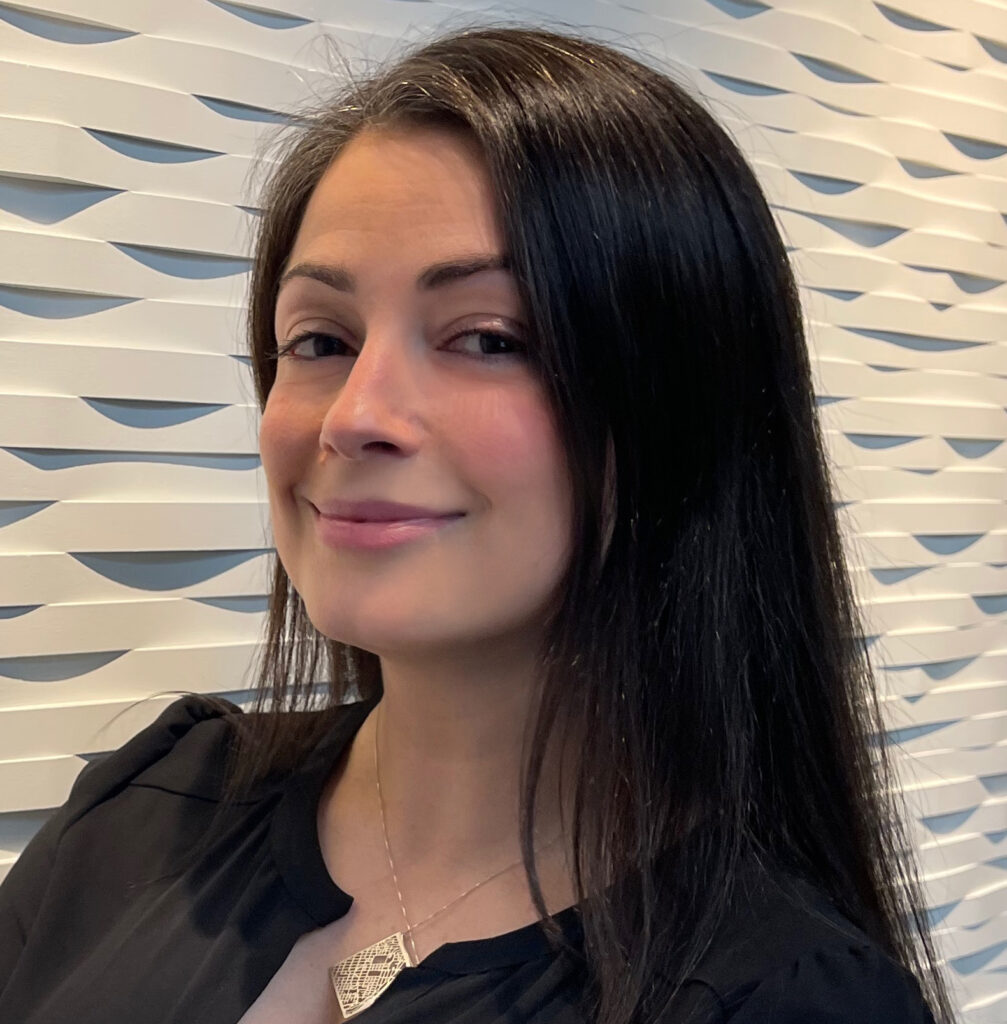
Founder and President Alison Darcy, PhD, sat down with Novant Health’s Paula Kranz, Vice President of Innovation Enablement & Executive Director of Novant Health Innovation Lab, to discuss the role of innovation in solving healthcare’s most complex problems.

Sign up to learn about future episodes of Meeting of the Minds
Key Takeaways
- The Innovation Lab investigates solutions for some of healthcare and healthcare workers’ biggest pain points and works to educate stakeholders within the organization and community about the role of technology in addressing them. It is funded by donations and grants.
- In response to the urgent workforce shortage, the Lab is looking at workforce augmentation, robotic process automation, virtual care, and ways to extend care into rural communities.
- When asked if she had the power to change one thing about healthcare, Kranz said she would destigmatize asking for mental health support.
Watch the Full Episode
Watch Episode Highlights
Sign up to learn about future episodes of Meeting of the Minds
Read the Transcript
Alison Darcy : Good morning and good afternoon to everybody. Thank you so much for attending this webinar, and in particular, I want to thank Paula Kranz, our first guest.
Paula is from Novant Health. Paula is both Vice President of Innovation Enablement and the founding Executive Director of the Novant Health Innovation Labs. She’s also the CEO and founder of Medi-XR, a global healthcare consulting firm specializing in innovation and digital transformation. Before entering healthcare, Paula had an impressive career as a US intelligence officer working in electronic warfare, all-source intelligence data analytics, NATO intelligence units, interagency FBI Joint Terrorism Task Force, and US Special Operations Command, she’s also a New York Times bestselling author. Paula, you’re very, very welcome indeed.
Paula Kranz: Thank you, Alison. Great to be here.
Alison Darcy: That is the condensed version of your career, Paula. I’m so intrigued to ask you, are there ways in which a military and intelligence training help you in healthcare?
Paula Kranz: Part of what we do as intelligence officers is winning hearts and minds, so you’ve got to find the problem that’s causing the pain point, and that takes trust building with stakeholders, whether it’s an emigre I’m trying to gather information from or in the workforce. I don’t have a healthcare background, so being able to build rapport with healthcare workers and get them to talk about their biggest frustrations and challenges so that we can do the solutioning to create a new way forward, it’s very similar.
Alison Darcy: Could you tell us a little bit about the Innovation Lab and its mission?
Paula Kranz: We opened the Novant Health Innovation Lab in Charlotte in April of this year, and we plan to open labs in Wilmington and in Winston-Salem. Novant Health, just for some context, has a four-state footprint; we have about 40,000 employees, we have about 5 million patient touchpoints per year, and we have 600 clinics in 18 large hospitals, so we have a lot of constituents and stakeholders in that footprint, as you can imagine.
I technically fall under the digital products and services team, which is ostensibly IT, and my direct supervisor is our chief transformation and digital officer. She has created this space for my team and me to imagine the world of possibilities. She’s protected us in these times when healthcare companies are so strained, most are in a deficit, and there is not a lot of margin for error or any kind of superfluous spending. So, she’s created this space for us to continue moving innovation forward and we don’t use operational dollars to do that; we raise money through donors or through grants.
Through those dollars and grants, we’ve been able to launch a couple of programs that support 3D printing, as well as virtual and augmented reality. We have different exhibits rotating through, so we might have an exhibit that focuses on innovation and mental health or innovation in the acute care space and so forth. The space is experiential, it’s meaningful for our workforce, but also for the community and for the next generation of workers, and we hope to replicate that in those other physical locations across the state.
Alison Darcy: What are your operating principles? There’s so much happening in healthcare, and there are such incredible innovations happening; how do you go about evaluating all of these things? Are there principles or core efficiencies that you are focused on at the moment?
Paula Kranz: The mission is really about business transformation– that’s digital transformation, that’s workforce transformation, which includes a cultural transformation. We do that through the engagement of all stakeholders. Part of it is just education. We have to show people how to embrace technology, how to not be afraid of artificial intelligence, and how it can be used to create decision-making tools, decision-support tools and augment the workforce, not necessarily replace it.
If we have a call to action, it’s all around democratizing innovation and bringing these new ideas and concepts to the full circle of stakeholders That might include corporations like Microsoft, Google, and Apple. It also includes startups who are trying to break into this space. It includes, obviously, our workforce and our community, as well, and then we work quite a bit with educational institutions. We want the younger generations to be attracted to healthcare and realize you can be a doctor or nurse, but you can also be a data informaticist or, in my case, a business transformation specialist or economist. There are so many opportunities in healthcare that are business-focused, and so we come in with a business mindset to focus on democratizing access to all of this.
Alison Darcy: I love that you start with the mission. Having a really strong mission is an organizing principle in and of itself. And then I’m hearing a lot of themes around collaboration with key stakeholders, but also, the broader community, education, and engagement. This is amazing because these are the structural components that come together to enable innovation to take place and ideas to flow. Where do you think the biggest problems are in healthcare at the moment? Where do you see the largest gaps or the most urgent things that we should be going after fixing?
Paula Kranz: Well, it’s no secret that there’s a workforce shortage. We’re short thousands of nurses in North Carolina. There’s a 40 percent nurse shortage across the state, so that impacts us gravely. It impacts patient care, patient experience, and probably patient outcomes, so we look for innovative ways to get the next generation of workers into the pipeline. We might start a program hiring veterans, maybe they were a combat medic or an EMT or an Air Force Special Operations parajumper–they can transition pretty easily to a healthcare job.
We also look at robotic process automation and any ways to support the workforce that we do have through artificial intelligence. There are various tools for that, including Woebot. We only have 13 behavioral health workers per 100,000 citizens, so we cannot provide all the mental healthcare that’s needed. Somewhere close to 40 percent of the adult population has some serious mental healthcare issue in their lifetime, one in five adults, and one in five kids.
We don’t have that workforce, so what can we do with automation or artificial intelligence, or other interventions to support the workforce that we do have?
We’re also focused on virtual care and care expansion outside of the hospital. That might be preventative wellness, like devices you can wear to help you understand your performance or your weight loss or your nutrition, but also, what could you wear to help with chronic disease management, so you don’t have to come into the hospital, or so taking your glucose every day is less painful?
And then how can we extend our clinicians into rural communities via telehealth and other tools. We might be using cameras for that or augmented reality or 5G technology. So, those are a couple of different spaces.
Alison Darcy: I love how you talk about process automation, and not about people automation. It’s not about people replacement. I’d love to hear about your thoughts on mental health, and in particular, how do you see that virtual and digital space evolving inside of mental health systems?
Paula Kranz: I know it’s been a priority for us. I’ve been at Novant for two and a half years, and the entire time, we’ve been looking for digital front doors, innovative tools, and ways to provide the bridge until we can get you in to see a therapist if you need it. I’ve personally engaged with our public school system. My son alone had four kids at his high school commit suicide.
The school doesn’t have the resources to support those teenagers. So, we, the Novant Health Innovation Lab, see that this is a problem in our community. It’s affecting us personally as families. It’s affecting our workforce because they have kids in these schools or children who are going through challenges. Our behavioral health therapists are in high demand, so like everyone, they’re experiencing burnout right now. So what online tools could serve as that bridge? Could it be a chatbot? Frankly, my teenager is more comfortable talking to AI and playing video games than he is sitting down and talking to me face-to-face or talking to someone else. Let’s lean into that. Let’s gamify rehab. Let’s find ways to take advantage of the tools that people are very comfortable using already.
And then we need to understand community cultural competencies. My experience as a former military officer is different from yours as an academic at Stanford. so we’re probably going to need somebody who understands our personal experiences. We’re even training our workforce in cultural competency for dealing with a female military veteran who might have experienced sexual assault or some of these other traumas; she’s been shot at, she’s been around toxic burn pits, and unless you understand where the person is coming from, I think it’s difficult to provide the right intervention. So, there’s no one size fits all. We’re looking at the full spectrum of innovations in this space.
Alison Darcy: What you’re describing is empathy, being able to step into the shoes of somebody’s real, lived experience, and starting from that place. I think often, a lot of the best tactics we have are these very grassroots, community-driven, cohesive, global initiatives, and that’s what I’m hearing you talk about, all of the key stakeholders and understanding the different perspectives and harnessing that and bringing it together, so that’s amazing.
I know that women’s empowerment is something that’s close to your heart, and you have a teenage son. I’m wondering if you thought about, say, somebody who is 18 years old now, just emerging from high school. In what ways do you feel like the world is different for them now than it was for you or me and where do you see it progressing? Are there ways in which we need to help empower these young women and young men? From your perspective, having had this incredible career in a, I think it’s safe to say, traditionally male-dominated place.
Paula Kranz: I think one of my frustrations, having grown up in the military Women were 8 percent of the population at the US Military Academy. Now, it’s higher, but I’ve grown up with brothers, so I was used to being pushed around and having to fight and stand up for myself and run really fast to get away and punch back, and I learned to defend myself. It didn’t feel that unusual going to West Point. When I realized I couldn’t be at the very top of the military because women weren’t allowed in combat and therefore, couldn’t have served in a position that would get you to be a four-star, I’m like, “Well, that’s not fair. I can run faster than him. I could shoot better than him. I can do all the military tactics that are required of me, in fact, I’m top 1 percent of the class,” so I didn’t understand that. That was the first time I was like, “What is this bias thing?” I never understood it. I grew up on a cattle ranch where everybody worked, everybody was equal. It was once I realized I couldn’t be all I could be, which was the army’s motto, ironically, I decided, I’ve got to help break those brass ceilings for the next generation of women in the military.
I personally campaigned for doors to be open and used myself and showed other women who had met the standards, exceeded the standards, and got an A+ on the men’s scale–we were holding ourselves to the same scale as men. So, I would encourage young women who might feel frustrated by a barrier or challenge to find a mentor who can help you figure out the way forward.
Teens these days, I think, face so much pressure from social media that’s contributing to depression, anxiety, anorexia, and eating disorders. Fortunately, my boys are just not interested in social media, they don’t compare themselves to others.
But I also think they’re part of the solution. They look for female friends who it’s more about their character than their looks and they value brains as much as anything else. So, it’s encouraging women to feel empowered and that they can break through those brass ceilings, and encouraging young men to respect them and enable them and empower them.
So, it’s not technology, it’s simple empathy, back to your original point.
I think teaching anyone at that age to be able to communicate is the most important thing we can do.
Alison Darcy: I agree with you. We had feedback from a clinician who was working with Woebot that said that Woebot was teaching young people how to express themselves in basic communication. A lot of teens are not getting that training in the same way that maybe you and I had growing up, so this is very interesting.
One last question I wanted to ask you before we go, is if you had the power to change one thing about healthcare, what would you do?
Paula Kranz: I would try to find a way to destigmatize the need for one to seek [mental health help]. We can find access, there are these innovative tools out there. But even in my experience in the military as an intelligence officer, I would’ve lost my clearance had I sought out psychological help for something. In the military, you’re taught to be a warrior, suck it up, carry on. Now, that’s taught me resilience and grit and that same spirit has helped me get through the toughest things in life, but I had a personal experience with major depression a couple of years ago, and I just couldn’t dig out of it. As strong and as resilient as I still think I am, I realized I needed outside intervention. So, de-stigmatizing that and making it’s okay, from a young age, to talk to Mom, an uncle or a friend, would be key. But, gosh Alison, I don’t know how we do that.
Alison Darcy: Paula, I agree with you completely. I think that stigma is the real access issue we need to solve. But so much of what you’re talking about, this idea that somehow experiencing a mental health episode or a struggle, like a depression, is not the same thing as strength. When people say, “I’m resilient and strong in spite of that,” I wonder if lots of people are resilient and strong because of it, that they’re actually hand-in-hand.
Paula, sadly, we are out of time, but I want to thank you so much for what was an incredibly illuminating conversation, and I’m sure all our listeners are thrilled, as well, so thank you so much.
Paula Kranz: Thanks, Alison, appreciate it. Thanks for all you’re doing with Woebot. Keep up the great work.
Alison Darcy: Thanks for all you’re doing. Indeed, I hope to talk to you again.
Sign up to learn about future episodes of Meeting of the Minds