Breaking Barriers in Behavioral Healthcare: Dr. Taft Parson III –...
Summary: Dr. Taft Parsons III, Chief Psychiatric Officer at CVS Health, discusses his journey into behavioral health leadership and how…
The value-based care model puts the patient and provider at the center of care delivery. It’s shown to improve patient and clinician experiences while reducing costs. So why are health systems hesitant to make the shift?
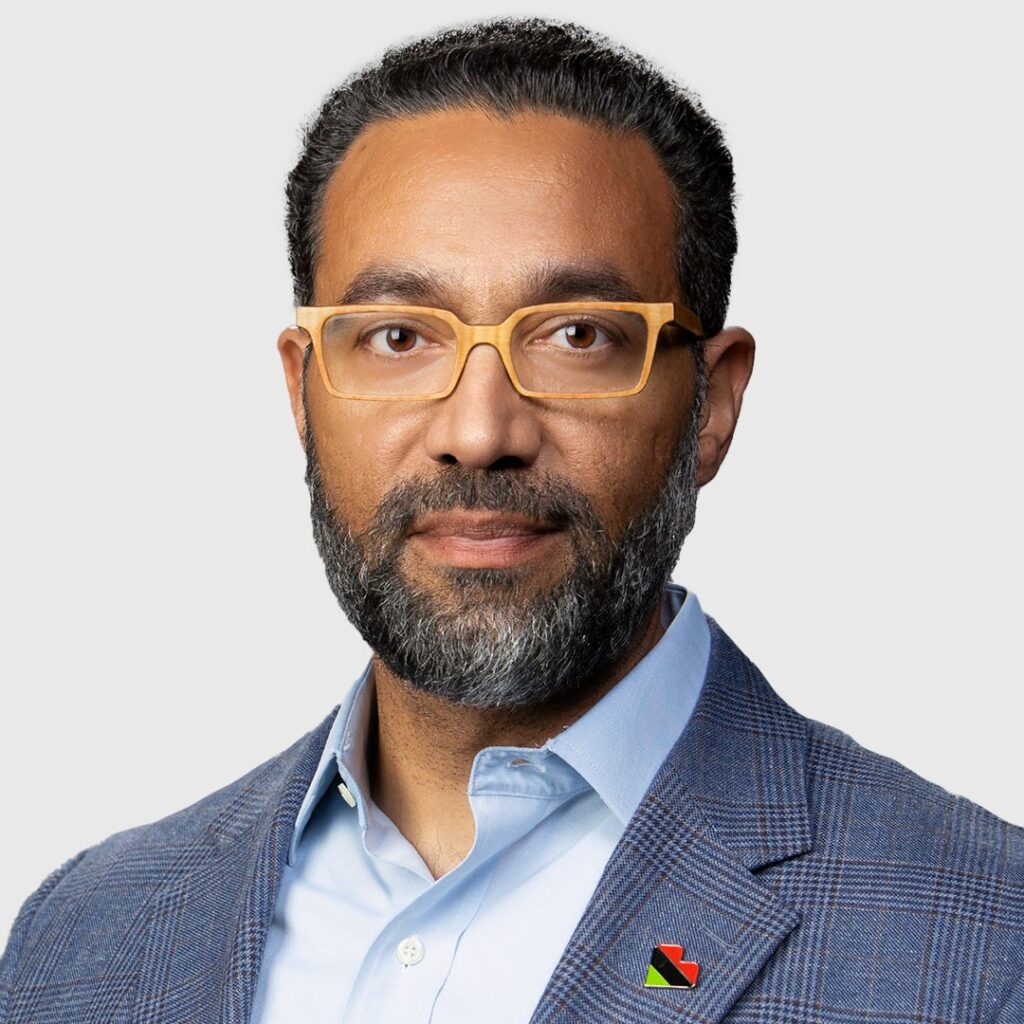
David Weathington, Elevance Health’s VP of Network and Value Based Solutions, joins us to talk about his expertise with this model of care.
(edited for clarity)
Chris Hemphill: Hello, and welcome to Meeting of the Minds with Woebot Health. I’m your host, Chris Hemphill. And I want to thank the Future of Mental Health for the podcast partnership that made this conversation possible. Today, we’re asking the question: is value based care living up to its promise? It’s a tough and provocative question. And to help us with that, we’ve got David Weathington, who is Elevance Health’s VP for Network and Value Based Solutions. So everybody, let’s welcome David.
David Weathington: Thanks for having me, Chris.
Chris Hemphill: Thanks for being here, David. Now, with that question, though, around value based care, I can point to many, many stories about positive outcomes in health care and population health equity that are made possible by the value based care payment model. But at the same time, I can point to many organizations that have a foot in two canoes: one canoe being value based care, and the other being fee for service. However, with the MGMA, reporting that only 5-15% of revenues come from value based contracts, we know that one canoe is actually much larger than the other. If you didn’t glean it from his current title, David has considerable experience with value based care. He’s been a clinical psychologist, before taking on the value based health and health plan leadership roles at places like Johns Hopkins Continuum Health and Clover Health, and he’s going to help us explore what actually is the promise of value based care, what stands in the way of meeting that promise, our role in growing value based care initiatives and behavioral health in spite of these roadblocks, and the role of digital health and addressing high needs populations. So before we get into it, David, am I missing anything?
David Weathington: Well, you mentioned that I was clinician, a behaviorist, early in my career, I think what I really was focused on was behavioral economics, and that wasn’t really a common field back then. So I think I get excited by the topic of value based questions, or value based care and the questions you’re asking, because a lot of it is just how do we influence the way members and clinicians and health systems are making decisions and ultimately allocating resources? I’m excited to dig into that a bit today.
Chris Hemphill: Well, thank you for sharing that background. Let’s dive into the basics here. What did lead you from the industry in this path, from clinical psychology to value based care leadership today?
David Weathington: Even before I had any concept of what population health was, earlier in my career, I realized that treating clients one on one was, I didn’t have the temperament for that. I have functional ADHD, which means I need to be involved in things that are a little bit broader and faster moving. So, you know, I wanted to understand how I could take the education experience I had and impact broader populations, broader groups of people. So my original transition from treating the patients in a traditional therapy setting, to beginning to work with managed care and with health plans back 20 plus years ago, before we even really thought about whole healthcare. And that’s where I began understanding the economics of healthcare and much broader how health systems were sort of the motivations for providers. A third of the people on this call are clinicians. I hate to say this, but I was doing traditional utilization management, it was on the behavioral side, but inpatient prior authorization, outpatient prior authorization. So I also became really familiar with the administrative burdens of working with the traditional payers and, you know, Elevance, Cigna, United. Through sort of chance, I ended up working with some smaller early stage Medicare Advantage plans. And really by definition, a Medicare Advantage Plan holds a value based contract with the government. I mean, it is a capitated value based array instrument where your success is dependent on performance, right through stars through risk adjustment, cost of care management, retention. So I got a really good grounding, I think in the basic tenets of population care and impacting physician and member behavior, incentives that work. And then as my career went on, began working in Medicaid and commercial as well, and took what I really learned in Medicare Advantage, which was always sort of at the forefront of what we call value based. After spending several years at startups, made the transition to Elevance, with the belief and the goal of using their massive platform to bring what I’ve learned, and what my really strong partners that Elevance, you know, want to want to bring to the marketplace in terms of advancing whole health or value based care.
Chris Hemphill: So thank you for outlining that background and referencing that part of our conversation ahead of time. I always have this conversation with people – what does value based care actually mean to you? What actually is the promise here? So let’s dig a little bit deeper into that. There’s some promise in what was going on in these overall payment models. And you had this healthcare economics lens that was really interesting the entire time. So how would you define value based care, to help cut through the noise of how it’s described in all these various ways, with buzzwords used over and over again?
David Weathington: So I do actually think that the triple or quadruple aim has some logic to it in terms of what is valuable to a consumer, that they get what they need, at the time they need it for a price that is reasonable. We’ve now kind of brought in physician satisfaction, and that’s a component of it. But that also, is sort of separate and distinct, right? How we create value in terms of a career and in a discipline for providers is slightly different than what would constitute effective and valuable care for the actual consumer who’s paying for care. So I believe those things. Now, I think, if you’re a clinician, it is: how do I access the resources and the knowledge, right? There’s a number of ways to do this that we’ll get into to meet my consumer, my patient where they’re at and make available what they need at the time they are sick. Appropriate diagnosis, appropriate specialist referral. Sometimes that is awareness and acknowledgement of issues outside of sick care. I mean, a recent study I saw from the Primary Care Collaborative, which is a group out of DC, was that roughly 85% of a member’s health experience is based on factors that are not genetic or biological. And so I think, from the payer side of value based care broadly is: how do we make knowledge and resources available to clinicians to use to meet the needs of consumers? I mean, it’s not meant to sound esoteric, right. There’s lots of very specific things we can get into about what that means. But ultimately, it’s aligning needs and resources much more effectively than we do today.
Chris Hemphill: I like the way that you frame it up. And I know that it’s hard to take something like that and define it in a way that we can share in under 280 characters on Twitter or what have you. So that’s good. And as we just said in the description, and as I’ve shared, I know that you’re willing to deep dive into the specifics with us.
David Weathington: It all starts with money. Everything starts with money. And that’s not a bad thing. There’s the old saying, money is the root of all evil, right? Or the love of money is the root of all evil, right? That expression is actually a foolish love of money that is the root of all evil. So we have to acknowledge that finances are what drives anything we do, right? I mean, that’s just the reality, it’s not good or bad. It just is, right. One thing that government health systems, businesses have all shown is that the central deployment of resources is really difficult, right? Meaning, I have the resources, and I’m able to anticipate where and when they’re going to be needed. And with just in time delivery, I’m going to be able to make sure that the consumer / clinician who needs them is going to have access to these resources, because I’m so good at distributing them. That’s a challenge. The other thing we’ve learned, in looking at effective philanthropy, effective charity, is direct cash distribution is the most effective, and I think this is something near and dear to your heart, as you work with marginalized communities, Chris, direct cash distribution is something that terrifies policymakers, but has been shown to be the most effective means to empower people to positive outcomes. A lot of traditional payer management, original value based contracting, a lot of very specific hoops to jump through that would regulate when and how these value based funds, as you reference that 5 to 15% would get distributed. Anybody, not just healthcare, is anticipating effectively, where and when we need to send this money. Not to go too far out there, sort of like a communist economy is a difficult thing. Because central distribution of resources, even with great intent, is very difficult. There are so many unanticipated things, right? So as we think about how to progress, and in that gap, it’s how do we move from a model, that’s sort of patriarchal, that tells providers the right way to use these resources, and move to empowering them to have access to the funds they need to make appropriate decisions about what their consumers need to remain healthy? So as we think about the risk levels, if I have a patient and they’re healthy today, how do I ensure I use my preventive time with them to help them remain healthy? If they’re healthy, but at risk, their blood pressure’s a little bit high, their blood sugar is a little bit high, how do I use my resources to help them get back to stable, right? And as we go, the interventions increase, but it’s how do we make it as easy and intuitive as possible for the primary care physician and their supports, whether that’s behavioral, whether it’s front office staff, nurse practitioner, medical assistant, to spend time discussing the issue of importance with a member / provider / patient at any given time. The traditional model, we all know, is a very specific kind of interaction, which only provides value from a revenue perspective, when somebody’s already sick. And so the gap is everything about our payment system, our claim systems or revenue cycle management. People’s experience now as folks are getting older who’ve been in healthcare for 30 and 40 years, are geared around a fee-for-service model. And so there is trepidation, fear, appropriate concern and really decoupling the flow of funds from that traditional chassis. It’s just that healthcare is very conserved and making a big leap forward in how we fund things is a challenge. Second, and this is one that’s always really interesting when you get to conferences, and it may elicit some responses. I heard Intermountain Healthcare, a great partner and a great system, have the same challenge, too. If you think about advanced primary care, the way the provider sees value at the primary care level, this can be true of behavioral to, is by removing overall cost from the system, but increasing their own revenue through two sided risks gain, sharing quality, gait all of those things that get built into advanced payment models. How does that work for a health system? Does a health system actually want their primary care to remove cost from the system? Because by definition, here, they’re removing top line revenue from the health system. So an honest conversation needs to be had that you can’t just talk to a health system about changing sight of service, reducing unnecessary care, etc. What you really need to focus on is making sure that regulated space is treating members who require that level of care. So it’s not removing their volume. It’s not reducing their importance to the community. But it’s making sure the sickest and those services that really need to happen in a facility setting occur there. And moving the more routine services. You don’t need appendectomies at academic medical centers. So there’s sort of the whole payment model in general that the industry is struggling with. And then there’s sort of the realities about how different segments of the healthcare environment make their money, and the implications of disrupting that revenue.
Chris Hemphill: Thanks for that broad answer, because it addressed a lot of things and I want to get into a couple of them. In particular, I thought it was a pretty inspiring definition. How do we make resources available in the right way that clinicians would want to be able to access them? How do we empower clinicians to actually be able to deliver the type of care, the standard of care that they believe will be the most effective? So one thing I just wanted to comment on, this is going to be an upcoming episode. But we sat down with Dr. Maria Koshi, who is the Chair of Chiefs of Psychiatry at Permanente Medical Group. So in early 2024, you should be seeing that sit down on how they moved from a fee-for-service environment to practicing within a value based care environment. What are the realities? And what do you do to help other clinicians make that transition? So I do like the fact that you went into addressing what the clinician experience is like and how does the payment model go all the way down to adjusting the clinician’s experience?
I also thought it was interesting how you define the question I brought up earlier MGMA, describing that only 5 to 15% of the revenues in our healthcare system today are coming from value based care contracts. So it raises the question, David, on what does it take to make value based care be the pill that these types of organizations might want to swallow?
David Weathington: So there’s a few building blocks to that, right? One is, on the provider side, the health systems they have to believe that they can win, when more of their revenue is at risk. That the game is not stacked against them. And so a lot of that comes from, we need to make sure we’re excellent at basic partnership operations, right. So boring things like managing AR (accounts receivable) appropriately, providing accurate attribution, reconciling, managing and processing data appropriately. There’s just all these nuts and bolts that have to occur for a provider to feel comfortable that the work they’re doing is being fully recognized by the funding source, the payer, ASO, the employer group, etc. So that’s one. Two, in some of these are very non-clinical answers – capital needs to be available. Primary Care in particular, tends not to be particularly capital heavy. Whereas payers and other funding sources that collect premiums or other types of upfront money can be more capital heavy. How do you look at programs like the government’s ACO reach, and things like that, that are looking to really bridge the gap between financier capital holder, a risk bearing entity and the clinicians right, to make it possible for clinicians who have the motivation and the expertise to take on this type of risk to actually be able to do it from an actuarial perspective. The third component in this is how do we include the entire value chain, primary care, specialty pharmacy, and inpatient, in that collaborative value based arrangement? Because it’s only when you put all of that at risk that you’re gonna see more funds flowing through, because if you think about that 5% to 15%, primary care only accounts generally for 5% to 7%, 6% to 8% of all spend. So even at 15%, it’s indicating that the revenue is starting to move beyond just putting primary care fees at-risk. Groups are starting to take on risk on behalf of those health systems. But at the end of the day, your very advanced groups, they’re taking on risk with the belief that they’re so effective that even though they don’t control the means of production all the way along the value chain, they can effectively manage it. Helping to solve for health systems is figuring out how they’re going to recognize true upside value in these relationships. It becomes the most critical part. I can tell you, most payers have an appetite for shifting a greater degree of revenue potential into that, but with health systems, there’s some debate about this. Overall, most people would agree that hospital systems are not a particularly high margin business. So even putting a few percent of your overall top line revenue at risk can be really scary if, you know, you don’t make more than a few percent margin on an annual basis.
Chris Hemphill: I love how we’re getting specific into these models and funding flows. I want to get into some examples in a little bit as well. But I got a really interesting question from Hunter Ferment, who’s a staff writer at Helio. And the question, I’m just gonna read it verbatim. In a value based care model, how do you prevent clinicians from prioritizing less risky patients and conditions in order to boost their performance and success rate and earn more? And the reason I wanted to go verbatim – I was actually watching Dr. Eric Bricker, do a presentation a little bit earlier on incentive structures and how they influence clinician decisions. So I was really curious about your perspectives here.
David Weathington: So one area you hear a lot about in various Value Based Payment Models,is from the Congressional Budget Office and Medicare is the concept of risk adjustment. Which is a really accurate diagnosis capture, meaning the revenue, the capitation, there’s different types of revenue, but ultimately can be adjusted based on the disease burden of the member. So if you only manage really healthy people, your baseline expense is going to be fairly low. So it’s a lot more difficult theoretically than to reap value. I mean, this is not 20 years ago, where you did see a lot of what he’s describing. Health plans have also gotten sophisticated at ensuring their partners don’t cherry pick, which is essentially what we’re talking about. We want a robust risk pool. How do I keep my healthy members healthy, but by being front-loaded the revenue in a different way, I can actually give more resources to those higher risk complex members, where ultimately there’s a greater opportunity for savings and a greater opportunity for revenue recognition. If I diagnose, and then manage them more effectively, like if you have diabetes, which tends to be what a lot of people talk about. Diabetes and complex diabetes are two different things, or diabetes with nephropathy are two different things. And there are so many expenses for a health plan, for the system, and so many negative outcomes that can come from poorly managed diabetes. And in a traditional 10 to 12 minutes with my patient, it’s a lot harder to get into those conversations with a complex member. But if I know that I am going to be recognized for really effectively helping this person eat better, understand why to take their medications, understand the value of getting up and moving around to improve circulation, all of these things. There’s just a lot more value for each part of the system to recognize. So the risk, getting back specifically to his question, is where we have to be fiduciaries as well, if you have a lot of organizations that are not quite as ready to risk, those higher complexity members, not quite as ready to manage them, who are excited about that value base. And also, what you’re seeing now is venture backed. And as the venture community has now heard, risk is a very exciting industry to be in, risk-based healthcare. So you have a lot of venture backed organizations who are getting into risk without maybe understanding how to manage it. So again, if you were to go and look at how the daily flow of activity and the way offices are constructed, and programs are constructed compared to a traditional practice, you’ll see the difference between a group that understands and is organized around managing complexity, and those that are not, being primarily focused on fee for service activity.
Chris Hemphill: David, I gotta go off script with you, because you brought up the investor community and funding for various organizations. A lot of these decisions were made by someone who had a chat with someone else, started understanding risk and made some major decisions. I think it would be helpful to talk about some examples where that can go awry, or how to suss out an investor that backed an entity who can’t put his money where his mouth is.
David Weathington: I think I will avoid naming any players. But I think there’s two specific areas where you’re seeing a lot of challenge right now. One is the flow of investment into advanced primary care that was born out of southern Florida, which is tremendously high. You have a lot of seniors in southern Florida. So there’s a tremendously high penetration of Medicare Advantage. Both members and providers are just really attuned to how the Medicare Advantage program works. So they’re getting high revenues, high degree of risk, really successful in a differentiated type of model, as you’ve described. How do we get more revenue flowing through through the actual value based contract? Other markets are not as mature as South Florida. So the idea or the risk is, do these groups that are really successful in South Florida port effectively, if you start growing into other markets. And so what you’re seeing is a whole lot of groups have been successful in Florida, a smaller number of groups have continued to show they can be equally effective in other markets that have less value based penetration, less Medicare Advantage penetration. So that’s one bucket – can you arbitrage from highly mature markets to less mature markets effectively. It’s possible, but you genuinely need to be competent in this work. The other area where there’s a lot of excitement around value based care right now, and this is separate from virtual and telehealth, which we’ll get which we can get into a little bit if you want, is home-based services. During COVID, during the pandemic, there was a tremendous amount of excitement around home-based delivery of care. And there is definitely an appetite for that. But the reality is a lot of venture flowed into companies that had actually proven out the economic model of home-based care. It can be very difficult to get the per unit economics of visits in the home to be even a positive. So right now, what you’re seeing in both of those pockets now is the investment community catching their breath in saying we’re actually now not quite as comfortable that these are areas we can really be successful in. What do we do? And then also, what’s real? Because what I don’t want to suggest is that there are not some very effective, very mature organizations in the marketplace that do this. It’s hard work. The kind of care we’re talking about takes care teams, right? It takes collaboration with community with family, we think of whole health. So a lot of times with behavioral, depending on the situations, understanding SDOH in health equity needs. So when I say I like to demystify value based care. No, depending on the needs of the consumer, of your patient, there’s very specific things they need. To have a positive outcome or as positive an outcome as possible. They’re just different for different members. So that’s why you need a trained clinician class who’s interested in this kind of work. And the tough part is Chris’s curiosity. Like, they’re curious, how do I create this mechanism to understand how to get the resources I need, right? Because I’m not making enough money as a fee-for-service behavioralist or primary care physician to fund all this stuff. I need somebody to help me fund it. But they’ll only do that if I can really effectively use it as needed to help with the outcomes. Because the interesting thing, and what was genius about Medicare Advantage, is when you think about quality programs, you’re half based on actual outcomes, you’re half based on your members perception. It really is not only ‘are you delivering what’s needed’, it’s ‘are you also doing it in a way that your customer feels good about’, which is sort of ingenious. It makes it an incredibly complex business to be effective in. It was really ingeniously set up by the government. You don’t say that very often, but it’s true.
Chris Hemphill: I’ll say demystify doesn’t mean debunk. And when you raise the point about inexperienced investors and solutions. I was at a conference, and I heard somebody had evaluated 500 different tech vendors. So it made me feel for anybody who is having to go through all that, identifying things to filter.
David Weathington: One rule of thumb that is a mantra for me – I’m not saying everybody should agree with this, or this is how they do it. But to your point as you go to these conferences, and there’s all these booths set up for very specific things. There’s a HEDIS measure for diabetic retinopathy screening. There are companies that have come up specifically because health plan PCPs don’t do that great on their own. It takes a specific piece of equipment, you need training to send people into the home to do diabetic retinopathy screenings. If NCQA were to change that as a HEDIS measure tomorrow, all of a sudden, the funding sources for a diabetic retinopathy company would dry up. When you look at investment, I bias towards platform companies or engagement companies a little more than solution companies. So I’m thinking, what’s most important is that I’m really good at engaging members in the home. I’ve got a primary competence of reaching, communicating with and getting alignment with my customer that makes sense, it’ll be valued and invite me into the home to do anything. If I have that core competency, if I have that platform ability, that content can be changed, the program can be changed, if my primary value is that I do the specific activity in the home really effectively. If, either I’m not great at getting in the home, or if the utility or value of that specific activity changes over time, all of a sudden, my whole value proposition is significantly in jeopardy. Right? We’ve talked about this a little bit, this is where digital comes in. To me, one of the things you may have picked up at the beginning, I said, is that knowledge is available for clinicians, right? We don’t always know what knowledge is going to be important as times change, depending on the needs of the patient, right? But it’s: do we have platforms to deliver the most salient information to a practice, to a care manager, in service of caring for that member. So it can be as tactical as user experience. Meet with as many PCPs as we can on what their needs are. One of the things we hear particularly for independence, which is less of an issue for health systems, as we refer our patients out for specialty care and never get anything back. We don’t know what the diagnosis, the outcome, was. So one thing that I’ve found is where payers get all of this information, the ability to deliver back to the primary care physician who referred out information on that specialty visit, right? So very specific. But then, through health risk assessment and other things, we may also get more general information about potential food insecurity, housing insecurity, language, gender, ethnicity concerns, marginalization that may be impacting or potentially impacted the health of a new member who’s joining your practice. And so to that degree, we can help prepare a practice to create a home for that member on the full spectrum of their needs. That’s really valuable. But to be an organization that very specifically solves just one aspect of that, there’s a lot of risk there. Because the environment changes quickly, and, who we look for to provide certain services, be it government social services, or a payer entity changes a lot. So kind of a soapbox issue for me, but I get really excited about effective platform and engagement companies. I’m gonna steal a question for you from you. A platform company and engagement company, is as a behavioralist, what I know is what you can address behavioral or substance abuse concern, adjacent to an activating event, think a car crash while drunk driving, a suicidal gesture, a prolonged depressive episode that’s made it difficult to manage daily activities or put work in jeopardy. That is when a member is most likely to become activated and actively engaged with the behavioral environment. What we know is that there’s a dearth of effective behavioral care in most communities. And so by the time somebody’s actually able to access the care they need, they’re not as adjacent to that activating event, there’s less motivation. So one thing that we spend a lot of energy in, and you had mentioned, a colleague of mine, Dr. Polo, they’re very passionate about whole health and how we create platforms for primary care clinicians to link the use of digital tools to almost have on demand access to behavioral care so that when a member is in that physician’s office, saying, I’ve had these thoughts of self harm, that maybe don’t meet the suicidal lethality action plan definition of an active risk, most primary care physicians default is going to send you to the ER when that’s not necessarily what’s needed. And that’s not where you’re gonna get the best care. Right? If they could, in that office, connect somebody using digital tooling to a behaviorist, you can appropriately assess them, and then initiate the treatment relationship process. You’re gonna see all kinds of outcomes really accelerate in success. For both medical care, not just on the behavioral side, you’re gonna see the impact across the entire spectrum of health.
Chris Hemphill: Honestly, I have definitely seen a variant of that, where one thing that you brought up, and I bring those up pretty regularly is like 70 to 75% of behavioral health challenges and issues present in the primary care setting. So you have this one scenario where there’s nothing I can do except send you to the ER, versus having a solution, having a platform having a network available, that is very much a difference between a satisfied physician who feels that they can operate at the top of the their license and offer up evidence based solutions, vetted by the organization as well, for a patient to have for something that they weren’t specifically trained on, but something that can that can offer to help in that moment of need.
David Weathington: Yeah, these are highly motivated, highly intelligent, highly trained individuals. It cannot feel good for your recourse to simply go to the ER. I manage large teams within Elevance. When you see a ball in the ground, you pick it up. It doesn’t mean you’re responsible for putting it in the goal, right? But it’s your responsibility until you hand it off to the person who’s going to. So think about the satisfaction that gets created by giving that primary care clinician, a resource to know, there’s been an effective handoff of this. I’m not just generically directing my patient, I’m genuinely connecting them with the right resource. I can go home and feel good that I did something effective. It’s those little kinds of tactical things that I believe will add up. And it’s the same for thinking about if a physician has a food voucher, right, or things like that. And so somebody comes in and is hungry, or is not getting medication, because they can’t afford the copay. We have given a primary care clinician the ability to solve that very specific thing, that just common sense and intelligence is telling them it is going to impact their patient’s health. You know, my father was a primary care physician, and he had given up on the counseling aspect of sort of more SDOH things, largely, because he would say, well, folks weren’t changing. He would say you need to stop smoking or you need to eat better. Well, the reality is, most of us know that if you smoke, it would be better not to smoke. If you have poor eating habits, you generally know that just being told it isn’t helpful. What’s helpful is to be given the help to get out of the starting blocks. And I think primary care physicians to your point, they’ve been trained highly to treat very specific things. It’s unfair to expect them to solve the others, but they are the bridge for, right? They’re there to the point of entry into a lot of other opportunities with that consumer / member. They can still be the initiants of good care for that member around SDOH, around health equity. Ideally, we’re starting to get a little bit smarter around again, issues of marginalization and how they impact care and people’s willingness to access the system. But a lot of it comes down to, how do you encourage, empower, and then I will say ultimately, once financing becomes involved, expect primary care to start moving in this direction.
Chris Hemphill: So one thing that you brought up is when your father was addressing or having communications around things related to SDOH, that he couldn’t necessarily make work, made me think about these physicians who want to operate at the top of their license, knowing and seeing, perhaps a lot of times the same patients rolling in with with similar issues. And we know that what needs to be addressed might be housing related, or related to something else around SDOH that they can’t necessarily solve for. It puts a powerful lens on how we start solving for the things that we know are our problems? How do we start identifying what those challenges are and identifying solutions to do that? But I guess the lens and where we can take this now, because, sadly, we’ve got one minute left in our official time, I’d really like for you to talk about, knowing that there are people who are passionate about these issues and wanting to solve these challenges, and we can see some of the very obvious benefits around value based care. But what have been some of the roadblocks organizationally that you’ve seen, in attempting to expand that value based care footprint? Like what are some things that people can focus on from a peer and leadership perspective, to be able to climb these hurdles and and expand the footprint of this type of model?
David Weathington: So I think one and maybe the most important, is getting varied experience. If you’re on the provider side, there’s a lot of frustrations you have with your clients or with your patients or with your payers, because you maybe don’t understand why and how some of the things they do work the same as on the payer side, right? Building these relationships with primary care physicians can be difficult if you don’t really understand primary care, and what life is really like in a provider’s office. And even for those people who have historically a lot of expertise right around the RVU payment model. It is about looking at inpatient trends, and managing all things that are really important. But we haven’t been as experienced at looking at primary care, behavioral care and the importance they bring, because in and of themselves, they’re much less expensive. Paying for primary care, behavioral health on a unit cost basis is much less. Without being trite, it’s having this kind of conversation at a health plan level. You mentioned one of my colleagues on the phone. I knew she was going to be on today, because we happen to be meeting today on some issues, relative to access and availability for our members. And by default, people very quickly get into conversations about the access for primary care, that’s not really what the challenge is. It’s around specialty care, and some benefit design, dental networks. And so it’s really about understanding the problem. Moving away from the generic tenants of value-based care. I need a diabetes manage program, I need a call center that has clinicians calling out to manage people they don’t know, to understand on a more granular market level basis, what is causing poor outcomes in this area, some zip codes, very little of it has to do with housing or food instability right? In other areas, that’s going to lead to almost everything. English as a second language could be an issue. It’s how big plans use the leverage they have, the resources they have, at an enterprise level. So think about us, and our primary partners in the market, still have to be nimble enough, like I said, to not make it all centralized distribution, to get the resources where they need to be in the decision making. At the same place, the resources are to be able to be nimble, to be quick, and to be sort of what I call it, agile, to make decisions in the moment, and addressing them quickly if they’re the wrong decisions. I think ultimately, a lot of it is what I’m getting at. And perhaps this might just be because of what I do now a lot of it has to do with execution. We understand the levers of better health. You can find white papers ad nauseam on what will lead people to be healthier, right? And a lot of it’s common sense. So then it’s what is it about the execution of helping clinicians help their patients take these actions that we haven’t quite solved for?
Chris Hemphill: Well, if I’m going to take two words from your description there, being specific is really powerful for me, just because once you start going into the nuances of like, you have an entire population, but what about this subset? And what about the people who are impacted by this diagnosis versus that diagnosis. Once you start peeling the layers back and being more specific, you have more targeted ways to find things that fit for the individuals that make up that population: we’re not just a hole, we’re not some blurry blob? That’s all the same. But given that, David, I know we’re close to time, but there’s something that we asked for every guest. And what we do is we give you a superpower, that superpower is to be able to change any one aspect of how healthcare is delivered. So if given that magic wand and, of course, drawing from your experience as a clinician, and as a leader within healthcare plans and value based spaces, what would that magic wand do?
David Weathington: It would eliminate the fee for service model, right? I’ll go one step further than that. I would eliminate employer-sponsored health care. Employer-sponsored health care, which is a remnant of compensation caps during World War Two, was a benefit that was created to try and attract employees from other companies, right? That’s really the genesis of employer-sponsored healthcare. We would get away from that because really what we’ve gotten is subscription healthcare, it’s not really insurance anymore. And we’ve decoupled the patient from the funding of their care that as long as you have employer-sponsored health care, it is never going to be real economics in the sense of people making rational decisions about the utilization of resources. So we’re not going to be there anytime soon. And that’s a really extreme version of it. And employers can still very much be stewards of that. I was talking to a company not too long ago, who help employer groups create very tailored work with very tailored identification on the exchanges, right. So say you’re an employer or a group of employers, the example they use because it’s specific conversation I was in, who has a sort of a fairly large group of trans or even LGBTQ employees, some of the specific needs, and the conditions that are comfortable engaging with might be slightly different than the overall population, creating an exchange product that is specifically designed around the needs of the LGBTQ and trans community. So there’s a lot of different things in terms of benefit design that go in that, that may be attractive. And so I don’t think eliminating the employer’s role in sort of driving some of that just because the employer is a natural aggregator, but I do think differently about how we look at the employer as the provider of benefits, right?
Chris Hemphill: I would say that it’s something that can’t happen instantly overnight, but it is at least a wake up call to the role of our employer, our employer relationships, our health care, and even do we know what our salaries are? What goes into compensating us? Like, there’s all kinds of things that are hidden and obfuscated about our entire compensation model. And I can’t take credit for being clever enough to have thought of that. There’s a Tik Toker, a doctor, Dr. Glaucomflecken. Have you heard of him?
David Weathington: I haven’t. But the concept of actual compensation, versus what you take home is a concept near and dear to me.
Chris Hemphill: Thank you very much, David. Big thank you for your time today. And for those who didn’t get quite enough time, what’s the best way for them to follow you online?
David Weathington: I am a bit of a Luddite, mainly because I worry about saying stupid things if I was on too many different social media platforms. I’m easy to reach through LinkedIn. That’s my primary social media platform.
Chris Hemphill: All right. I know that this conversation went really deep, really fast with regards to value based care. And it might have left some people confused. Well, we were focused on people who are already operating within that value based care context, and might be trying to overcome certain challenges and hurdles for growth of these types of contracts. But we also had a conversation that went more basic. We spoke with the chief operating officer for Orlando Health South Seminole hospital. His name is Antoine de Williams, and he had some powerful first principles, very basic thinking about how to best explain and grow value based care initiatives from the ground up. We’re popping that video up on screen but if you can’t find it, just look up value based care for Dummies on YouTube or wherever you get your podcasts.
The value-based care model puts the patient and provider at the center of care delivery. It’s shown to improve patient and clinician experiences while reducing costs. So why are health systems hesitant to make the shift?
David Weathington, Elevance Health’s VP of Network and Value Based Solutions, joins us to talk about his expertise with this model of care.
(edited for clarity)
Chris Hemphill: Hello, and welcome to Meeting of the Minds with Woebot Health. I’m your host, Chris Hemphill. And I want to thank the Future of Mental Health for the podcast partnership that made this conversation possible. Today, we’re asking the question: is value based care living up to its promise? It’s a tough and provocative question. And to help us with that, we’ve got David Weathington, who is Elevance Health’s VP for Network and Value Based Solutions. So everybody, let’s welcome David.
David Weathington: Thanks for having me, Chris.
Chris Hemphill: Thanks for being here, David. Now, with that question, though, around value based care, I can point to many, many stories about positive outcomes in health care and population health equity that are made possible by the value based care payment model. But at the same time, I can point to many organizations that have a foot in two canoes: one canoe being value based care, and the other being fee for service. However, with the MGMA, reporting that only 5-15% of revenues come from value based contracts, we know that one canoe is actually much larger than the other. If you didn’t glean it from his current title, David has considerable experience with value based care. He’s been a clinical psychologist, before taking on the value based health and health plan leadership roles at places like Johns Hopkins Continuum Health and Clover Health, and he’s going to help us explore what actually is the promise of value based care, what stands in the way of meeting that promise, our role in growing value based care initiatives and behavioral health in spite of these roadblocks, and the role of digital health and addressing high needs populations. So before we get into it, David, am I missing anything?
David Weathington: Well, you mentioned that I was clinician, a behaviorist, early in my career, I think what I really was focused on was behavioral economics, and that wasn’t really a common field back then. So I think I get excited by the topic of value based questions, or value based care and the questions you’re asking, because a lot of it is just how do we influence the way members and clinicians and health systems are making decisions and ultimately allocating resources? I’m excited to dig into that a bit today.
Chris Hemphill: Well, thank you for sharing that background. Let’s dive into the basics here. What did lead you from the industry in this path, from clinical psychology to value based care leadership today?
David Weathington: Even before I had any concept of what population health was, earlier in my career, I realized that treating clients one on one was, I didn’t have the temperament for that. I have functional ADHD, which means I need to be involved in things that are a little bit broader and faster moving. So, you know, I wanted to understand how I could take the education experience I had and impact broader populations, broader groups of people. So my original transition from treating the patients in a traditional therapy setting, to beginning to work with managed care and with health plans back 20 plus years ago, before we even really thought about whole healthcare. And that’s where I began understanding the economics of healthcare and much broader how health systems were sort of the motivations for providers. A third of the people on this call are clinicians. I hate to say this, but I was doing traditional utilization management, it was on the behavioral side, but inpatient prior authorization, outpatient prior authorization. So I also became really familiar with the administrative burdens of working with the traditional payers and, you know, Elevance, Cigna, United. Through sort of chance, I ended up working with some smaller early stage Medicare Advantage plans. And really by definition, a Medicare Advantage Plan holds a value based contract with the government. I mean, it is a capitated value based array instrument where your success is dependent on performance, right through stars through risk adjustment, cost of care management, retention. So I got a really good grounding, I think in the basic tenets of population care and impacting physician and member behavior, incentives that work. And then as my career went on, began working in Medicaid and commercial as well, and took what I really learned in Medicare Advantage, which was always sort of at the forefront of what we call value based. After spending several years at startups, made the transition to Elevance, with the belief and the goal of using their massive platform to bring what I’ve learned, and what my really strong partners that Elevance, you know, want to want to bring to the marketplace in terms of advancing whole health or value based care.
Chris Hemphill: So thank you for outlining that background and referencing that part of our conversation ahead of time. I always have this conversation with people – what does value based care actually mean to you? What actually is the promise here? So let’s dig a little bit deeper into that. There’s some promise in what was going on in these overall payment models. And you had this healthcare economics lens that was really interesting the entire time. So how would you define value based care, to help cut through the noise of how it’s described in all these various ways, with buzzwords used over and over again?
David Weathington: So I do actually think that the triple or quadruple aim has some logic to it in terms of what is valuable to a consumer, that they get what they need, at the time they need it for a price that is reasonable. We’ve now kind of brought in physician satisfaction, and that’s a component of it. But that also, is sort of separate and distinct, right? How we create value in terms of a career and in a discipline for providers is slightly different than what would constitute effective and valuable care for the actual consumer who’s paying for care. So I believe those things. Now, I think, if you’re a clinician, it is: how do I access the resources and the knowledge, right? There’s a number of ways to do this that we’ll get into to meet my consumer, my patient where they’re at and make available what they need at the time they are sick. Appropriate diagnosis, appropriate specialist referral. Sometimes that is awareness and acknowledgement of issues outside of sick care. I mean, a recent study I saw from the Primary Care Collaborative, which is a group out of DC, was that roughly 85% of a member’s health experience is based on factors that are not genetic or biological. And so I think, from the payer side of value based care broadly is: how do we make knowledge and resources available to clinicians to use to meet the needs of consumers? I mean, it’s not meant to sound esoteric, right. There’s lots of very specific things we can get into about what that means. But ultimately, it’s aligning needs and resources much more effectively than we do today.
Chris Hemphill: I like the way that you frame it up. And I know that it’s hard to take something like that and define it in a way that we can share in under 280 characters on Twitter or what have you. So that’s good. And as we just said in the description, and as I’ve shared, I know that you’re willing to deep dive into the specifics with us.
David Weathington: It all starts with money. Everything starts with money. And that’s not a bad thing. There’s the old saying, money is the root of all evil, right? Or the love of money is the root of all evil, right? That expression is actually a foolish love of money that is the root of all evil. So we have to acknowledge that finances are what drives anything we do, right? I mean, that’s just the reality, it’s not good or bad. It just is, right. One thing that government health systems, businesses have all shown is that the central deployment of resources is really difficult, right? Meaning, I have the resources, and I’m able to anticipate where and when they’re going to be needed. And with just in time delivery, I’m going to be able to make sure that the consumer / clinician who needs them is going to have access to these resources, because I’m so good at distributing them. That’s a challenge. The other thing we’ve learned, in looking at effective philanthropy, effective charity, is direct cash distribution is the most effective, and I think this is something near and dear to your heart, as you work with marginalized communities, Chris, direct cash distribution is something that terrifies policymakers, but has been shown to be the most effective means to empower people to positive outcomes. A lot of traditional payer management, original value based contracting, a lot of very specific hoops to jump through that would regulate when and how these value based funds, as you reference that 5 to 15% would get distributed. Anybody, not just healthcare, is anticipating effectively, where and when we need to send this money. Not to go too far out there, sort of like a communist economy is a difficult thing. Because central distribution of resources, even with great intent, is very difficult. There are so many unanticipated things, right? So as we think about how to progress, and in that gap, it’s how do we move from a model, that’s sort of patriarchal, that tells providers the right way to use these resources, and move to empowering them to have access to the funds they need to make appropriate decisions about what their consumers need to remain healthy? So as we think about the risk levels, if I have a patient and they’re healthy today, how do I ensure I use my preventive time with them to help them remain healthy? If they’re healthy, but at risk, their blood pressure’s a little bit high, their blood sugar is a little bit high, how do I use my resources to help them get back to stable, right? And as we go, the interventions increase, but it’s how do we make it as easy and intuitive as possible for the primary care physician and their supports, whether that’s behavioral, whether it’s front office staff, nurse practitioner, medical assistant, to spend time discussing the issue of importance with a member / provider / patient at any given time. The traditional model, we all know, is a very specific kind of interaction, which only provides value from a revenue perspective, when somebody’s already sick. And so the gap is everything about our payment system, our claim systems or revenue cycle management. People’s experience now as folks are getting older who’ve been in healthcare for 30 and 40 years, are geared around a fee-for-service model. And so there is trepidation, fear, appropriate concern and really decoupling the flow of funds from that traditional chassis. It’s just that healthcare is very conserved and making a big leap forward in how we fund things is a challenge. Second, and this is one that’s always really interesting when you get to conferences, and it may elicit some responses. I heard Intermountain Healthcare, a great partner and a great system, have the same challenge, too. If you think about advanced primary care, the way the provider sees value at the primary care level, this can be true of behavioral to, is by removing overall cost from the system, but increasing their own revenue through two sided risks gain, sharing quality, gait all of those things that get built into advanced payment models. How does that work for a health system? Does a health system actually want their primary care to remove cost from the system? Because by definition, here, they’re removing top line revenue from the health system. So an honest conversation needs to be had that you can’t just talk to a health system about changing sight of service, reducing unnecessary care, etc. What you really need to focus on is making sure that regulated space is treating members who require that level of care. So it’s not removing their volume. It’s not reducing their importance to the community. But it’s making sure the sickest and those services that really need to happen in a facility setting occur there. And moving the more routine services. You don’t need appendectomies at academic medical centers. So there’s sort of the whole payment model in general that the industry is struggling with. And then there’s sort of the realities about how different segments of the healthcare environment make their money, and the implications of disrupting that revenue.
Chris Hemphill: Thanks for that broad answer, because it addressed a lot of things and I want to get into a couple of them. In particular, I thought it was a pretty inspiring definition. How do we make resources available in the right way that clinicians would want to be able to access them? How do we empower clinicians to actually be able to deliver the type of care, the standard of care that they believe will be the most effective? So one thing I just wanted to comment on, this is going to be an upcoming episode. But we sat down with Dr. Maria Koshi, who is the Chair of Chiefs of Psychiatry at Permanente Medical Group. So in early 2024, you should be seeing that sit down on how they moved from a fee-for-service environment to practicing within a value based care environment. What are the realities? And what do you do to help other clinicians make that transition? So I do like the fact that you went into addressing what the clinician experience is like and how does the payment model go all the way down to adjusting the clinician’s experience?
I also thought it was interesting how you define the question I brought up earlier MGMA, describing that only 5 to 15% of the revenues in our healthcare system today are coming from value based care contracts. So it raises the question, David, on what does it take to make value based care be the pill that these types of organizations might want to swallow?
David Weathington: So there’s a few building blocks to that, right? One is, on the provider side, the health systems they have to believe that they can win, when more of their revenue is at risk. That the game is not stacked against them. And so a lot of that comes from, we need to make sure we’re excellent at basic partnership operations, right. So boring things like managing AR (accounts receivable) appropriately, providing accurate attribution, reconciling, managing and processing data appropriately. There’s just all these nuts and bolts that have to occur for a provider to feel comfortable that the work they’re doing is being fully recognized by the funding source, the payer, ASO, the employer group, etc. So that’s one. Two, in some of these are very non-clinical answers – capital needs to be available. Primary Care in particular, tends not to be particularly capital heavy. Whereas payers and other funding sources that collect premiums or other types of upfront money can be more capital heavy. How do you look at programs like the government’s ACO reach, and things like that, that are looking to really bridge the gap between financier capital holder, a risk bearing entity and the clinicians right, to make it possible for clinicians who have the motivation and the expertise to take on this type of risk to actually be able to do it from an actuarial perspective. The third component in this is how do we include the entire value chain, primary care, specialty pharmacy, and inpatient, in that collaborative value based arrangement? Because it’s only when you put all of that at risk that you’re gonna see more funds flowing through, because if you think about that 5% to 15%, primary care only accounts generally for 5% to 7%, 6% to 8% of all spend. So even at 15%, it’s indicating that the revenue is starting to move beyond just putting primary care fees at-risk. Groups are starting to take on risk on behalf of those health systems. But at the end of the day, your very advanced groups, they’re taking on risk with the belief that they’re so effective that even though they don’t control the means of production all the way along the value chain, they can effectively manage it. Helping to solve for health systems is figuring out how they’re going to recognize true upside value in these relationships. It becomes the most critical part. I can tell you, most payers have an appetite for shifting a greater degree of revenue potential into that, but with health systems, there’s some debate about this. Overall, most people would agree that hospital systems are not a particularly high margin business. So even putting a few percent of your overall top line revenue at risk can be really scary if, you know, you don’t make more than a few percent margin on an annual basis.
Chris Hemphill: I love how we’re getting specific into these models and funding flows. I want to get into some examples in a little bit as well. But I got a really interesting question from Hunter Ferment, who’s a staff writer at Helio. And the question, I’m just gonna read it verbatim. In a value based care model, how do you prevent clinicians from prioritizing less risky patients and conditions in order to boost their performance and success rate and earn more? And the reason I wanted to go verbatim – I was actually watching Dr. Eric Bricker, do a presentation a little bit earlier on incentive structures and how they influence clinician decisions. So I was really curious about your perspectives here.
David Weathington: So one area you hear a lot about in various Value Based Payment Models,is from the Congressional Budget Office and Medicare is the concept of risk adjustment. Which is a really accurate diagnosis capture, meaning the revenue, the capitation, there’s different types of revenue, but ultimately can be adjusted based on the disease burden of the member. So if you only manage really healthy people, your baseline expense is going to be fairly low. So it’s a lot more difficult theoretically than to reap value. I mean, this is not 20 years ago, where you did see a lot of what he’s describing. Health plans have also gotten sophisticated at ensuring their partners don’t cherry pick, which is essentially what we’re talking about. We want a robust risk pool. How do I keep my healthy members healthy, but by being front-loaded the revenue in a different way, I can actually give more resources to those higher risk complex members, where ultimately there’s a greater opportunity for savings and a greater opportunity for revenue recognition. If I diagnose, and then manage them more effectively, like if you have diabetes, which tends to be what a lot of people talk about. Diabetes and complex diabetes are two different things, or diabetes with nephropathy are two different things. And there are so many expenses for a health plan, for the system, and so many negative outcomes that can come from poorly managed diabetes. And in a traditional 10 to 12 minutes with my patient, it’s a lot harder to get into those conversations with a complex member. But if I know that I am going to be recognized for really effectively helping this person eat better, understand why to take their medications, understand the value of getting up and moving around to improve circulation, all of these things. There’s just a lot more value for each part of the system to recognize. So the risk, getting back specifically to his question, is where we have to be fiduciaries as well, if you have a lot of organizations that are not quite as ready to risk, those higher complexity members, not quite as ready to manage them, who are excited about that value base. And also, what you’re seeing now is venture backed. And as the venture community has now heard, risk is a very exciting industry to be in, risk-based healthcare. So you have a lot of venture backed organizations who are getting into risk without maybe understanding how to manage it. So again, if you were to go and look at how the daily flow of activity and the way offices are constructed, and programs are constructed compared to a traditional practice, you’ll see the difference between a group that understands and is organized around managing complexity, and those that are not, being primarily focused on fee for service activity.
Chris Hemphill: David, I gotta go off script with you, because you brought up the investor community and funding for various organizations. A lot of these decisions were made by someone who had a chat with someone else, started understanding risk and made some major decisions. I think it would be helpful to talk about some examples where that can go awry, or how to suss out an investor that backed an entity who can’t put his money where his mouth is.
David Weathington: I think I will avoid naming any players. But I think there’s two specific areas where you’re seeing a lot of challenge right now. One is the flow of investment into advanced primary care that was born out of southern Florida, which is tremendously high. You have a lot of seniors in southern Florida. So there’s a tremendously high penetration of Medicare Advantage. Both members and providers are just really attuned to how the Medicare Advantage program works. So they’re getting high revenues, high degree of risk, really successful in a differentiated type of model, as you’ve described. How do we get more revenue flowing through through the actual value based contract? Other markets are not as mature as South Florida. So the idea or the risk is, do these groups that are really successful in South Florida port effectively, if you start growing into other markets. And so what you’re seeing is a whole lot of groups have been successful in Florida, a smaller number of groups have continued to show they can be equally effective in other markets that have less value based penetration, less Medicare Advantage penetration. So that’s one bucket – can you arbitrage from highly mature markets to less mature markets effectively. It’s possible, but you genuinely need to be competent in this work. The other area where there’s a lot of excitement around value based care right now, and this is separate from virtual and telehealth, which we’ll get which we can get into a little bit if you want, is home-based services. During COVID, during the pandemic, there was a tremendous amount of excitement around home-based delivery of care. And there is definitely an appetite for that. But the reality is a lot of venture flowed into companies that had actually proven out the economic model of home-based care. It can be very difficult to get the per unit economics of visits in the home to be even a positive. So right now, what you’re seeing in both of those pockets now is the investment community catching their breath in saying we’re actually now not quite as comfortable that these are areas we can really be successful in. What do we do? And then also, what’s real? Because what I don’t want to suggest is that there are not some very effective, very mature organizations in the marketplace that do this. It’s hard work. The kind of care we’re talking about takes care teams, right? It takes collaboration with community with family, we think of whole health. So a lot of times with behavioral, depending on the situations, understanding SDOH in health equity needs. So when I say I like to demystify value based care. No, depending on the needs of the consumer, of your patient, there’s very specific things they need. To have a positive outcome or as positive an outcome as possible. They’re just different for different members. So that’s why you need a trained clinician class who’s interested in this kind of work. And the tough part is Chris’s curiosity. Like, they’re curious, how do I create this mechanism to understand how to get the resources I need, right? Because I’m not making enough money as a fee-for-service behavioralist or primary care physician to fund all this stuff. I need somebody to help me fund it. But they’ll only do that if I can really effectively use it as needed to help with the outcomes. Because the interesting thing, and what was genius about Medicare Advantage, is when you think about quality programs, you’re half based on actual outcomes, you’re half based on your members perception. It really is not only ‘are you delivering what’s needed’, it’s ‘are you also doing it in a way that your customer feels good about’, which is sort of ingenious. It makes it an incredibly complex business to be effective in. It was really ingeniously set up by the government. You don’t say that very often, but it’s true.
Chris Hemphill: I’ll say demystify doesn’t mean debunk. And when you raise the point about inexperienced investors and solutions. I was at a conference, and I heard somebody had evaluated 500 different tech vendors. So it made me feel for anybody who is having to go through all that, identifying things to filter.
David Weathington: One rule of thumb that is a mantra for me – I’m not saying everybody should agree with this, or this is how they do it. But to your point as you go to these conferences, and there’s all these booths set up for very specific things. There’s a HEDIS measure for diabetic retinopathy screening. There are companies that have come up specifically because health plan PCPs don’t do that great on their own. It takes a specific piece of equipment, you need training to send people into the home to do diabetic retinopathy screenings. If NCQA were to change that as a HEDIS measure tomorrow, all of a sudden, the funding sources for a diabetic retinopathy company would dry up. When you look at investment, I bias towards platform companies or engagement companies a little more than solution companies. So I’m thinking, what’s most important is that I’m really good at engaging members in the home. I’ve got a primary competence of reaching, communicating with and getting alignment with my customer that makes sense, it’ll be valued and invite me into the home to do anything. If I have that core competency, if I have that platform ability, that content can be changed, the program can be changed, if my primary value is that I do the specific activity in the home really effectively. If, either I’m not great at getting in the home, or if the utility or value of that specific activity changes over time, all of a sudden, my whole value proposition is significantly in jeopardy. Right? We’ve talked about this a little bit, this is where digital comes in. To me, one of the things you may have picked up at the beginning, I said, is that knowledge is available for clinicians, right? We don’t always know what knowledge is going to be important as times change, depending on the needs of the patient, right? But it’s: do we have platforms to deliver the most salient information to a practice, to a care manager, in service of caring for that member. So it can be as tactical as user experience. Meet with as many PCPs as we can on what their needs are. One of the things we hear particularly for independence, which is less of an issue for health systems, as we refer our patients out for specialty care and never get anything back. We don’t know what the diagnosis, the outcome, was. So one thing that I’ve found is where payers get all of this information, the ability to deliver back to the primary care physician who referred out information on that specialty visit, right? So very specific. But then, through health risk assessment and other things, we may also get more general information about potential food insecurity, housing insecurity, language, gender, ethnicity concerns, marginalization that may be impacting or potentially impacted the health of a new member who’s joining your practice. And so to that degree, we can help prepare a practice to create a home for that member on the full spectrum of their needs. That’s really valuable. But to be an organization that very specifically solves just one aspect of that, there’s a lot of risk there. Because the environment changes quickly, and, who we look for to provide certain services, be it government social services, or a payer entity changes a lot. So kind of a soapbox issue for me, but I get really excited about effective platform and engagement companies. I’m gonna steal a question for you from you. A platform company and engagement company, is as a behavioralist, what I know is what you can address behavioral or substance abuse concern, adjacent to an activating event, think a car crash while drunk driving, a suicidal gesture, a prolonged depressive episode that’s made it difficult to manage daily activities or put work in jeopardy. That is when a member is most likely to become activated and actively engaged with the behavioral environment. What we know is that there’s a dearth of effective behavioral care in most communities. And so by the time somebody’s actually able to access the care they need, they’re not as adjacent to that activating event, there’s less motivation. So one thing that we spend a lot of energy in, and you had mentioned, a colleague of mine, Dr. Polo, they’re very passionate about whole health and how we create platforms for primary care clinicians to link the use of digital tools to almost have on demand access to behavioral care so that when a member is in that physician’s office, saying, I’ve had these thoughts of self harm, that maybe don’t meet the suicidal lethality action plan definition of an active risk, most primary care physicians default is going to send you to the ER when that’s not necessarily what’s needed. And that’s not where you’re gonna get the best care. Right? If they could, in that office, connect somebody using digital tooling to a behaviorist, you can appropriately assess them, and then initiate the treatment relationship process. You’re gonna see all kinds of outcomes really accelerate in success. For both medical care, not just on the behavioral side, you’re gonna see the impact across the entire spectrum of health.
Chris Hemphill: Honestly, I have definitely seen a variant of that, where one thing that you brought up, and I bring those up pretty regularly is like 70 to 75% of behavioral health challenges and issues present in the primary care setting. So you have this one scenario where there’s nothing I can do except send you to the ER, versus having a solution, having a platform having a network available, that is very much a difference between a satisfied physician who feels that they can operate at the top of the their license and offer up evidence based solutions, vetted by the organization as well, for a patient to have for something that they weren’t specifically trained on, but something that can that can offer to help in that moment of need.
David Weathington: Yeah, these are highly motivated, highly intelligent, highly trained individuals. It cannot feel good for your recourse to simply go to the ER. I manage large teams within Elevance. When you see a ball in the ground, you pick it up. It doesn’t mean you’re responsible for putting it in the goal, right? But it’s your responsibility until you hand it off to the person who’s going to. So think about the satisfaction that gets created by giving that primary care clinician, a resource to know, there’s been an effective handoff of this. I’m not just generically directing my patient, I’m genuinely connecting them with the right resource. I can go home and feel good that I did something effective. It’s those little kinds of tactical things that I believe will add up. And it’s the same for thinking about if a physician has a food voucher, right, or things like that. And so somebody comes in and is hungry, or is not getting medication, because they can’t afford the copay. We have given a primary care clinician the ability to solve that very specific thing, that just common sense and intelligence is telling them it is going to impact their patient’s health. You know, my father was a primary care physician, and he had given up on the counseling aspect of sort of more SDOH things, largely, because he would say, well, folks weren’t changing. He would say you need to stop smoking or you need to eat better. Well, the reality is, most of us know that if you smoke, it would be better not to smoke. If you have poor eating habits, you generally know that just being told it isn’t helpful. What’s helpful is to be given the help to get out of the starting blocks. And I think primary care physicians to your point, they’ve been trained highly to treat very specific things. It’s unfair to expect them to solve the others, but they are the bridge for, right? They’re there to the point of entry into a lot of other opportunities with that consumer / member. They can still be the initiants of good care for that member around SDOH, around health equity. Ideally, we’re starting to get a little bit smarter around again, issues of marginalization and how they impact care and people’s willingness to access the system. But a lot of it comes down to, how do you encourage, empower, and then I will say ultimately, once financing becomes involved, expect primary care to start moving in this direction.
Chris Hemphill: So one thing that you brought up is when your father was addressing or having communications around things related to SDOH, that he couldn’t necessarily make work, made me think about these physicians who want to operate at the top of their license, knowing and seeing, perhaps a lot of times the same patients rolling in with with similar issues. And we know that what needs to be addressed might be housing related, or related to something else around SDOH that they can’t necessarily solve for. It puts a powerful lens on how we start solving for the things that we know are our problems? How do we start identifying what those challenges are and identifying solutions to do that? But I guess the lens and where we can take this now, because, sadly, we’ve got one minute left in our official time, I’d really like for you to talk about, knowing that there are people who are passionate about these issues and wanting to solve these challenges, and we can see some of the very obvious benefits around value based care. But what have been some of the roadblocks organizationally that you’ve seen, in attempting to expand that value based care footprint? Like what are some things that people can focus on from a peer and leadership perspective, to be able to climb these hurdles and and expand the footprint of this type of model?
David Weathington: So I think one and maybe the most important, is getting varied experience. If you’re on the provider side, there’s a lot of frustrations you have with your clients or with your patients or with your payers, because you maybe don’t understand why and how some of the things they do work the same as on the payer side, right? Building these relationships with primary care physicians can be difficult if you don’t really understand primary care, and what life is really like in a provider’s office. And even for those people who have historically a lot of expertise right around the RVU payment model. It is about looking at inpatient trends, and managing all things that are really important. But we haven’t been as experienced at looking at primary care, behavioral care and the importance they bring, because in and of themselves, they’re much less expensive. Paying for primary care, behavioral health on a unit cost basis is much less. Without being trite, it’s having this kind of conversation at a health plan level. You mentioned one of my colleagues on the phone. I knew she was going to be on today, because we happen to be meeting today on some issues, relative to access and availability for our members. And by default, people very quickly get into conversations about the access for primary care, that’s not really what the challenge is. It’s around specialty care, and some benefit design, dental networks. And so it’s really about understanding the problem. Moving away from the generic tenants of value-based care. I need a diabetes manage program, I need a call center that has clinicians calling out to manage people they don’t know, to understand on a more granular market level basis, what is causing poor outcomes in this area, some zip codes, very little of it has to do with housing or food instability right? In other areas, that’s going to lead to almost everything. English as a second language could be an issue. It’s how big plans use the leverage they have, the resources they have, at an enterprise level. So think about us, and our primary partners in the market, still have to be nimble enough, like I said, to not make it all centralized distribution, to get the resources where they need to be in the decision making. At the same place, the resources are to be able to be nimble, to be quick, and to be sort of what I call it, agile, to make decisions in the moment, and addressing them quickly if they’re the wrong decisions. I think ultimately, a lot of it is what I’m getting at. And perhaps this might just be because of what I do now a lot of it has to do with execution. We understand the levers of better health. You can find white papers ad nauseam on what will lead people to be healthier, right? And a lot of it’s common sense. So then it’s what is it about the execution of helping clinicians help their patients take these actions that we haven’t quite solved for?
Chris Hemphill: Well, if I’m going to take two words from your description there, being specific is really powerful for me, just because once you start going into the nuances of like, you have an entire population, but what about this subset? And what about the people who are impacted by this diagnosis versus that diagnosis. Once you start peeling the layers back and being more specific, you have more targeted ways to find things that fit for the individuals that make up that population: we’re not just a hole, we’re not some blurry blob? That’s all the same. But given that, David, I know we’re close to time, but there’s something that we asked for every guest. And what we do is we give you a superpower, that superpower is to be able to change any one aspect of how healthcare is delivered. So if given that magic wand and, of course, drawing from your experience as a clinician, and as a leader within healthcare plans and value based spaces, what would that magic wand do?
David Weathington: It would eliminate the fee for service model, right? I’ll go one step further than that. I would eliminate employer-sponsored health care. Employer-sponsored health care, which is a remnant of compensation caps during World War Two, was a benefit that was created to try and attract employees from other companies, right? That’s really the genesis of employer-sponsored healthcare. We would get away from that because really what we’ve gotten is subscription healthcare, it’s not really insurance anymore. And we’ve decoupled the patient from the funding of their care that as long as you have employer-sponsored health care, it is never going to be real economics in the sense of people making rational decisions about the utilization of resources. So we’re not going to be there anytime soon. And that’s a really extreme version of it. And employers can still very much be stewards of that. I was talking to a company not too long ago, who help employer groups create very tailored work with very tailored identification on the exchanges, right. So say you’re an employer or a group of employers, the example they use because it’s specific conversation I was in, who has a sort of a fairly large group of trans or even LGBTQ employees, some of the specific needs, and the conditions that are comfortable engaging with might be slightly different than the overall population, creating an exchange product that is specifically designed around the needs of the LGBTQ and trans community. So there’s a lot of different things in terms of benefit design that go in that, that may be attractive. And so I don’t think eliminating the employer’s role in sort of driving some of that just because the employer is a natural aggregator, but I do think differently about how we look at the employer as the provider of benefits, right?
Chris Hemphill: I would say that it’s something that can’t happen instantly overnight, but it is at least a wake up call to the role of our employer, our employer relationships, our health care, and even do we know what our salaries are? What goes into compensating us? Like, there’s all kinds of things that are hidden and obfuscated about our entire compensation model. And I can’t take credit for being clever enough to have thought of that. There’s a Tik Toker, a doctor, Dr. Glaucomflecken. Have you heard of him?
David Weathington: I haven’t. But the concept of actual compensation, versus what you take home is a concept near and dear to me.
Chris Hemphill: Thank you very much, David. Big thank you for your time today. And for those who didn’t get quite enough time, what’s the best way for them to follow you online?
David Weathington: I am a bit of a Luddite, mainly because I worry about saying stupid things if I was on too many different social media platforms. I’m easy to reach through LinkedIn. That’s my primary social media platform.
Chris Hemphill: All right. I know that this conversation went really deep, really fast with regards to value based care. And it might have left some people confused. Well, we were focused on people who are already operating within that value based care context, and might be trying to overcome certain challenges and hurdles for growth of these types of contracts. But we also had a conversation that went more basic. We spoke with the chief operating officer for Orlando Health South Seminole hospital. His name is Antoine de Williams, and he had some powerful first principles, very basic thinking about how to best explain and grow value based care initiatives from the ground up. We’re popping that video up on screen but if you can’t find it, just look up value based care for Dummies on YouTube or wherever you get your podcasts.