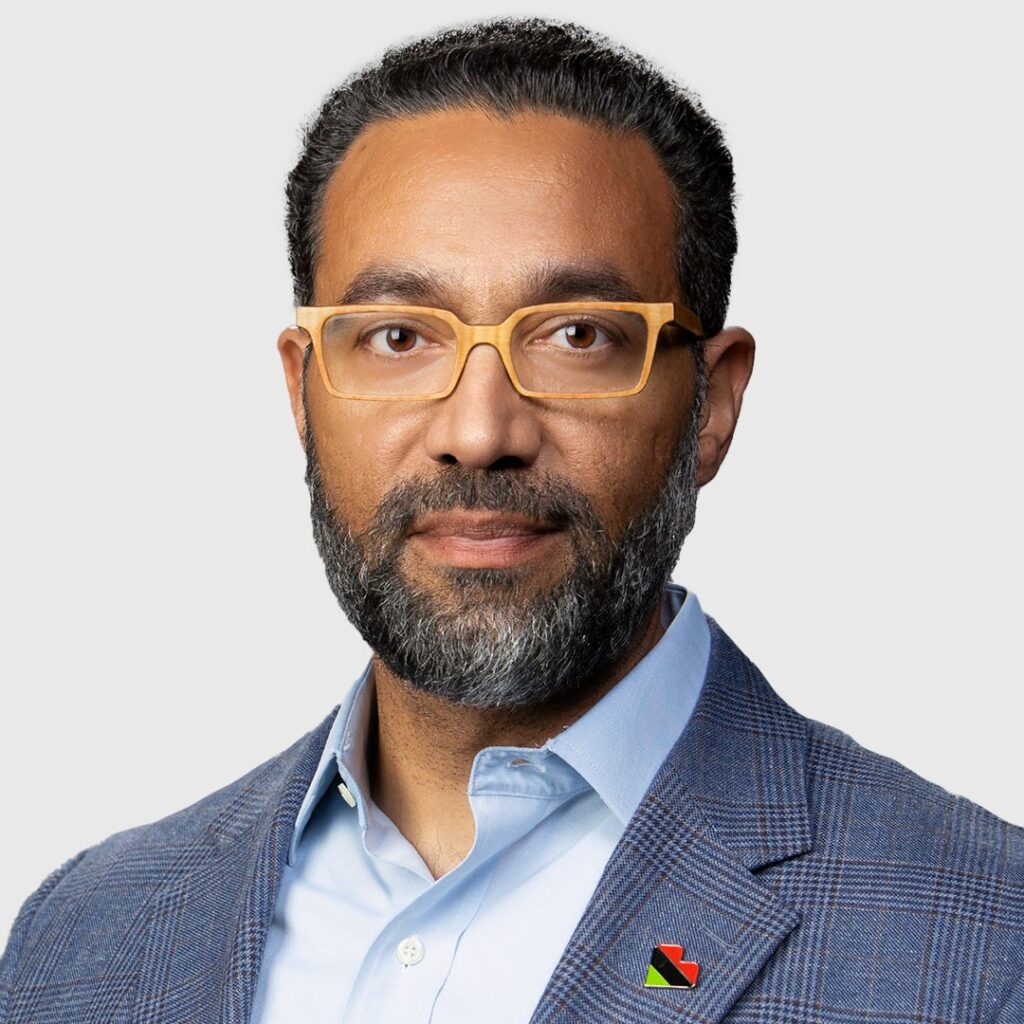
Point solution or platform? Both have their place in the healthcare ecosystem, but sometimes a true platform is hard to recognize. Ben Maisano, SVP, Head of Strategy for Tendo, lays out the features of platforms and how they can benefit your organization. This special episode of Meeting of the Minds was recorded at ViVe 2023.

Sign up to learn about future episodes of Meeting of the Minds
Benefits of Platforms
- Configurable to different conditions and patent journeys
- Easily integrate with new and existing solutions
- Streamline the number of solutions and vendors to manage
- Centralized command means ease of use by all members of a system
- Allows for discovery
- Allows for elongated relationships building
Watch the Full Episode
Sign up to learn about future episodes of Meeting of the Minds
Read the Full Transcript
(edited for clarity)
Today we’re with Ben Maisano from Tendo, who has a storied background as Chief Technical Officer at Mount Sinai Health System in New York and Chief Digital and Innovation Officer at Atlantic Health System in Jersey.
Ben, want to say a quick hello? Any story on your background you want to share?
Thanks, Chris. I’ve been around the block at both startups and health systems, and now most recently with Tendo, back at startups. I started my career at UnitedHealth building software. I did a stint in fintech in early 2010-11 when mobile took off, but I always gravitated back to healthcare.
My mom was a nurse growing up. She and I lived through her doing night shifts at the hospital. Then she moved to the pediatric unit, to a pediatric office, and then to being a school nurse. So she progressed to more manageable jobs, but that was my first perspective.
Then, when we were having kids, my wife had to have an emergency C-section. You go from having a plan to it being thrown out the window, from two clinicians in the room to 12. They had our daughter out in 2 minutes and saved her life.
Thank God that worked out. But it gave me an appreciation of this amazing clinical environment. But as a technologist, I always felt like the technology didn’t live up to the clinical excellence that we have in the U.S. Seeing the parallels in other industries, whether that’s fintech or even what the travel and airline industry has done by just opening up a few data points, APIs, and had a lot more accessibility, it all just felt like healthcare had so many problems to solve. And I’ve always just been a guy that goes after a challenge.
There’s a huge amount at stake in the industries you’re describing, but even more so when we bring lives into the fold and not just lives, but health, mental health, and the well-being of the people delivering that care. It’s a blessing that you grew up the child of a clinician and had that influence some of your thinking in enabling the digital end.
I think it is. The clinicians have gone from no tech to tech being forced on them to being jaded about frustrating tech and extra clicks. We’re finally reaching a point where we can focus on them as users.
We know it’s a supply-constrained industry. We know that basically every good idea in healthcare is put on the back of physicians and clinicians. I’d say nurses pretty much run hospitals. And so it’s always been more work, whether it’s a new tech, an EMR digital solution, virtual care, value-based care, or new models of care. It’s all been put on the back of these clinicians.
We’ve got to reach a point where tech is helping them be more efficient. They know how to help the patient.
Having their hands on the patients and having the closest path to empathy highlights the importance of listening to our clinician partners. One major thing that I’m hoping that people get from this conversation is how to cut through all the noise of thousands and thousands of thousands of point solutions apps in a way that does help clinicians and patients. Does that sound pretty lined up?
There is a realization, Hey, I’m buying these solutions, and it’s 60% of what I need. So then I bought another solution at 60%, which didn’t even cover the 40% delta I needed. Then I’ve got two solutions, and I still have this gap of what I really wanted, and it goes on and on like that. And that’s why you’ll have a portfolio of 300 to 1,000 vendors and pieces of software in a health system because they can only kind of pick off the shelf.
So at Mt. Sinai, with 800,000 lives at risk and competitive in the New York environment, they said, let’s start building and collaborating and innovating in this space. So we spun up a team of engineers, product managers, and designers. Some of the first hires were UX/UI researchers to go out and talk with these users and bring that mindset of product and user research into a health system.
That was really rewarding work. We built up many good virtual tools and even a kind of concierge and health and wellness access in New York. I was proud of that work. I think it showed, yes, it’s expensive to build at first. It’s a two-year upfront investment to really get going, but then there are big benefits because you can unlock that creativity and the entrepreneurial spirit that folks in the health system are yearning for instead of always trying to analyze the market to find this thing.
Now, not every health system can go spin up a product organization. So, joining Atlantic during the pandemic, the idea was to create a venture studio. How do you partner, co-design, and co-build with the great entrepreneurs out there? I think of the assets a health system has–they’ve got patients, doctors, and infrastructure. These are things that are tremendous assets to a startup, way more than capital.
Capital you can get from VCs if you have all the right pieces, but you still need these other things. And likewise, the startups in the world have this great product mindset. Usually, they bring the latest technology. They can move quickly. Iteration is necessary, but health systems aren’t built for quick iteration.
That was a really interesting model: how do you stop this vendor-customer thing and talk about strategic relationships and co-design and let health systems influence your roadmap and partner in the evolution of a product? That’s how you’ll get to solutions that are more like a true platform.
We can talk about what a true platform means. It’s why I joined Tendo because they were really architecting and creating the platform I wished I had at these two systems. I would have had to do less building, probably.
I can only imagine. Being in the startup world, at a certain point everybody realizes they need to be a platform. So you have a lot of people saying they are platforms, but they’re not really. Can you help the audience out with a sniff test? How do you suss out who is truly a platform and who’s not?
You’ve got to look at the characteristics, so you get past this term everyone’s overusing and say, hey, is this a SaaS-like architecture that is configuration driven? So it’s designed for agility and extensibility. That’s the core. Can I take one use case but then apply other use cases over time?
You’ve got to have extensibility, which usually means configuration-driven workflows. Because think about it: why have specialists in healthcare? If everything were the same, I would have primary care doctors or one doctor that does everything. We have specialists for a reason–because every condition is so nuanced, every condition is so new, and every person’s journey is so personal.
So why do you think that you could have this rigid solution? That’s not the reality of the problem. We’re not looking at the real problem. The real problem is I need a personalized plan. I need things that are catered to each condition.
If you think about what your patient portal looks like–I used to show pictures of a patient portal for an expecting mother, a patient portal for a person recently diagnosed with cancer, a patient portal for someone that’s healthy and looking at wellness, a patient portal for a diabetic. They’re all the same picture. How is this a digital solution for these people?
A true platform architecture realizes that everyone’s experience has to be different. You have to have that architecture from the ground up. You can’t add it in after. It’s one of those one-way doors. If you’ve got to build it up right now, you can decide how you sequence that, but what is really important is that you can add more workflows.
So we can consolidate three point solutions into one at Tendo. And so I think if you can do that, that’s a strong ROI case. You should have a command and control center where people can log in, see it, and quickly make changes. Ultimately, we want to put the health systems in the driver’s seat.
Characteristics of a platform, those are kind of the big ones that come to mind. And then, obviously, you need a good security architecture for an access control system. You need to be data-driven. So you need these layers. You need the configuration layer, but you need the right data model at these base levels. Then you build up off of that. You need an insights and orchestration layer.
And no one’s just coming to your platform, either. How are you engaging and reaching out? How are you using data to personalize along with config? If you put data and config together, that’s when you actually have a content-personalized experience today.
So the environment that you’re describing is it a one-vendor-rules-them-all approach, or is this like connecting multiple different specialist-type systems and solutions into a platform play?
Health systems have core systems, just like banking and airlines. They’re going to have a core scheduling system. They’re going to a core billing system. They’re going to have a core clinical system. Many of these back-office systems exist, and we build tech solutions around them.
I think there’s a lack of a central front-office system that covers you at the top of the funnel when people are just trying to figure out what they need. They don’t know what kind of doctor they need. They want to be triaged. Discovery before even access. So you need discovery.
You need access. You need a lot of that elongated journey managed. You need what is the next evolution of the access center. It can’t just be the call center, and it can’t even just be what’s traditionally viewed as operational, like what is the kind of clinical front-office system that supports the whole operation of the front office of a health system? I think that’s kind of what we’re looking at.
So the idea of the front-office system is to enable the type of experience that an end-user clinician or patient might need but allow the best applications in the back end to do it. It’s not just one approach, like one company that owns all these approaches, but it’s a connection of where different endpoints need to touch.
You’ve got to be collaborative in the ecosystem. You’ve got to be able to let people integrate. You’ve got to integrate with others. If you don’t play nice in that ecosystem, I don’t think you’ll do well in healthcare. And so you can leverage the latest interoperability and standards. You’ve got to know that ecosystem and how to connect.
Be friendly with others. Because health systems, it’s a hard job. And these chief digital officers or any decision makers, CIOs, clinician leaders, operational leaders trying to figure out what solution they need, they need to synthesize all this. They’re ultimately running their platform.
We can say we’re coming with the platform, and we can. Being more strategic and aligning with them is the way to go. But you’ve got to be able to still piece together and integrate bi-directionally and both sides. I think it’s important to focus on being this trusted connection between the patient and the clinician.
You’re going to go automate a survey and collect some data. Someone’s got to look at that. And if you did that for a thousand patients, you’ve got to know which one I need to look at first. So you’ve got to know the workflow. I think that is more important than just each individual user’s experience. It’s like it’s a team sport. If you’re not designing it for a team sport, I don’t think you’ll have the right platform.
And that gets to the last point. I’d say it’s ridiculous how big of a lack of family organization there is. There aren’t digital solutions. When you have a health issue, God forbid, your family is involved, and almost no solution is built around a family experience. How easily you can share and organize around a family, not just a patient, but in reality, your family’s involved. So why aren’t they involved digitally?
I know for myself, I have one of my child records, and my wife has two. Our fourth child, we don’t know where she is digitally, and there are a lot of people like that.
And then sometimes when your parents don’t exactly know how to convey everything they heard of the doctor’s office. So you’ve got to be thinking patient-clinician, but also the workflow in the family unit.
You really need to share and be able to discuss it, and that brings comfort to everyone. I think it raises outcomes drastically if families involved are involved efficiently.
So one thing I wanted to get into is the impact. Earlier, we talked about business-level strategic impact, at the very least, getting away from the headache of these gigantic portfolios of solutions that don’t address the problems. Are there any examples that you can think of where there’s been a significant impact on the clinician experience that doctors and nurses have had an easier go based on a solid platform play?
If they have a platform, physicians can personalize it to their needs so it feels like it’s working for them, not against them. If you’re able to reduce clicks, if you’re able to give them the right insight…a lot of the EMRs are essentially architected in a visit-based architecture.
It’s this point of time and this point of care. And that’s what healthcare had to do in the beginning. It’s like, hey, you’re here. You’re in my office. I’ve got to get your vitals. I’ve got to do this. How billing works? Is it encounter-based? And that’s missing the elongated story of the patient.
So I think where we’re seeing clinician value is if you can help them organize that story and see that story and not just be focused on the person right in front of me. Because in reality, I read a stat, it was like you see a doctor–actual meaningful, engaging, talking time–about 12 minutes a year. It’s so little.
And in reality, health is daily, and health is longitudinal and a condition or a journey, and you’re seeing the new models of care and how you pay and measure look at more than an episode of the journey. Now I think that’s a great move. We’ve got to have digital, make sure it’s supporting and seeing the story of a patient’s journey. So it’s multidisciplinary, it’s multi-step, it’s long, it’s not the 12 minutes at the office. That’s valuable time, but that’s not where sick care or health care happens.
So you mentioned the patient. Could we talk briefly about the advantages of that single platform payment? Maybe they’re not in these systems every day, but what would you say are the advantages that go downstream to the patient due to this platform thinking and strategic moves?
I think it should be more helpful. It’s not just, hey, I’m making a booking online over here, and I’m getting this other thing for my bill pay, and nothing’s helping me manage my meds, and I have like a PDF about my care plan, too. That’s all got to change to feel integrated, to feel as one system, and to feel connected with the health system. It’s got to be a relationship.
The leading physicians and the great practices that I’ve talked to want relationship-based medicine. I loved hearing that because you don’t feel that all the time. I think clinicians feel that out now with the growing administrations and the growing complexity. They still want to practice relationship-based medicine. So the right platform and the right digital solution for the patients should make it feel like that. And that’s not easy to do when you have to constantly grow your patients. You have all the overhead, and you have to find the ROI of running a practice or running a health system. It’s tough. And now you have to establish a relationship with thousands of patients. So you need help digitally.
You’ve given a good overview on how to think through certain aspects of digital strategy and think through platform versus point solution mentality. I want to finish with one question we ask of every guest. If there were one thing that you could change about the way healthcare is delivered in this country, what would that be?
Just one? How it’s paid for complicates a lot of incentives. If you reimburse something based on the complexity and the time it takes the doctor, and then I innovate and make it faster, that means they will get paid less. Tell me how to wrangle that equation.
You’ve got to be able to pay and incentivize everyone based on the value. That’s where we are everywhere else. As a consumer, you pay for things based on value, not how long it took the manufacturer to make something. But in healthcare, they actually come up with reimbursements based on the length of the procedure, time, and complexity. And then you can extrapolate that to many other areas where I’m paying for quantity. I think there are a lot of challenges.
Many health systems and practices are trying [value-based care] and building the rails to try to make it work. And it’s been a mixed bag, but it still seems like it’s the best way to try to solve this thing I’m talking about, which is just a really hard incentive dynamics.
How will you change that when everyone now, especially this year, is focused on ROI, business plans for everything? But you still have these weird dynamics. And if we don’t openly talk about it, we won’t be able to solve it. And sometimes, it’s as if people aren’t super comfortable, but ultimately everyone in the industry wants to do good by the patient. But then you have that has to jive with reality.
So maybe we jolt people into getting comfortable with it. Let’s imagine being in a system where you have a business if nobody gets sick. Then what’s the incentive alignment there?
So the encouraging things with the employer, seeing the sticker shock, or the government trying to help make it a valuable business to take care of people proactively to move upstream of illness. It’s a sick care system today. We want it to get to be an actual healthcare and wellness system.
There will always be this acute need, but we’ve got to do a lot better on the front end. And I feel like that’ll get us there.
Exactly. And for the people who want to connect with you, what’s the best way to reach out to you?
Ben@Tendo.com. I’m at conferences and definitely try to be accessible for any partnership that makes sense with the entrepreneurs out there or collaborating with health systems. We have a strategic customer model. So we really go deep and broad with our health system partners.
It’s been a great conversation, and I think there’s a lot of great learnings that people can start using to help change their organizations.
For anybody who wants to dig in some more I had a recent conversation about evaluating digital health solutions, knowing what’s effective, with Dr. Quyen Ngo.
Sign up to learn about future episodes of Meeting of the Minds