Access to care: One of the most significant opportunities presented by mental health apps.
Unfortunately, many of the estimated 10,000 to 20,000 mental health apps on the market today aren’t living up to that promise, especially when it comes to supporting diverse and underserved populations. Lack of evidence is one major reason; another is that developers neglect to include the intended users in their design.
“Often you read studies and look at the participant breakdown, and you see who was not included, whose voice was not heard,” says Terika McCall. “How can we say that we’re trying to create something that’s going to be helpful to diverse communities when they’re not even included in the beginning to find out what they need?”
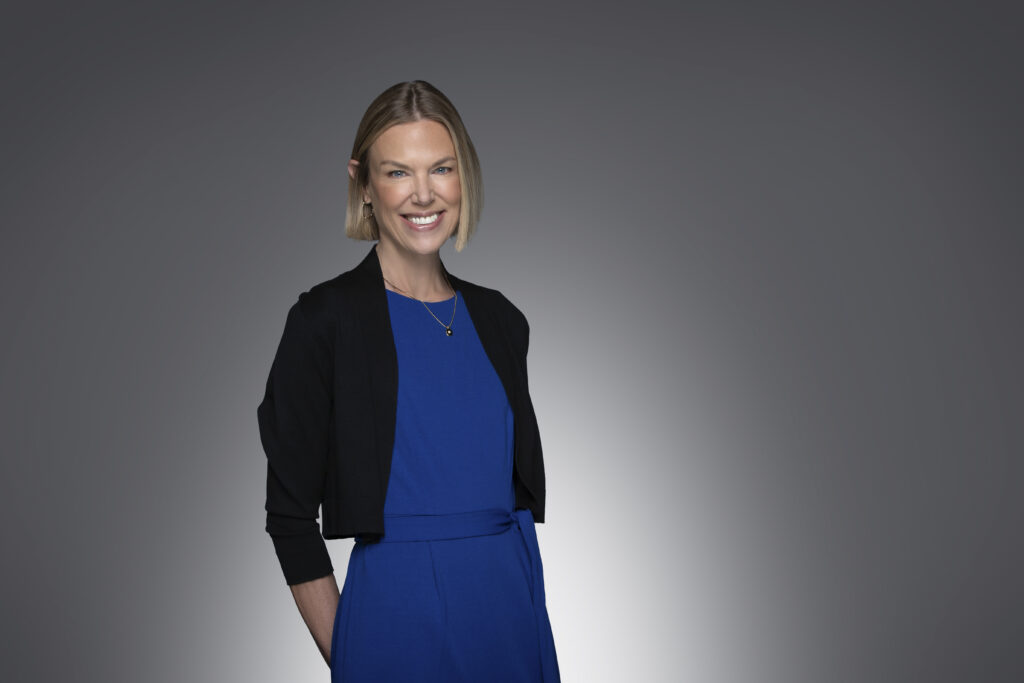
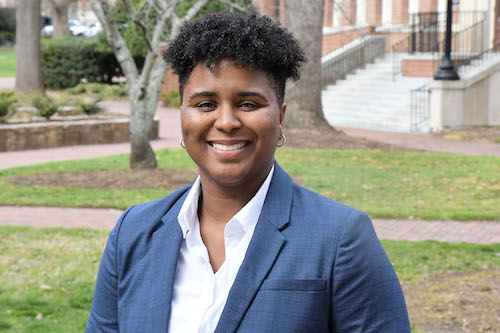
McCall, the newest member of our Diversity Advisory Board, is working to change that. She promotes user-centered design principles and practices, the kind that Woebot Health has been using since day one, and she does it in several ways. She is the founding Director of CHIL, the Consumer Health Informatics Lab at Yale, a research space dedicated to developing and evaluating consumer-facing health products. She teaches a graduate-level course, User-centered Design of Digital Health Tools, and she authored an abstract entitled “Teaching Health Equity Research to the Next Generation.”
We spoke to McCall about what user-centered design work really entails, the apps she is developing, and why her students give her hope.
Tell us about your work and your area of expertise.
My background, my Ph.D., is in health informatics. I focus on leveraging technology to deliver mental health services and resources to communities that are underserved.
At the lab, we focus on user-centered design and usability testing of digital health tools. Many of my projects involve the development of mobile apps, primarily because mobile phones can be used to provide access to those who can’t get to a therapist for mental health support. For instance, I’m developing a mobile app to support Black women with elevated anxiety or depression self-manage. Another project I’m involved with is the development of an app to assist individuals recently released from incarceration. It will have content and features to access resources, services, and social support as they rejoin their communities.
You’re not only using user-centered design principles in your work at the lab, you also teach them. Can you talk a bit about the class?
I teach students how to develop inclusive tools and think about who the intended users are, the context in which they would use the tool, and what their needs are. To do that, they should take a humble approach, not make assumptions and let the users inform the design and then co-design with them.
What does that look like in action?
You have to go into the community and do the work. Be willing to listen, really listen, and not be in a hurry to get your data and get out. You talk to people, so whatever solution comes out of it is informed by the intended users. They tell you exactly what they need if you are listening. I’m not saying they’re going to say, “we need this app.” But as you’re doing interviews or you’re having co-design workshops, they’ll indicate that there are pain points and barriers for them. Then take that and figure out what role technology can play in addressing the pain points and mitigating barriers.
It seems intuitive to ask the user what they need. Why doesn’t every developer do this?
One reason is that it takes a lot more time and work to be inclusive in the design process. You have to form relationships, especially in communities where researchers have come in, collected their data, and then disappeared without any benefit to the community.
It should be mutually beneficial. I like to ask, “How can I help you? Can I be a resource or a guest speaker at the church?” Just promising that your insights will help the community isn’t enough. How? Plus, that will take a while to be realized, so what are some tangible things that you can do now that will actually help the community?
Are there specific examples of relationship building that you can share?
As I mentioned, there’s an app that’s being developed to better support individuals who are released from incarceration. Dr. Karen Wang is the principal investigator. I have a supplemental grant for the project, specifically, to speak to Black women who are recently released from incarceration. Black women are incarcerated at over two times the rate of their White counterparts, so I am conducting focus groups to find out if there are any specific needs and preferences that they may have for this app.
The focus groups are held at a community organization that helps individuals transition back into the community after they are released from incarceration. They also have a weekly women’s group, so I’ve become part of that. They asked me to speak. I helped with their toy drive and, at Christmas time, sponsored lunch. Things like this matter. People see and appreciate it.
In what ways, if any, do your students surprise you?
Part of the needs assessment they do for their final project is to speak to their intended users to find out what would be most beneficial to them. For many of them, this is their introduction to this type of participatory research. It challenges their mindset. It’s different when you’re speaking to someone, and they’re telling you about their life and challenges, then when you’re just hearing it secondhand or reading it in a book. It makes it real. The students get so motivated by it. They want to create outstanding products because they’ve met with the people, real people, who they’re designing it for. It gives me hope to see them so excited after these meetings.
If there’s one thing you could change about the way mental health care is delivered in this country, what would it be?
First of all, it should be free. Outside of it being free, it should be as simple as seeing a primary care physician. I don’t have a copay to see my primary care physician for my checkup. Mental health care should be just as affordable, accessible, and not stigmatized.